

3-Tier Wire Shelving Unit Which One Is Reliable?
2026-11-16
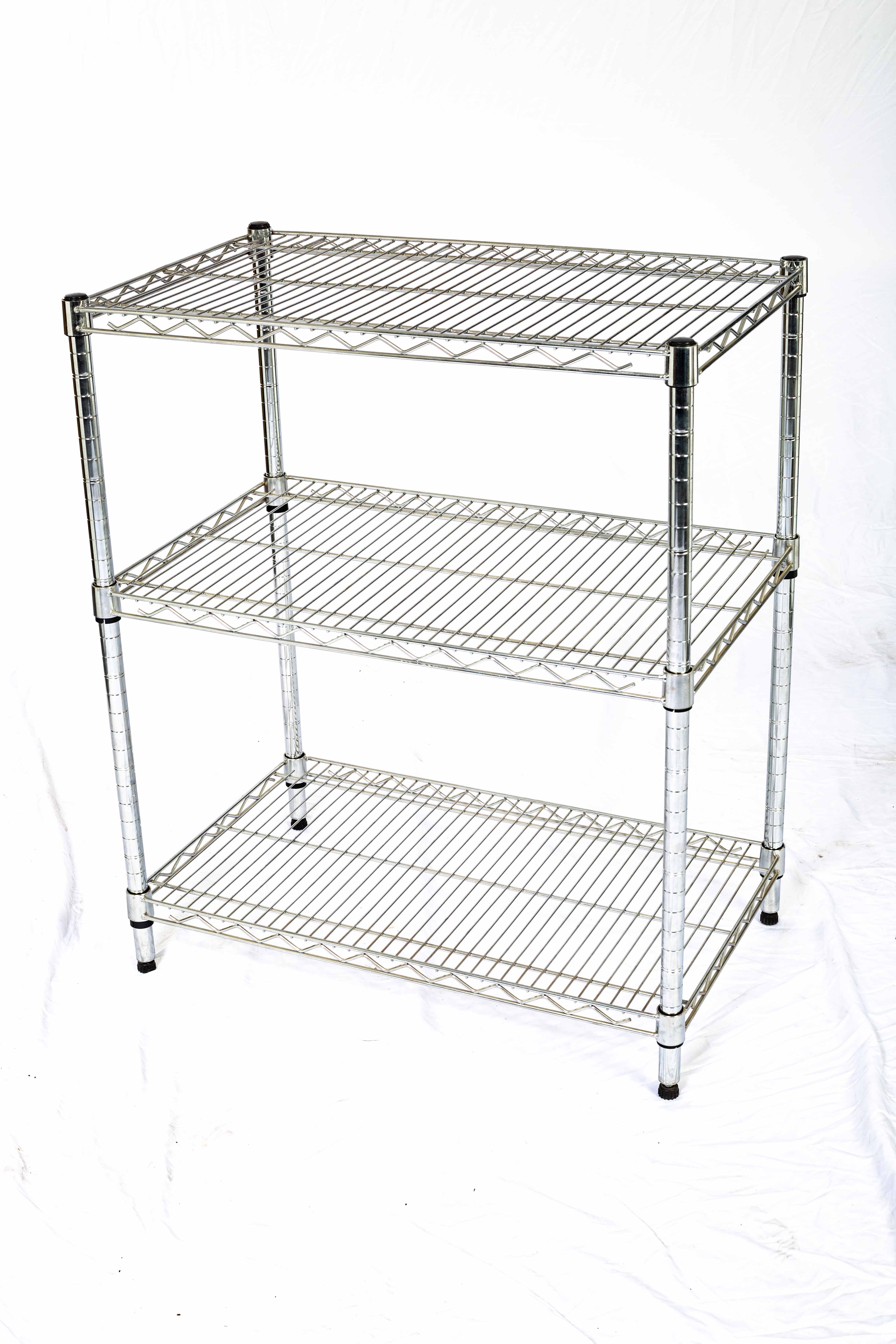
Not all 3-tier wire shelving units are built the same. Some wobble under a fraction of their stated capacity, while others start rusting after one humid season. If you are wondering which one is actually reliable, you are already asking the right question. This guide cuts past the marketing noise to compare load limits, finish quality, shelf adjustability, and day-to-day durability. We also put ZEOU under the same scrutiny, because a familiar name alone should never be enough. Here is what separates a shelving unit you can forget is there from one you will regret buying.
What Actually Keeps a Three-Tier Unit From Swaying
Most sway in a three-tier unit doesn't start with a lack of weight; it starts with loose joints and tiny racking movements that build on each other. The bolts, cam locks, or screws holding the rails to the shelves need to be snug, but the contact points matter just as much. If one corner of a shelf can twist even slightly, the uprights begin working against the frame instead of with it. A thin back panel, seated fully in its grooves and fixed with screws or nails, often does more to stop side-to-side movement than extra brackets on the front. That panel turns the rear opening into a shear plane, blocking the parallelogram shift that causes most sway.
The way the legs meet the floor also controls how much motion reaches the frame. If one foot carries less load, the unit leans and every push gets exaggerated. Adjustable feet or a firm shim under the low side can settle the frame, but only when the shelves are not overloaded. On carpet, a slightly wider footprint or a low cross brace near the base usually helps more than adding weight to the bottom shelf. For taller units, a small bracket anchoring the top to the wall gives the whole structure a fixed reference point. That connection keeps the shelves from drifting and turns what would be a sway into a barely noticeable flex.
Finish Flaws That Show Up After the First Humid Week
Humidity has a way of pulling finish flaws out of hiding. A tabletop that looked smooth in dry air can suddenly show cloudy patches, tiny blisters, or a rough texture after a week of damp weather. Wood expands, the finish softens, and trapped moisture pushes against the film from below. Those early signs are easy to miss during application, but they become impossible to ignore once the air stays wet.
Blushing is usually the first thing people notice: a milky haze that sits inside the clear coat rather than on top of it. It happens when moisture gets trapped as the finish cures, and high humidity makes it worse. Small bubbles or pinholes often appear around the same time, especially along edges and joints where the wood moves the most. If the finish was applied a little too thick, the surface may also turn soft or tacky in patches, picking up fingerprints and dust.
Rather than rushing to sand everything down, it helps to wait until the indoor humidity levels out. Some cloudiness fades on its own once the wood releases the trapped moisture. If it doesn't, a light scuff-sand and a thin recoat usually cleans up the surface better than adding more product over the haze. Watching how a finish behaves during that first humid week tells you more about the job than any dry-day inspection.
Load Ratings That Overpromise on the Middle Shelf
A middle shelf can look sturdy until you actually rest a loaded crate on it and watch the board flex just enough to make you reconsider the purchase. The printed weight limit often assumes a perfectly even load spread across the entire surface, a condition that rarely matches the way boxes get shoved toward the center or concentrated on one edge. Once the weight drifts away from the brackets, the effective capacity drops fast, and that confident number starts to feel more like a sales pitch than a safety margin.
Some labels are based on short-term tests with brand-new hardware, not on what happens after months of temperature changes, minor bumps, or slightly over-tightened screws. Particleboard and thin metal brackets especially lose their grip over time, which means the middle shelf is often the first place to bow or slip. The promised number may hold up in a clean demonstration, but in a busy storage room it tends to hide the real weak point: the connection between the shelf and the upright.
A more honest approach is to treat the advertised rating as a best-case ceiling rather than a daily allowance. If the middle shelf says it can hold ninety kilograms, keeping routine loads closer to sixty or sixty-five kilograms leaves room for uneven stacking, small impacts, and gradual wear. Spreading the weight across the full depth and checking the clips or pins before adding heavier items does more for long-term stability than trusting the boldest figure on the box.
How the Shelf Clips Either Lock or Loosen Over Time
On a shelf that rarely moves, a clip can actually tighten with age. The little flexing tooth or wedge gets pressed into place each time something is set down, and fine dust plus humidity works into the gap between the clip and the upright. Instead of sliding back, the plastic grips harder, especially if the clip has a slight taper. People notice this when they try to remove an old shelf and have to smack it upward with the heel of a hand.
Elsewhere, the clip loosens for the same reason a well-used snap loses its bite. The polymer is being bent just past its relaxed shape every day, and heat from sunlight, ovens, or electronics lets it creep into that slightly open position. Once the lip no longer sits flat against the rail, the shelf starts to seesaw under load. That tiny movement works like a lever, prying the clip outward a little more each week until a routine bump sends the shelf corner down.
Which direction a shelf clip goes is mostly set by the shape of the hook and the material it is stamped or molded from. A deep, steep lip in glass-filled nylon tends to bed in and lock, while a shallow lip in softer resin is more likely to relax and skate out of the slot. Installers who overload the shelf or force a slightly wrong clip into an upright often create the looseness themselves: the clip never fully recovers from that first hard stretch, and the shelf spends the rest of its life creeping toward the floor.
Casters Versus Feet When the Unit Holds Real Weight
Load ratings on casters are often taken at face value, but real weight behaves differently once a unit sits on an uneven floor or gets nudged sideways. A set of four locking casters might be rated for far more than the cabinet weighs, yet one wheel can still carry a concentrated share of that load when the floor dips or the frame flexes. The locks stop rolling, but they do not eliminate the small pivot and give that comes from the caster’s swivel bearing, which is enough to let a heavy unit shift under use.
Feet take a different route: they give the weight a direct, predictable path to the floor. There is no wheel material to compress, no stem bearing to loosen, and no swivel radius working against the footprint. For a piece that stays put under real load—a workbench, a heavy cabinet, a machine stand—leveling feet tend to feel more solid and hold their setting longer. They also make it easier to correct for an uneven floor without relying on a brake that may or may not grip.
If the unit only moves occasionally, a practical middle ground is to mount casters for transport and add retractable or screw-down feet that take the weight once it is in position. This keeps the convenience of rolling without asking the casters to act as permanent load bearers. In shops and labs, the pattern often becomes simple: light carts and frequently rearranged gear get good locking casters, while anything heavy enough to settle into the floor gets feet.
Assembly Red Flags That Predict a Short Service Life
A bearing that needs a hammer to seat properly is already telling you something about the housing or shaft. Hard installation often leaves brinelling on the raceways or hairline cracks around the rolling elements, and though the machine may run fine for the first few hours, that damage becomes a fatigue site that shortens the service interval dramatically.
If a build crew runs bolts down in a circle because it feels faster, the assembly already has a problem. Without a star or crisscross sequence, the mating faces don't settle evenly, and the joint may feel tight while carrying uneven clamp load. A few thermal cycles later, that uneven pressure relaxes, gaskets start to seep, and fretting takes hold in places that should have stayed locked.
Dirt and handling marks during assembly rarely get the same attention as torque specs, but they do more long-term damage than most people expect. A shaft wiped with a dirty rag, a seal installed over fingerprints or dust, or an open bearing left on a workbench overnight can pick up particles that act like lapping compound. The wear doesn't show up on day one, but it cuts into the part's design life and often gets blamed on lubrication or materials later.
FAQ
Look for steel wire with a thick chrome or epoxy coating, reinforced support bars, and a weight rating that leaves comfortable headroom. The shelf clips or plastic sleeves should grip the posts tightly so the tiers don't slip when you load them unevenly.
Not exactly. Chrome is fine indoors and looks clean, but it can corrode in damp garages or near wash areas. Epoxy or powder-coated finishes hold up better in humid spaces and resist scratches, though they can chip if struck hard.
It varies by model, but many sturdy units list 300 to 600 pounds total when the load is spread properly. The key is the per-shelf rating and the post gauge. Thicker posts and wire diameters usually mean less wobble and sag over time.
Yes. If you plan to move the unit often, locking casters should be wide and secure; cheap wheels can make the whole shelf feel shaky. For stationary storage, adjustable leveling feet help correct uneven floors and keep the frame from twisting.
Not necessarily. A well-designed slip-sleeve or split-post system can be sturdy if the tolerances are tight. If assembly feels too loose and the shelves rock after loading, adding zip ties or replacing the sleeves may help, but a solid fit from the start is better.
36 inches wide by 18 inches deep is a common sweet spot for pantries, garages, and laundry rooms. It gives enough depth for bins without making the center hard to reach. Match the height to your space, usually 60 to 72 inches works well.
Load heavier items on the bottom tier, keep the unit against a wall if possible, and check whether the posts feel rigid when you push from the side. Some people add rubber mats or cross braces for extra insurance in high-traffic areas.
Usually yes. Many units can be split into two shorter shelving units or used with casters as a rolling cart. If the posts and clips are still solid, the same frame can handle pantry storage, workshop tools, or even a temporary plant stand.
Conclusion
The difference between a shelving unit that stays rigid and one that starts rocking usually shows up in details that are easy to overlook. Sway control is not just about having an X-brace on the back; the connection points and clip fit matter just as much. Stamped shelf clips with shallow teeth may feel secure during assembly, but they can begin to loosen after repeated loading, especially on the middle shelf where the stated capacity often does not match real-world flex. If the posts need forcing, the plastic collars crack, or the clip holes are misaligned during setup, that frame will likely develop play within months. Those early assembly flaws are a stronger predictor of short service life than a brand name printed on the box.
Finish problems tend to show up fast in humid spaces, with thin chrome or uneven powder coating blistering around welds and clip notches within the first week or two. Load ratings deserve the same skepticism; a unit may claim heavy total capacity while the middle shelf bows under half that weight if the beams are light gauge or the clips lack a positive locking tab. Under genuine weight, casters only help when they have metal threads and working brakes, otherwise fixed feet are the safer choice because they remove one more source of movement. A reliable three-tier unit is usually the one with locked clips, an even coating, and a middle shelf that holds its shape during an honest load test.
Contact Us
Contact Person: Alin
Email: [email protected]
Tel/WhatsApp: +86 15015291051
Website: https://zeoumetal.com/