

5G Core Network Vendor Guide for Successful Deployment
2026-08-19
Deploying a 5G core network is rarely a plug-and-play affair. Between the promises of ultra-low latency and the reality of integration headaches, the vendor you choose can make or break your rollout. That’s where this guide comes in. We’ll cut through the marketing noise to examine what actually matters when evaluating 5G core vendors—from architecture flexibility to real-world deployment support. Whether you’re a mobile operator planning a greenfield build or an enterprise exploring private 5G, the choices are nuanced. Companies like IPLOOK have shown that agile, software-centric approaches can reshape expectations. In the following sections, you’ll find practical criteria, red flags to avoid, and insights to help you select a partner that aligns with your network’s long-term success.
Why a Cloud-Native Core Changes Vendor Selection
Buying enterprise software used to feel like committing to a decade-long marriage. You picked the vendor with the longest feature list and the most convincing demo, then spent years adapting your processes to their way of doing things. A cloud-native core flips that dynamic. Instead of accepting a monolithic stack because it checks every box, you judge each component on whether it plugs into the rest of your stack without friction. If a vendor's service can't run on your Kubernetes clusters, expose sane APIs, or fit your existing observability and security tooling, it doesn't matter how many modules they offer. The integration tax is the real cost.
The shift also changes how you weigh portability and second-sourcing. With cloud-native patterns, you're no longer locked into a single vendor's roadmap or pricing model. Selection becomes less about picking the winner and more about designing a system where swapping a component is an engineering task, not a re-platforming project. That favors vendors who treat their product as a set of composable services with clean contracts, published SLAs for each API, and no hidden data gravity. You start asking different questions: Can I run this myself if needed? Does the licensing allow me to move data freely? Will this tool work with my existing service mesh and policy engines?
Cloud-native also forces a sharper look at operational alignment. A vendor might have polished marketing but weak GitOps support, no Terraform provider, or API rate limits that break your CI/CD pipelines. Those details, not feature count, now determine fit. Vendors that thrive in this environment are the ones that expose configuration as code, provide real-time usage metering, and make failure modes visible. That's a far more useful selection signal than a glossy demo.
Mapping Deployment Risks Before You Commit
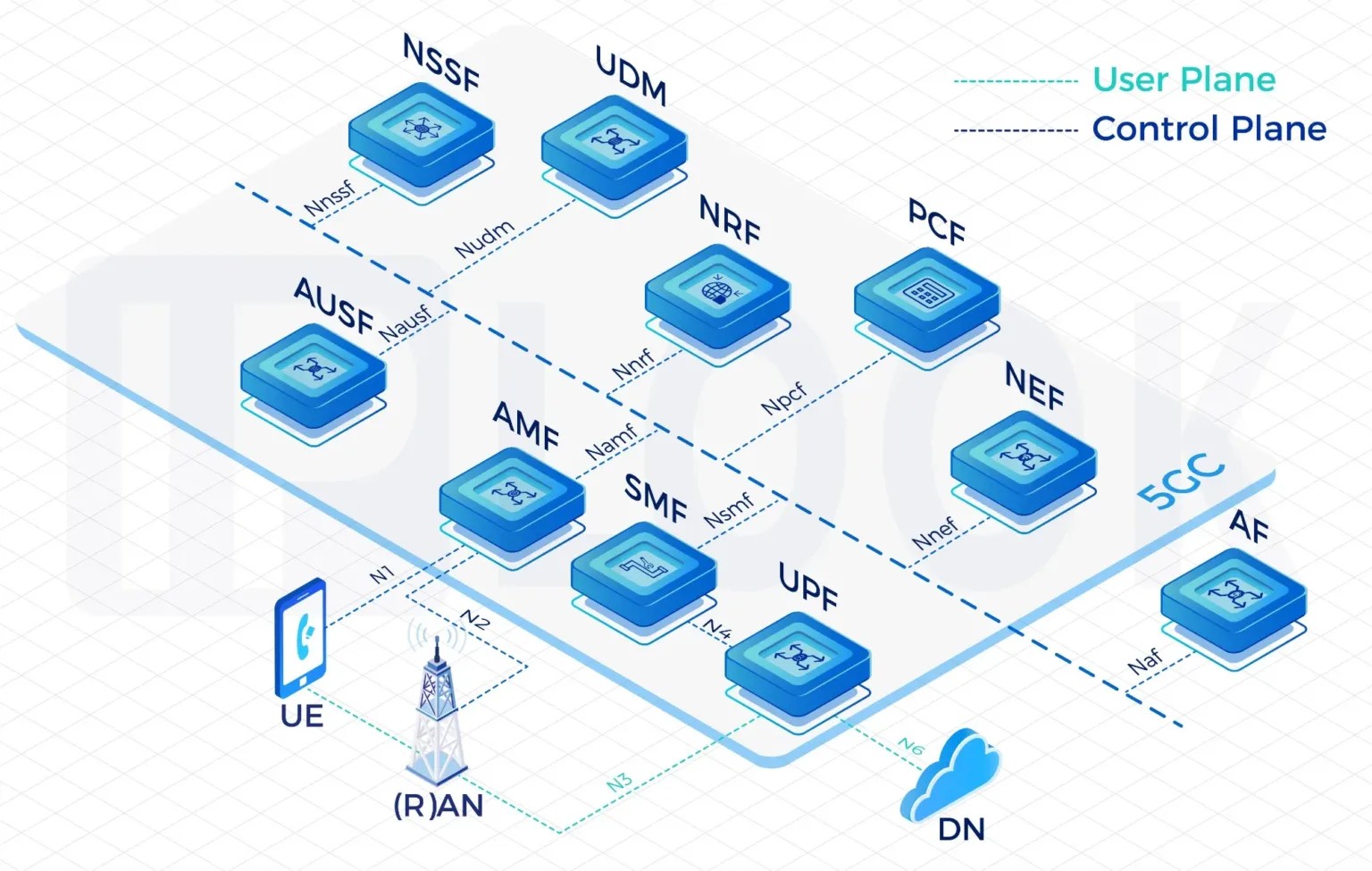
Every deployment plan looks solid on a whiteboard. It’s only when you trace the actual path from commit to production that the silent failure points appear — the database schema drift nobody flagged, the third-party rate limit that wasn’t in the original scope, the environment variable mismatch that only shows up under load. Mapping risks isn’t about being pessimistic; it’s about refusing to let the system surprise you.
Start by walking the release backward. What does each service assume about its neighbors? Where are the handoffs that require manual approval but lack a rollback trigger? Which dependencies update on their own schedule — and could break your pinned versions mid-deploy? A quick risk map often reveals that the biggest danger isn’t the code change itself, but the assumptions baked into the pipeline.
Then separate what you can control from what you can only monitor. For each identified risk, assign a concrete pre-commit action: a dry-run migration, a canary percentage cap, a feature flag kill switch. If a risk has no owner and no mitigation, it’s not a risk — it’s a planned outage. Document these findings in plain language, so the next engineer doesn’t have to rediscover them at 2 a.m.
What Tier-1 Operators Actually Test in Vendor Labs
Tier-1 operators don't run generic checklists in vendor labs. They push equipment past the edge of the datasheet, deliberately injecting malformed signaling, clock drift, and sudden route flaps that only surface after weeks of sustained load. A single misbehaving line card can trigger a cascade of BGP churn, so they watch how the box behaves when memory leaks start creeping in at 3 a.m. rather than in a clean demo window.
Interoperability gets far more scrutiny than raw throughput. The lab racks mix multiple vendor generations, older optical transceivers, and quirky third-party SFPs to see whether the new platform still honors delay budgets under asymmetric traffic. If a control plane restart takes 40 seconds instead of the claimed 15, the operator will hammer it with repeated ISSU attempts until the actual recovery profile becomes undeniable.
Security testing is equally blunt. Operators feed the device real-world attack traffic captured from their production networks — not sanitized test vectors — and watch for backplane congestion, silent packet drops, or unexpected management plane exposure. Any vendor lab that isn't ready for a 48-hour soak with live route reflectors and telemetry streaming won't make the short list.
Interoperability Traps That Delay 5G Standalone
Moving a network to 5G Standalone sounds like flipping a switch, but the reality is far messier. The biggest hidden cost isn't spectrum or new radios—it's the slow, painful grind of making multi-vendor equipment talk to each other. A 5G core from one supplier and a RAN from another might both claim 3GPP compliance, yet when the N2 signaling link comes up, you discover that one side treats a particular timer as milliseconds while the other expects seconds. These mismatches don't show up in lab certification; they appear only after weeks of live traffic, forcing engineers to open tickets that bounce between vendors with no clear owner.
The traps get more subtle as you move up the stack. HTTP/2 implementations vary in how they handle stream prioritization, which can stall session establishment under load. Network slicing parameters that look identical in a configuration file can differ in how they're interpreted by the policy control function, leading to silent traffic drops for enterprise customers. Even something as basic as TLS certificate rotation becomes a minefield when one vendor's core expects a full chain and another's RAN only sends a leaf certificate. Each of these issues eats into the launch timeline, not because anyone is incompetent, but because the standards leave just enough room for interpretation that real-world testing becomes the only way to find the gaps.
Cost Drivers Beyond the License Fee
The sticker price on a software license rarely tells the whole story. Once you move past the initial quote, you start running into costs that weren't on the first slide of the vendor's pitch. Implementation work, for instance, often requires pulling internal staff away from their regular duties or hiring outside consultants to handle data migration and system configuration. Those hours add up quickly, especially if your existing processes don't map neatly onto the new tool's assumptions.
Then there's the ongoing upkeep that nobody budgets for in year one. Training new employees, troubleshooting edge cases, and applying patches or upgrades all consume time from your operations team. If the software needs dedicated server resources or specialized security reviews, those expenses continue month after month. They're not as visible as an invoice, but they show up in overtime pay, delayed projects, and the slow creep of operational friction.
Integration costs deserve a mention too. Most tools don't live in a vacuum—they need to talk to your CRM, your ERP, or a handful of other internal systems. Building and maintaining those connections can involve custom API work, middleware licenses, or simply paying a developer to babysit fragile sync jobs. Every time one of those systems changes, the integration needs to be re-tested and often rebuilt, creating a recurring cost that's easy to overlook during the buying process.
Future-Proofing Without Overbuilding
It's tempting to add layers of abstraction or speculative features in the name of staying ahead. But most of those guesses turn out wrong, and now you're maintaining code nobody uses. Overbuilding doesn't buy you time—it steals it from the work that matters now.
A better approach is to keep interfaces narrow and replaceable. When a new requirement appears, you can swap one piece without rewriting the whole system. This means designing around boundaries that are stable, like data contracts or event streams, instead of trying to predict every possible future feature.
Consider a payment module: instead of building a generic gateway that supports ten providers from day one, you write a clean adapter for one provider. Adding another later means writing a new adapter, not tearing apart the core. That's how you stay flexible without carrying the weight of unused abstractions.
FAQ
Look closely at how the vendor handles multi-vendor interoperability and cloud-native operations. A vendor that treats Kubernetes and CI/CD pipelines as first-class concerns, not afterthoughts, will save you a lot of pain during upgrades and scaling.
A service-based architecture with clearly separated network functions allows teams to deploy and test components in parallel. Monolithic cores, even if virtualized, tend to drag timelines because changes ripple across the whole stack.
Charging and policy interfaces are frequently underestimated. If the core vendor's Nchf/Npcf exposure is weak or undocumented, you'll end up building custom adapters for BSS/OSS systems that can delay commercial launch by months.
Automation is not just about speed; it's about repeatability. Vendors that provide robust APIs and support GitOps-style workflows let you roll back config changes cleanly and enforce compliance without manual reviews.
Ask for evidence of stateless design, graceful degradation under pod failure, and horizontal scaling on commodity hardware. A demo on a locked-down lab stack is not the same as running on your own cloud with real traffic patterns.
Focus on signaling security between network functions and exposure to external networks. Look for built-in support for TLS, network policies, and regular security patches that align with your own vulnerability management cadence.
Insist on a phased knowledge transfer model with joint operations for at least one full lifecycle event, such as a major upgrade or failure drill. Vendors that only offer classroom training leave your NOC unprepared for real incidents.
Conclusion
Selecting a 5G core vendor involves more than checking off a feature list. Cloud-native architecture forces operators to rethink their criteria, because vendors that merely virtualize legacy network functions often stumble on microservices, stateless design, and in-service upgrades. Before committing, successful teams map deployment risks: multi-vendor RAN integration, user plane latency under bursty load, and exposure of APIs to enterprise customers. Tier-1 operator labs do not just run conformance tests—they stress the control plane with deliberate failure injection, measure recovery times, and probe the vendor's ability to migrate live traffic from 4G to 5G standalone. Interoperability traps remain the top cause of delayed launches: mismatched 3GPP interpretations, differences in NRF behavior, or incomplete support for IPv6 and HTTP/2 can stall a rollout for months. The most effective buyers treat vendor labs as an extension of their own staging environment, demanding evidence from real multi-vendor setups rather than slideware.
Cost drivers extend far beyond the license fee. Custom integration, feature parity gaps, and recurring subscription charges for software updates often exceed initial quotes. Scaling the user plane function across edge sites introduces hardware and power costs that few RFPs capture properly. Future-proofing does not mean buying the largest platform; it means demanding modular, versioned APIs, open interfaces, and a vendor roadmap that decouples software from hardware. The most successful deployments plan for three to five years of capacity headroom but avoid overbuilding; they negotiate for elasticity in licensing and commit to a continuous integration pipeline with the vendor. Ultimately, a successful 5G core deployment depends less on marketing claims and more on rigorous, verifiable testing of cloud-native behaviors and real-world resilience.
Contact Us
Contact Person: Shimmy
Email: [email protected]
Tel/WhatsApp: 85253392231
Website: https://www.iplook.com