
Best Glue Dispensing Machine Options for Every Application
2026-11-16
If your current glue dispensing process produces more scrap than finished parts, it's time to look beyond the spec sheet. Not every machine suits every adhesive or line speed—and that's exactly why the 'best' option depends on your application. Below, we compare practical setups, including a closer look at JATEN's range, so you can stop guessing and start bonding with confidence.
Electronics assembly calls for micro-deposit control
Keeping solder paste volumes within tight tolerances has become a defining challenge as board densities climb and component pitches shrink. A deviation of just a few microns in deposit height or area can shift a joint from reliable to marginal, especially on fine-pitch BGAs and micro-passives. Process engineers now treat micro-deposit control less as a printer setting and more as a closed-loop discipline, pulling data from SPI, stencil inspection, and even paste rheology checks to pin down variation before it reaches reflow.
The same precision extends to adhesives, underfills, and thermal interface materials, where deposit placement often matters as much as volume. Dispensing systems rely on calibrated needles, auger pumps, or jet valves, but tooling alone cannot compensate for batch-to-batch shifts in material viscosity or substrate flatness. Teams that log deposit weight, diameter, and height per run, then tie those records to downstream yield and field returns, gain the ability to adjust parameters in hours rather than days.
Micro-deposit control also reshapes maintenance habits. Stencil wiping frequency, solder paste working life, and nozzle wear become variables that demand statistical tracking instead of fixed schedules. When a line can detect a 5 percent drift in average deposit volume across a single shift, it prevents the slow degradation that often masquerades as random defects, keeping assembly quality stable without constant manual intervention.
Automotive seals need repeatable bead paths on complex parts
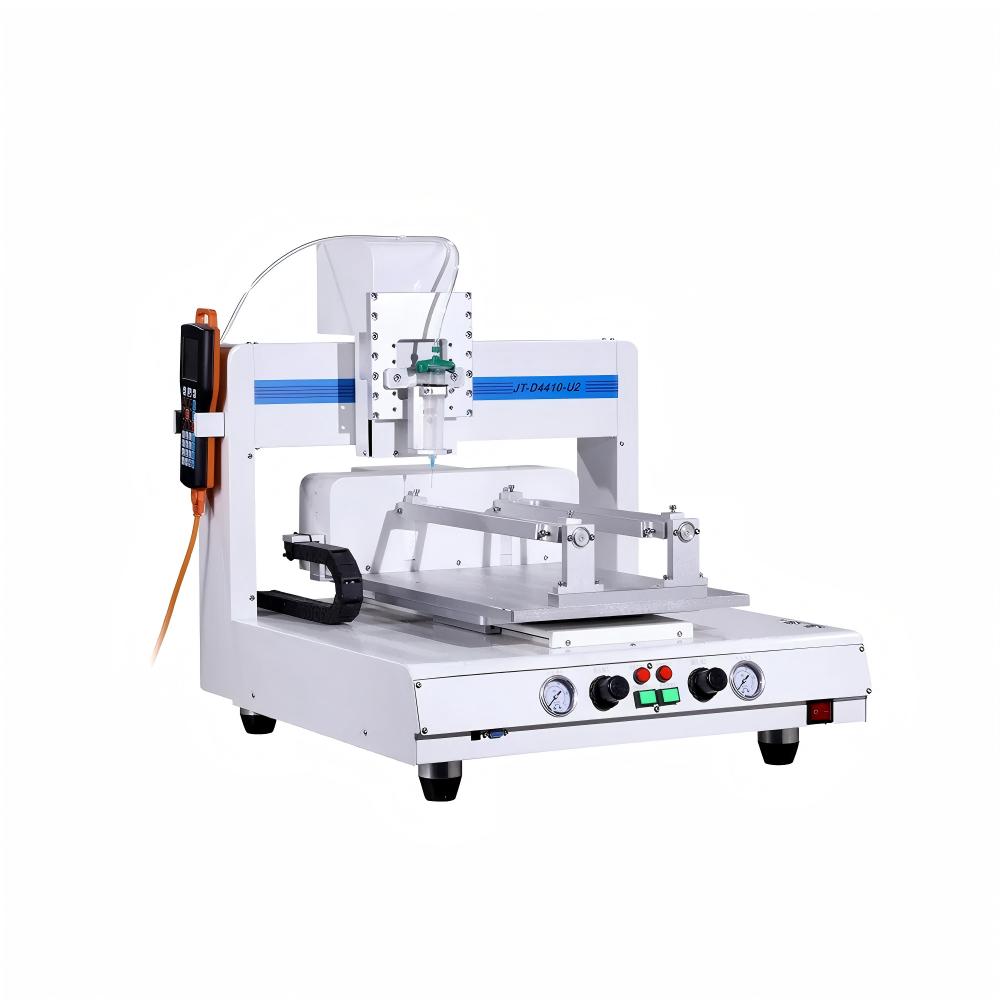
Achieving repeatable bead paths on complex automotive parts demands a level of precision that goes far beyond basic extrusion. The seal must follow sweeping curves, tight corners, and varying cross-sections without drifting or thinning. Even a small deviation can compromise the seal's ability to block water, dust, or noise. This repeatability is not just about the robot's accuracy, but also about how the material flows and how the part is fixtured during application.
On complex geometries, every bend and transition introduces potential for inconsistency. Tooling design becomes critical, as the nozzle must maintain a constant angle and standoff distance while the part moves or the robot reorients. Advanced dispensing systems often use vision or force feedback to compensate for part-to-part variation, ensuring the same bead path is laid down on every unit that comes down the line. Without that, scrap rates climb and rework becomes the norm.
Repeatable bead paths also require a deep understanding of the sealant's rheology. Different materials behave differently under shear, and a path that works for one compound may sag or slump with another. Process engineers must dial in temperature, speed, and flow rate to match the part's complexity. The result is a sealing line that looks effortless but is actually the product of tightly controlled parameters and constant monitoring.
Medical device bonding demands clean and consistent output
Achieving reliable bonds in medical devices starts with an almost obsessive focus on surface cleanliness. Even minuscule residues from machining fluids, mold release agents, or human handling can compromise adhesion and, more critically, introduce biocompatibility risks. Many manufacturers turn to plasma treatment or solvent wiping protocols, but the real challenge lies in verifying that every single component meets the same cleanliness threshold before adhesive application. A single overlooked fingerprint on a catheter hub or sensor housing can lead to a bond that passes initial inspection yet fails after sterilization cycling or prolonged exposure to bodily fluids.
Consistency is equally non-negotiable. Medical device production runs often span thousands of units, and each bond must behave identically in terms of strength, flexibility, and long-term stability. Variables like adhesive viscosity shifts due to temperature, inconsistent bead dispensing, or uneven curing energy create weak points that may only surface during accelerated aging tests. To counter this, leading manufacturers integrate closed-loop process controls that monitor dispense volume, mix ratio, and cure parameters in real time, automatically rejecting parts that drift outside tight tolerances.
The intersection of clean and consistent output is where modern bonding systems earn their keep. Robotic dispensing platforms paired with vision inspection and atmospheric monitoring can maintain a controlled microenvironment around the bond line, keeping particulates and humidity at bay while ensuring repeatable adhesive placement. Cleanroom-compatible equipment, ionized air curtains, and regular process validation via tensile or leak testing further tighten the envelope. For engineers, the goal is a bonding process so robust that even a novice operator on a night shift produces joints indistinguishable from those made by a veteran during first shift.
Packaging lines favor speed without frequent nozzle changes
In high-volume packaging environments, every minute of downtime cuts directly into throughput. Lines are increasingly engineered around the principle that the nozzle setup should stay untouched for entire production runs. Rather than stopping to swap out adhesive, coating, or coding nozzles between product batches, operators now rely on tool-free quick-release mounts and pre-calibrated nozzle arrays that lock into place without fine-tuning. This keeps the line moving at full speed and shifts changeover work to planned maintenance windows instead of mid-shift interruptions.
The push for speed has also driven a move toward multi-purpose nozzle designs that can handle a wider range of viscosities and spray patterns. Instead of maintaining a rack of specialized tips for different SKUs, a single nozzle body with adjustable swirl inserts or interchangeable orifice plates lets operators fine-tune output while the line is still running. Some systems even use automated cleaning cycles that purge residue between jobs, eliminating the need to pull nozzles off for manual scrubbing. The result is fewer touchpoints, fewer chances for misalignment, and a steadier production cadence.
However, favoring speed doesn't mean ignoring wear. Smart packaging lines now monitor nozzle performance through pressure sensors and flow meters, flagging drift before it causes rejects. When a change is finally needed, the design allows a single operator to swap the entire manifold in under two minutes—without tools and without recalibrating the pattern. This blend of monitoring and modular design means the line rarely stops for nozzle-related issues, keeping overall equipment effectiveness high and maintenance crews focused on bigger problems.
Construction and wood bonding tolerate rougher surfaces
Most construction and wood adhesives are formulated to perform well on substrates that would be considered too rough for many general-purpose bonding jobs. Concrete, brick, plywood, and sawn timber all have irregular profiles, open pores, or minor voids. Instead of demanding a perfectly flat or polished surface, these products rely on gap-filling capability and a degree of flexibility. A thicker, high-solids construction adhesive can bridge small depressions and still maintain full contact, while a wood glue with good wet tack can flow into the grain and lock mechanically after curing.
That tolerance means surface preparation can focus on removing dust, oil, and loose particles rather than achieving a mirror finish. For wood joints, light sanding that exposes clean fibers is often enough; the adhesive will soak into that roughened texture and create a bond stronger than the wood itself. For masonry or subfloor work, a rougher surface actually increases the bonding area and gives the adhesive more keying points. Users should still check the manufacturer's gap-filling limits, but in general these adhesives are designed to accommodate the unevenness found in real building materials.
Lab and prototype work benefits from quick material changeover
Swapping materials quickly sounds like a small operational detail, but in a lab or prototyping shop it changes how fast a team can learn. Instead of waiting for a machine to cool down or clearing out the previous resin, engineers can move from a rigid PLA to a flexible TPU in minutes. That kind of turnaround keeps the focus on evaluating the design, not on the logistics of the equipment.
Quick changeover also makes it practical to run side-by-side material trials. A prototype housing can be printed in ABS, PETG, and polycarbonate within the same afternoon, revealing how each one handles snap-fits, heat, or impact. Without that speed, teams often settle for a single material because switching costs feel too high. With it, the best material choice becomes a test result rather than an assumption.
For labs that juggle multiple projects, this flexibility reduces bottlenecks around shared machines. One station can shift from an elastomer for a gasket to a clear polymer for a lens mockup without a lengthy cleaning cycle. The result is less idle time, fewer scheduling conflicts, and prototypes that actually get tested in the materials they might be produced in.
FAQ
Start with your adhesive's viscosity and how much control you need over bead size. Pneumatic systems are fine for simple dot or line work, but if you're dealing with abrasive fillers or need repeatability down to a few milligrams, look at positive displacement or auger valves. Also check the wetted parts—cheaper machines often can't handle cyanoacrylates without frequent clogs.
For short runs, a time-pressure controller with a good quality syringe barrel and tapered tip is usually enough. You lose some precision compared to volumetric pumps, but it's easy to switch adhesives and clean. If you're potting dozens of units daily, a peristaltic or progressive cavity pump will cut waste and give more consistent fill weights.
Not without changing setups. Low-viscosity fluids need a pinch valve or needle valve to prevent dripping, while pastes require positive pressure and often a follow plate or cartridge ram. Some modular systems let you swap valve types in minutes, but expecting a single valve to cover a 1,000-fold viscosity range will lead to frustration.
It depends on your tolerance for rework. A handheld pneumatic gun works if an operator can control speed and placement by eye. But for arrays of dots, underfill, or sealing paths with tight curves, a benchtop robot removes hand tremors and speeds up production. The payback shows up when you stop scrapping boards due to adhesive bridging.
Keep your work area humidity under control, use luer lock caps when the machine is idle, and pick a tip diameter at least 2-3 times the largest filler particle in your adhesive. Also, a slight suck-back or anti-drip setting on the controller helps retract material after each shot. If clogs persist, switch to a positive shutoff valve instead of relying on air pressure alone.
They buy based on lowest price and then discover the machine can't handle their adhesive's chemistry. For example, moisture-curing silicones will cure inside a standard needle valve if it's not designed for that. Ask for a trial with your actual material, not just water, and check what replacement parts cost—some valves need rebuild kits every month in continuous use.
Yes, mostly because the material can set up if exposed to stray light. You need opaque or amber reservoirs and tubing, and sometimes a cooled dispense valve if the adhesive generates heat during shear. The shot size control is similar to other adhesives, but cleanliness is more critical since cured UV resin is hard to remove from valve internals.
Conclusion
Precision-driven sectors like electronics assembly, medical device manufacturing, and automotive sealing don't tolerate sloppy adhesive placement. For micro-deposits on circuit boards, a dispensing machine with fine-tipped valves and programmable shot control keeps dots and lines within tight tolerances. Medical bonding goes further, demanding not just accuracy but cleanliness—systems with disposable fluid paths or quick-purge mechanisms reduce cross-contamination risk. Meanwhile, automotive work on oddly shaped parts benefits from robotic or multi-axis units that follow complex bead paths without wandering, ensuring every seal is repeatable. These applications share a need for closed-loop feedback, so consistent output becomes the baseline, not an aspiration.
On faster-moving lines and rougher jobs, different priorities emerge. Packaging operations care about throughput, so a dispenser that holds its nozzle clear for thousands of cycles and swaps tips in seconds wins over one needing constant unclogging. Construction and wood bonding, where surfaces are rarely perfect, call for tolerant nozzles and adjustable pressure rather than ultra-fine metering. Lab and prototype settings add another twist: quick material changeover matters more than top speed, so modular cartridges or easy-cleaning reservoirs let teams switch adhesives without wasting half the afternoon. The best option, then, isn't a single machine but a match between the dispenser's strengths and the specific demands of the task.
Contact Us
Contact Person: Volien
Email: [email protected]
Tel/WhatsApp: +86 18029161762
Website: https://www.jatentech.com/