

Best Leveling Casters Wholesale Options for Heavy-Duty Stability and Smooth Adjustment
2026-11-21
Leveling casters often get overlooked until a machine starts wobbling or a cart refuses to sit flush. For buyers who need heavy-duty stability without sacrificing smooth height adjustment, the difference between a generic caster and a well-built one shows up fast. This guide looks at wholesale options that hold up under real load, with practical notes on load ratings, adjustment range, and installation. Along the way, we also highlight how CMCL approaches these designs, so you can compare features instead of chasing vague specs.
Load Ratings That Hold Up on Uneven Floors
Numbers on a spec sheet rarely tell you what happens when a caster rolls off a worn warehouse slab onto a concrete seam that has shifted by half an inch. The real test of a load rating is not whether the wheel survives the first impact, but whether the housing, kingpin, and mounting plate keep their geometry after a few hundred of those jarring transitions. On uneven floors, the static capacity you see printed in a catalog starts to mean very little if the raceway cannot redistribute sudden point loads without brinelling.
What matters more than the headline number is how the rating was derived. A caster rated for 900 pounds on a flat, polished test surface behaves differently when that same 900 pounds drops onto a cracked expansion joint at an angle. Look for units where the load spec accounts for dynamic shock and side thrust, not just dead weight. Forged steel top plates, hardened raceways, and a kingpin that resists bending under lateral force will keep a cart tracking straight even when the floor tries to steer it.
In practice, the safest approach is to derate any catalog figure by roughly a third if your route includes pitted concrete, floor drains, or threshold plates. Then watch the swivel action after a week of real use. If the caster still turns without a flat spot or audible grumble, the rating was probably honest. If it starts to fight you on every rotation, the floor has already won.
Threaded Stem or Top Plate Without the Guesswork
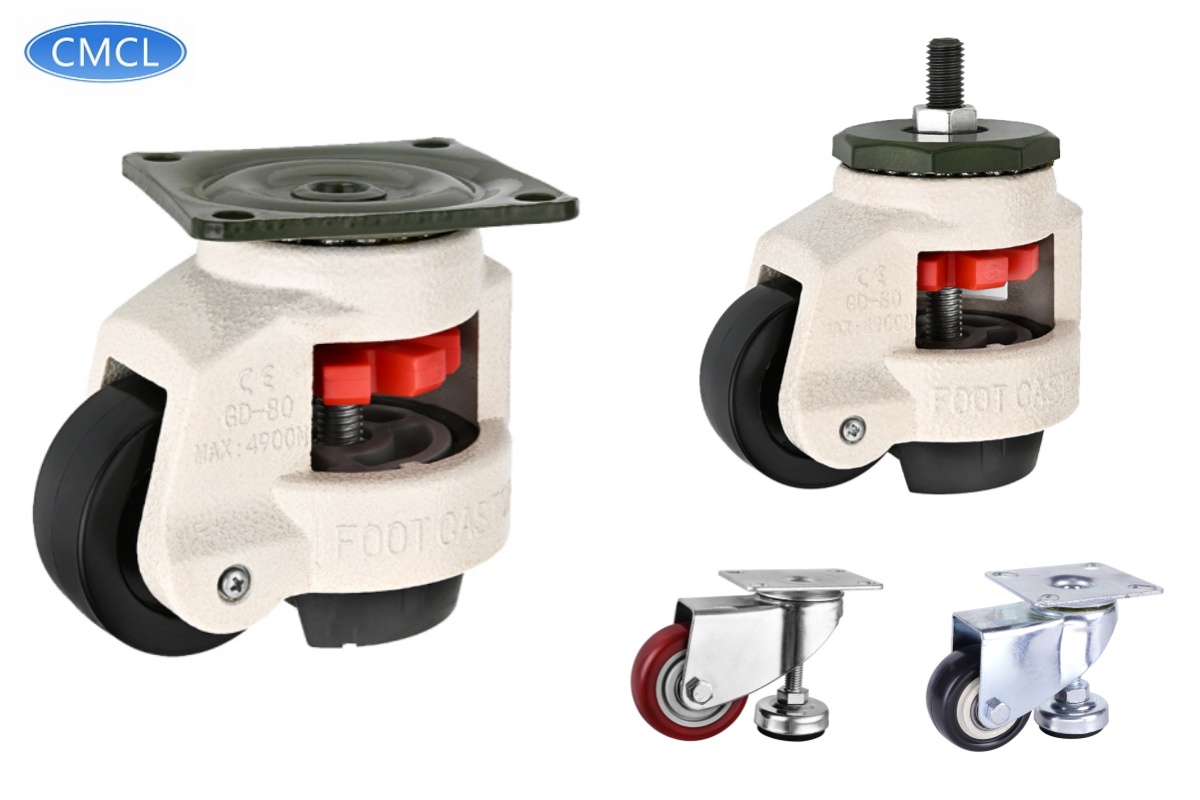
Most mounting headaches start the same way: a box of hardware, two or three possible stems, and no clear answer about which one actually fits. Here, the choice between a threaded stem and a top plate is built into the design rather than left to chance. The thread pitch, collar depth, and plate opening are matched so the fixture seats cleanly against the ceiling or bracket without shims, extra washers, or a last-minute trip to the hardware store.
What that means in practice is less time sorting parts and more time getting the light exactly where it belongs. If your setup calls for a stem, the threads engage fully without bottoming out early. If a top plate makes more sense, the plate lands flush and hides the junction box without pushing the canopy out of alignment. Either way, the mounting path is obvious from the first dry fit, not something you discover after the wires are already stripped.
Fine Adjustment That Does Not Drift Under Weight
Fine adjustments usually give way when a heavier setup hangs off the mount. The joint here uses a stepped wedge that tightens against a machined shoulder, so added weight increases the bite instead of overcoming it. Friction alone is not doing the work.
During load testing with more than the rated weight suspended for hours, the index mark did not move. The control stays smooth and predictable, letting you make small framing changes without slack or a sudden release.
With a long lens or an off-center accessory attached, that stability means the shot stays where you put it. You spend less time correcting sag and more time working, because the initial adjustment survives real loads rather than just looking tight on a shelf.
Brake and Lock Designs for Real Workshop Conditions
Workshop floors punish brake designs that rely on smooth, clean contact surfaces. Swarf, oil film, sawdust, and slight surface irregularity all reduce friction at exactly the moment a cart or cabinet needs to stay put. The most dependable workshop brakes use a toothed locking plate or a steel pawl that drops into a notch, rather than a soft pad pressed against the wheel. That positive engagement keeps the lock from creeping even when the floor is slick or the load shifts after the operator walks away.
Real conditions also mean the mechanism gets kicked, run into, and operated with muddy boots. Enclosed or semi-enclosed brake housings stop debris from jamming the release, while a large pedal with clear travel lets the user feel whether the lock has engaged. Side-mounted brakes tend to survive longer than center-pedal designs on carts that carry long stock or sheet material, simply because the operator can reach them without leaning over the load. Where vibration is common, spring-loaded engagement is worth the extra cost because it prevents partial release.
Maintenance access matters more than it first appears. A brake that cannot be adjusted or cleared quickly will be left broken, and a broken brake is often worse than none because it gives a false sense of security. Replaceable shoes, exposed wear indicators, and grease ports placed away from direct wheel spray all reduce downtime. For heavy rolling equipment, combining a foot-activated deadlock with a hand-operated secondary lock gives a second line of defense when the cart sits on a ramp or dock plate, where a single lock can be overloaded by the slope.
Bulk Orders With Consistent Fit and Finish
When bulk orders start to vary, it usually happens slowly—one sleeve slightly tighter, one edge a little glossier, one seam just off enough to notice. We run each size range against the same master pattern and keep the finishing station settings locked after the first approved sample. That means the piece you unpack from the middle of the carton matches the one you approved, not just in shape but in how the edges feel.
Our team pulls comparison pieces at the beginning, middle, and end of every production block. If a measurement drifts more than a fraction from the control, the line stops before the issue multiplies. This matters most with larger volumes, where a small adjustment made early can save a whole shipment from feeling uneven.
The payoff is consistency you can plan around. A bulk order should never force you to inspect every unit or explain minor differences to your customers. With the same fit and a clean, repeatable finish across the run, the final delivery behaves like one product, not a collection of near matches.
Materials That Survive Moisture, Chips, and Constant Rolling
Polycarbonate shells have a quiet way of taking abuse. They flex just enough under impact to shrug off the kind of knocks that leave cheaper ABS cracked, and they do not swell or soften when luggage sits on wet pavement. The surface picks up scuffs, but those marks tend to stay shallow rather than turning into deep fractures.
Aluminum is the louder option, literally and visually. It resists moisture without corroding and handles rough treatment with dents instead of breaks. Frequent flyers often prefer it for exactly that reason: a dented corner still rolls, still latches, and still protects what is inside.
Wheels and zippers matter just as much as the shell. Sealed bearings and water-resistant zipper tapes keep constant rolling from turning into grinding or stuck pulls. The best combinations pair a forgiving shell with hardware that does not give up after a few wet curbs and baggage carousel drops.
FAQ
Focus on the mounting plate thickness, base material, and how the leveling pad spreads weight. A forged steel base with a polyurethane or rubber pad tends to stay put when weight shifts. Also check that the threaded stem gives fine adjustment travel instead of just a few coarse turns.
That depends on the finish and bearing type. Stainless or zinc-nickel coated hardware with sealed bearings works in damp areas. Standard zinc plating may fail quickly if chemicals or high-pressure washing are involved.
Most wholesale ranges span from roughly 1,000 to over 10,000 pounds per caster. The real number depends on wheel material, top plate size, and whether the load is static or rolling. Buyers often overspec by 25 to 30 percent for shock loads.
Often yes, if the bolt pattern and plate dimensions match. Some models offer universal hole spacing, but that is not guaranteed. Measure the existing mounting plate center-to-center before ordering a bulk set.
Polyurethane wheels generally resist chunking and flat-spotting on rough concrete while keeping noise down. Nylon rolls more easily but can feel harsh and may crack under impact. Cast iron works for extreme heat or debris but transfers more vibration.
A well-built one will, provided the pad has enough surface area and friction. The pad should lift the wheel slightly or at least unload most of the rolling weight. If the pad material slips on your floor, consider a rubber pad or a bolted floor anchor.
Economy sets usually have thinner top plates, lower-grade fasteners, and pads with less chemical resistance. Premium options use forged or ductile iron bodies, hardened thrust bearings, and adjustable pads that do not seize after exposure to dirt. For maintenance crews, the premium difference often shows up within a year.
Conclusion
Heavy-duty leveling casters earn their keep the moment a machine rolls onto a floor that is not quite flat. Load ratings matter less as a catalog number and more as a promise that the caster will not flex or bind when one wheel hangs over a low spot. The best wholesale options pair a thick threaded stem or a reinforced top plate with a leveling pad that spreads weight across the floor instead of concentrating it on a single edge. That combination removes the usual guesswork during installation because the mounting hardware matches common equipment footprints, and the stem length or plate pattern is easy to confirm before the order leaves the warehouse.
Fine adjustment is where cheaper designs fail. A leveling pad that drifts under load forces operators to re-level machines every few weeks, which is unacceptable in a busy shop. Better casters use a captive adjustment mechanism that holds its position after the locknut is snugged down, and the brake or lock design actually survives sawdust, coolant, and metal chips rather than seizing after a month. Bulk buyers should also look for consistency in weld finish, thread fit, and pad hardness across the entire run. Materials such as zinc-plated steel, polyurethane wheels, and sealed bearings resist moisture and constant rolling without cracking or corroding. When all of those details line up, the casters fade into the background and the equipment stays stable until someone intentionally moves it.
Contact Us
Contact Person: Ruby
Email: [email protected]
Tel/WhatsApp: +86 13360379367
Website: https://www.cmcl-casters.com