
China Collapsible Silicone Kettle Makes Packing Light Surprisingly Easy
2026-11-16
A collapsible kettle from China sounds like a gadget you'd toss in a drawer and forget—until it saves you from cold coffee in a hotel room. Qunhao has turned that idea into a silicone kettle that folds nearly flat, boils water when you need it, and takes up less space than a rain jacket. It's the kind of packing upgrade that doesn't ask you to sacrifice hot meals or tea on the road. Here's why it earns a spot in the bag.
A Full-Size Kettle That Folds Down to Almost Nothing
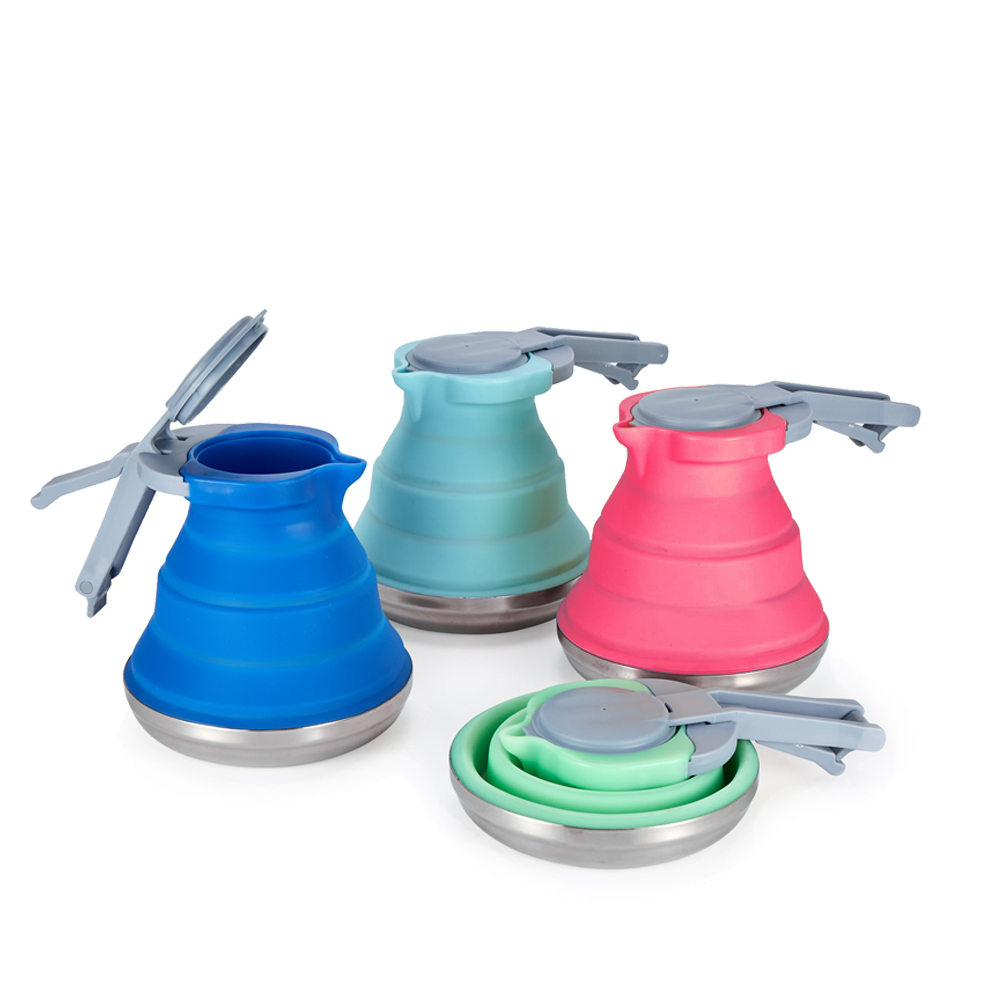
Most collapsible kettles shrink their capacity, leaving you with a toy-sized pot that barely boils a cup. This one keeps a full 1.2-liter body when open, so you can brew for a group or prep pour-over water without refilling. The trick is a silicone midsection that holds its shape under heat but compresses to about a third of the height once the stainless base and lid nest together.
On a camp stove or induction burner, the folded-down unit sits low enough to slide into a side pocket of a backpack, yet the rigid rim and base give it the stability of a standard kettle. The handle locks upright for pouring and folds flat against the wall for storage, so there is no awkward tangle of straps or hinged parts sticking out.
Day hikers, van-lifers, and tiny-kitchen cooks will notice the difference immediately: it stows like a collapsed bowl but performs like the kind of kettle you would leave on the stove at home. The wide mouth makes cleaning straightforward, and when packed away it takes up less room than a rolled-up towel, leaving space for the things you would otherwise leave behind.
What the Weight Difference Feels Like After a Long Packing Day
By the time you've shouldered your pack for the tenth hour, the difference between a 30-pound load and a 34-pound load stops being a number on a spreadsheet. It settles into the base of your neck, where the straps bite a little harder, and into the small of your back, where sweat gathers under the hip belt. You find yourself stopping more often, not because you need rest, but because the extra pressure makes every mile feel like it's been stretched by twenty minutes.
The odd part is how the sensation arrives in waves. In the morning, four extra pounds can feel like nothing—just a slightly tighter buckle and a faint pull across the shoulders. But after a long day, that same weight seems to find every sore spot you've been ignoring. Your feet land a bit heavier, your pace shortens, and even small climbs demand a forward lean that leaves your lower back tired in a way lighter days never do.
There's also the mental side. A pack that's only marginally heavier doesn't just wear on your body; it quietly drains your patience. You catch yourself eyeing the trail ahead with less curiosity and more calculation, counting switchbacks, checking the time, and rehearsing the moment you can drop the pack at camp. The difference isn't dramatic, but by evening it's written all over your posture.
The Silicone Body That Handles Boiling Water Calmly
Pouring a full kettle into this thing feels almost anticlimactic. The silicone doesn’t flinch, buckle, or give off that faint hot-plastic smell you brace for. It just sits there, taking the heat with a kind of quiet steadiness, and a few minutes later the surface is still easy to touch near the rim while the water inside stays hot.
What makes it work is the thickness and the way the walls keep their shape instead of turning wobbly when the temperature climbs. You can press a finger against the side mid-pour and feel a bit of give, but no collapse. That balance between flex and structure is the whole point: it absorbs the shock of boiling water without feeling rigid or brittle afterward.
After it cools, there is no lingering smell or cloudy film left behind. A quick rinse is usually enough, and it dries without holding onto any stale water marks. For anyone who has had cheaper silicone warp or stain at the first sign of heat, this is the kind of small reliability that becomes hard to live without.
Making Coffee and Instant Meals in Places Without a Kitchen
A travel kettle changes what's possible in a hotel room or dorm. I keep a compact 0.5L electric kettle, a small stainless steel French press, and a handful of pre-ground coffee bags. Boil the water, let it sit for thirty seconds so it won't scorch the grounds, then press slowly. If the sink is your only cleanup space, line the press with a paper filter before adding coffee—it keeps the mesh from clogging and makes disposal tidier.
Instant meals don't have to end at cup noodles. Rolled oats, couscous, instant mashed potatoes, miso paste, and dehydrated beans all work with nothing more than hot water and a lidded bowl. I lean on a wide-mouth thermos for anything that needs to steep: add the dry ingredients, pour in boiling water, close it, and wait eight to ten minutes. It holds heat better than an open bowl and doubles as the eating container, so there's less to wash.
The unglamorous part is smell and cleanup. A kettle used for noodles will carry that flavor into tomorrow's coffee unless you rinse it immediately and leave the lid open to dry. In shared or rented spaces, I avoid cooking anything with strong spices or fish, and a small ziplock of dish soap, a sponge, and trash bags lives in the same dry bag as my food kit. Wipe down the counter and run hot water through the press and thermos right away—it keeps the whole setup from becoming the reason housekeeping knocks.
How It Fits Into Carry-On Bags Without a Fight
It doesn’t demand the prime real estate of your carry-on. The shape is low and flexible enough to slide down the side of a backpack or lie flat against the bottom before you pile anything else on top. Squeeze it past the frame of a roller bag and it tends to settle into that awkward space near the handle instead of pushing the zipper back at you.
When the bag is already half full, that’s where it works best. You can fold it once, tuck it around a packing cube, or let it curve along the front panel. It won’t hold a rigid shape that forces you to rearrange everything else around it.
The material also helps. It compresses just enough under pressure without feeling flimsy, so closing the lid isn’t a wrestling match. You get the extra layer you need without turning your carry-on into an overstuffed brick.
Drying and Storing It So It Never Smells Like the Last Trip
That stale, sour note almost never comes from the trip itself. It comes from packing something away while it still held a little moisture, then letting it sit in the dark. I started treating dry time as part of the trip, not an afterthought. Hang everything in moving air, away from direct sun, and wait until the fabric feels crisp at the seams. If there is any coolness against your skin, it is not ready.
For storage, I avoid anything with a tight lid. That just traps whatever is left. Instead I use old pillowcases or mesh laundry bags, and I toss in a piece of cedar or a dry tea bag. It keeps the smell neutral without making everything reek of fake lavender. Bulky items stay loose on a shelf rather than crushed into a duffel.
The real test is the first minute you open the bag next time. If it smells like nothing, you did it right. If it smells like the last trip, check the spots you forgot: the inside of shoes, the liner of a jacket, the strap padding on a backpack.
FAQ
It flattens down to a small disc, so it takes up far less room in a backpack or suitcase while still holding a full pot of water.
Yes, food-grade silicone can handle high heat without releasing harmful chemicals or leaving a plastic-like taste in your drink.
Most versions collapse to roughly the height of a thick paperback, making it easy to slip into a side pocket or a small carry-on pouch.
It works well on electric coils, gas stoves, and camping burners, but it should not be placed directly over a strong open flame or used on induction cooktops.
There can be a faint silicone scent at first, but boiling water with a little lemon juice or baking soda usually removes it after one or two uses.
You can rinse it with warm soapy water, turn it partly inside out to reach corners, or put it on the top rack of a dishwasher and let it air dry completely.
Backpackers, van campers, hotel guests who prefer their own hot drinks, and anyone trying to keep their luggage light without giving up a warm meal or tea.
Conclusion
There’s something quietly practical about a travel kettle that starts out full-size and then collapses into a flat, almost weightless disc. Mine holds enough for a proper mug or a small pour-over, yet packs down to a fraction of its working height. The first time I slipped it into a carry-on, I kept unzipping the bag to check it was really there because the added weight barely registered. After a long day of walking through terminals and dragging luggage, that missing bulk matters more than the spec sheet can explain. It sits next to packing cubes without the usual shoving match, and the silicone body stays composed even with a full rolling boil inside. It’s the kind of item that earns space by being easy to forget in the bag.
What really sold me was using it in a bare hotel room with no kitchen in sight. Coffee, oatmeal, instant noodles — all pulled together with a quick plug and a short wait, no lobby microwave involved. The wide opening makes rinsing straightforward, and the lid folds out of the way while you pour. Once it’s empty, leaving the body popped open for a few minutes of air keeps mildew and that stale “last trip” smell from taking hold; the silicone doesn’t cling to odors the way you’d expect. Fold it down, tuck it into its pouch, and it disappears until the next morning when hot water becomes the easiest part of the day.
Contact Us
Contact Person: Cecilia
Email: [email protected]
Tel/WhatsApp: 8619057488653
Website: https://silwatbottle.com