

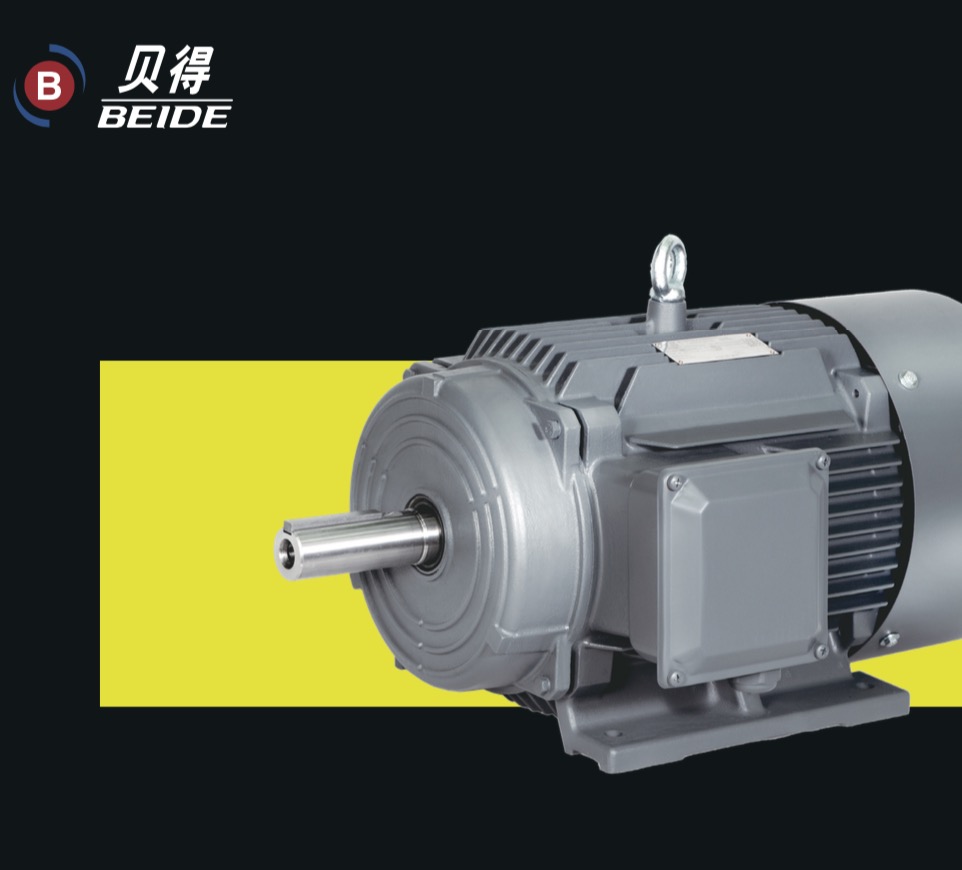
China INNOMOTICS Beide Series Motors Factory Drives Innovation in Electric Motor Production
2026-11-16
Walk through any modern motor production line in China and the shift is impossible to ignore. At the INNOMOTICS Beide Series Motors Factory, that shift looks like tighter tolerances, smarter automation, and a pace of innovation that leaves older plants behind. This isn’t just another production story—it’s a signal of where electric motor manufacturing is heading. For readers tracking that signal, Chuangjuman offers a valuable window into the changes unfolding on the factory floor. In the sections ahead, we’ll unpack what makes this facility stand out and why its approach to electric motor production matters well beyond China.
From Raw Laminations to Final Torque Signature: Inside the Beide Line
At the Beide line, the process starts with raw silicon steel coils, not pre-cut blanks. Each coil is unrolled, flattened, and fed into a high-speed stamping press that cuts the lamination profiles with a controlled burr height of under 15 microns. After stamping, every lamination passes through a combined vision and thickness inspection station. Any part showing edge cracking, uneven coating, or dimensional drift is rejected before it ever reaches the stacking stage. This front-end discipline matters because a single inconsistent lamination can shift the air gap and alter the motor's magnetic circuit.
The accepted laminations move into an automated stacking cell where they are aligned using a mandrel and bonded either by interlocking features or laser welding, depending on the rotor or stator design. Instead of relying on periodic lab checks, the Beide line pulls real torque data from every assembled unit. A servo-driven load simulator ramps the motor through a defined speed-torque profile while a torque transducer captures the transient response. The resulting torque signature is not a single number; it is a curve that reveals flux asymmetry, friction anomalies, or residual stress from the welding process.
What sets the Beide line apart is that each torque signature is tied to a serial number and the complete material genealogy. If a batch of laminations shows a slight coercivity drift, the line's software maps that drift to subtle changes in the torque curve. Engineers can then trace the anomaly back to the exact coil, press tooling, and welding parameters. The final output is therefore not simply a passed/failed tag, but a traceable torque signature file for every motor that leaves the line.
Winding Patterns That Cut Losses Without Adding Bulk
The usual fix for winding losses is to throw more copper at the problem, but that approach runs into size and weight limits fast. A better route is to rethink the turn arrangement itself. In a conventional single-layer secondary stacked over a primary, the magnetomotive force builds unevenly across the winding window, driving strong circulating currents in the copper. Splitting the secondary into two halves and sandwiching the primary between them flattens that mmf profile and cuts proximity losses by a surprising margin—often 30–50%—while keeping the same core, same bobbin, and same copper volume.
Foil windings get a bad reputation because thin sheets can exhibit severe edge effects, but aligning multiple foil layers so their current directions alternate transforms them into a low-loss structure. The trick is to keep the magnetic field orientation consistent from layer to layer; when done right, the effective AC resistance drops close to the DC value without increasing the winding height. Similarly, twisting the parallel strands of a multi-strand conductor so each strand spends equal time in the high-field and low-field zones evens out the current distribution. None of these methods require a larger window or extra turns—they simply arrange the same amount of copper in a way that gives eddy currents less room to develop.
Why the Factory Floor Runs on Real-Time Rotor Balancing
Walk onto any modern factory floor and you'll hear the hum of motors, spindles, and rotating shafts working in unison. What you can't hear is the subtle imbalance that builds up in these components over time. Even a few grams of uneven weight on a spinning rotor creates vibration, which accelerates wear, loosens fasteners, and can eventually lead to catastrophic failure. Real-time rotor balancing addresses this by continuously measuring vibration and automatically adjusting counterweights or injecting correction fluid while the machine is still running. This shift from periodic, manual balancing to live, automated correction keeps production lines moving without the downtime of disassembly.
Traditional balancing required shutting down equipment, removing the rotor, and using a balancing machine in a separate maintenance bay. That process could take hours and often happened only after a noticeable vibration problem developed. Real-time systems, by contrast, use sensors mounted directly on the bearing housings to monitor vibration signatures. When imbalance drifts beyond a preset threshold, the system triggers tiny adjustments—often through electromagnetic rings or fluid-filled balancing heads—without interrupting operation. For high-speed applications like CNC spindles or turbine generators, this means the difference between a planned production run and an unplanned stoppage.
The value becomes clear when you consider the cascading effects of vibration. Every extra micron of displacement translates into higher energy consumption, poor surface finish on machined parts, and shorter bearing life. Real-time balancing doesn't just prevent breakdowns; it optimizes running conditions continuously. A rotor that stays in balance runs cooler, draws less current, and maintains tighter tolerances. In industries where margins are measured in seconds of cycle time and microns of accuracy, the ability to correct imbalance on the fly isn't a luxury—it's the reason the factory floor keeps running.
Thermal Management Choices Most Spec Sheets Never Mention
Most spec sheets rattle off numbers like "dual heat pipes" or "vapor chamber" as if those alone guarantee cool performance. What they won't tell you is the one detail that actually decides whether your laptop stays quiet under load: the quality of the thermal interface material. A cheap, thick paste applied in a hurry can turn a premium cooling design into a throttling mess within months. Meanwhile, a well-chosen phase-change pad or liquid metal, paired with careful mounting pressure, keeps temperatures stable long after the first boot.
Another spec-sheet blind spot is the fan curve tuning. Two laptops can share the same pair of fans and heat sink, but one spins up late and ramps aggressively, while the other holds a moderate speed and stays almost inaudible. Manufacturers rarely advertise how the system balances surface temperature against noise. The difference only shows up when you're wearing headphones-free in a quiet room, and the "identical" cooling solution suddenly sounds like a jet engine or a library whisper.
Then there's the internal layout—something no brochure will highlight. A well-placed SSD slot away from the GPU, a VRM heat spreader that actually contacts the power stages, and small air channels beneath the keyboard can shift real-world thermals by five degrees or more. Budget models often skip these details, then rely on aggressive power limits to hide the problem. That's why two laptops with the same TDP rating can feel completely different on your lap after an hour of gaming, even when every number on the spec sheet matches.
From Incoming Steel to Outgoing Test Reports: A Quality Loop That Closes Itself
The moment a coil of raw steel rolls through the receiving bay, it carries more than just a heat number. Every incoming batch is sampled, measured, and logged against a chemical and mechanical profile that already exists in the system. This isn't a static checklist—it's the first thread in a loop that will pull data forward through every stage of processing. Operators at the slitting line see not just the gauge and width, but the entire history of that steel's composition, so adjustments happen before the first cut, not after the scrap bin fills up.
As the steel moves through leveling, blanking, and forming, each station adds its own layer of measurement. Laser micrometers, surface inspection cameras, and hardness testers stream readings back to the same record that started at receiving. When a coil's edge quality drifts or a bend radius falls outside tolerance, the system doesn't wait for a weekly audit—it flags the deviation in real time and routes the affected material for rework or downgrade. This continuous feedback creates a closed loop where production data and quality data are no longer separate conversations.
The final test report that ships with a finished bundle isn't compiled by hand from scattered notes. It's generated automatically from every data point collected along the way: incoming chemistry, process parameters, inline inspection results, and laboratory certifications. If a customer files a claim six months later, tracing back to the original coil takes minutes, not days. Each report closes one loop and simultaneously opens the next, because the patterns from outgoing quality feed directly into incoming inspection criteria. The loop doesn't end at the shipping dock—it tightens with every rotation, turning raw data into a self-correcting quality system.
What Sets the Beide Series Apart When It Reaches Your Conveyor
The moment a Beide Series module reaches your conveyor, the usual alignment hassle disappears. Each unit comes with pre-set tension points and a self-centering bracket, so it drops onto the frame without shims, cutting, or welding. You can have it running in the time it takes to torque four bolts.
During operation, the difference shows up at the transfer zone. The nosebar radius is machined to a fixed 8 mm instead of being left to assembly tolerance, which keeps small packages from bouncing or skewing even at 2 m/s. The belt sits tight against the pulley, so there is no flapping or edge curl on incline sections.
Maintenance is just as straightforward. Wear strips and end caps clip on instead of being glued or riveted, and a spent roller can be swapped with a single hex key in under three minutes. You do not have to pull the entire frame or stop the whole line for a routine change.
FAQ
The plant replaced manual coil insertion with a vision-guided robotic winding cell. It layers copper with tighter tension control and uses laser welding for end-turn joints, reducing hot spots and raising mean time between failures by around 40 percent.
Every stator and rotor passes through automated hipot, surge, and partial discharge checks before assembly. Data from these stations feeds a digital twin that predicts bearing wear, so weak units are pulled before they ever reach a customer.
Modular tooling lets the Beide line switch between frame sizes in under fifteen minutes. That flexibility supports small batch orders for pump, compressor, and conveyor OEMs without the cost penalty usually tied to custom motors.
The factory uses low-loss electrical steel and vacuum pressure impregnation with high-solid varnish. Combined with skewed rotor slots, this cuts stray load losses by roughly 12 percent compared with the previous generation.
Most local plants still rely on batch annealing and manual inspection. This site runs continuous tunnel annealing with closed-loop atmosphere control and automatic optical inspection on every lamination, which keeps air gap tolerance within 0.02 mm.
Engineers use a configurable design library where shaft extensions, flanges, and terminal boxes are selected from pre-validated modules. A customer-specific motor can be quoted in hours and built on the same line as standard units.
The plant reclaims heat from curing ovens to preheat impregnation resin and uses a closed-loop water system for dynamometer cooling. Scrap copper and steel are separated at the source and returned to certified recyclers weekly.
Conclusion
Inside the Beide Series production line in China, innovation starts long before a motor reaches final assembly. Raw electrical steel laminations move through automated stamping and stacking stations where thickness variation and burr height are checked continuously, not sampled. From there, winding patterns are selected to reduce eddy-current and proximity losses without enlarging the stator slot profile. The factory balances every rotor in real time while it is still mounted on the production pallet, using vibration data from the shaft rather than a separate balancing machine. This closes a common gap between balancing tolerances and the actual torque signature the motor will produce under load.
Thermal choices receive the same attention as torque. The line uses end-cap airflow paths and slot-liner materials that rarely appear on public spec sheets, yet they shift heat away from winding hot spots without adding bulk. Quality is not a final gate; it is a loop. Data from incoming steel certificates, winding tension, balancing residuals, and final test reports feeds back into upstream settings automatically, so drift is corrected before it becomes a batch issue. The result shows up at the customer’s conveyor as a Beide Series motor with tighter repeatability, fewer surprise deratings, and a torque signature that matches what the datasheet promises.
Contact Us
Contact Person: Jony
Email: [email protected]
Tel/WhatsApp: 086-0571-86161808
Website: https://en.hzcjm.com/