

China KYN28-12 Medium Voltage Switchgear: A Comprehensive Guide
2026-11-02
When a single equipment failure can halt production or compromise safety, the medium voltage switchgear you choose matters more than most people realize. The China KYN28-12 has earned its reputation as a workhorse in distribution networks, but what exactly sets it apart? MOLDVOLT has spent years refining this design to meet demanding industrial and commercial applications. In this guide, we’ll walk you through the core strengths, typical use cases, and practical considerations for the KYN28-12—so you can see whether it’s the right fit for your power system.
Decoding the KYN28-12's Role in Medium-Voltage Distribution
The KYN28-12 switchgear occupies a practical niche in medium-voltage networks, not because of any single breakthrough feature, but because its design aligns with how maintenance crews and plant engineers actually work. The draw-out breaker compartment, for instance, lets a technician isolate a circuit without wrestling with bolted bus connections or risking exposure to live parts. This seemingly mundane detail reduces downtime during routine testing or fault clearing, which in turn keeps production lines running. In an era where reliability is often treated as a checklist item, the KYN28-12 reminds us that true dependability comes from reducing the friction of human interaction.
Beyond its mechanical convenience, the switchgear’s internal arc classification deserves closer attention. Many medium-voltage cabinets promise safety, but the KYN28-12 backs it up with a tested arc-resistant structure that redirects pressure and hot gases away from the operator. This is not just a compliance measure; it changes how confidently a facility can place the gear in occupied areas or near critical equipment. By coupling this with interlocking mechanisms that prevent misoperation, the unit turns what could be a high-risk zone into a predictable, almost boring part of the plant—exactly what you want from infrastructure that runs for decades.
Integration also sets the KYN28-12 apart from older, fixed-configuration switchgear. Its compact footprint and modular busbar system allow it to slip into substations originally designed for lower fault levels, without triggering a complete rebuild. Utilities and heavy industries facing incremental expansion find this particularly useful: a new feeder or motor circuit can be added by sliding in another breaker truck, rather than shutting down an entire section. That flexibility, combined with a design that doesn’t demand exotic spare parts, gives the KYN28-12 a subtle staying power that more specialized or proprietary gear often lacks.
Metal-Clad Compartmentalization: More Than Just a Box
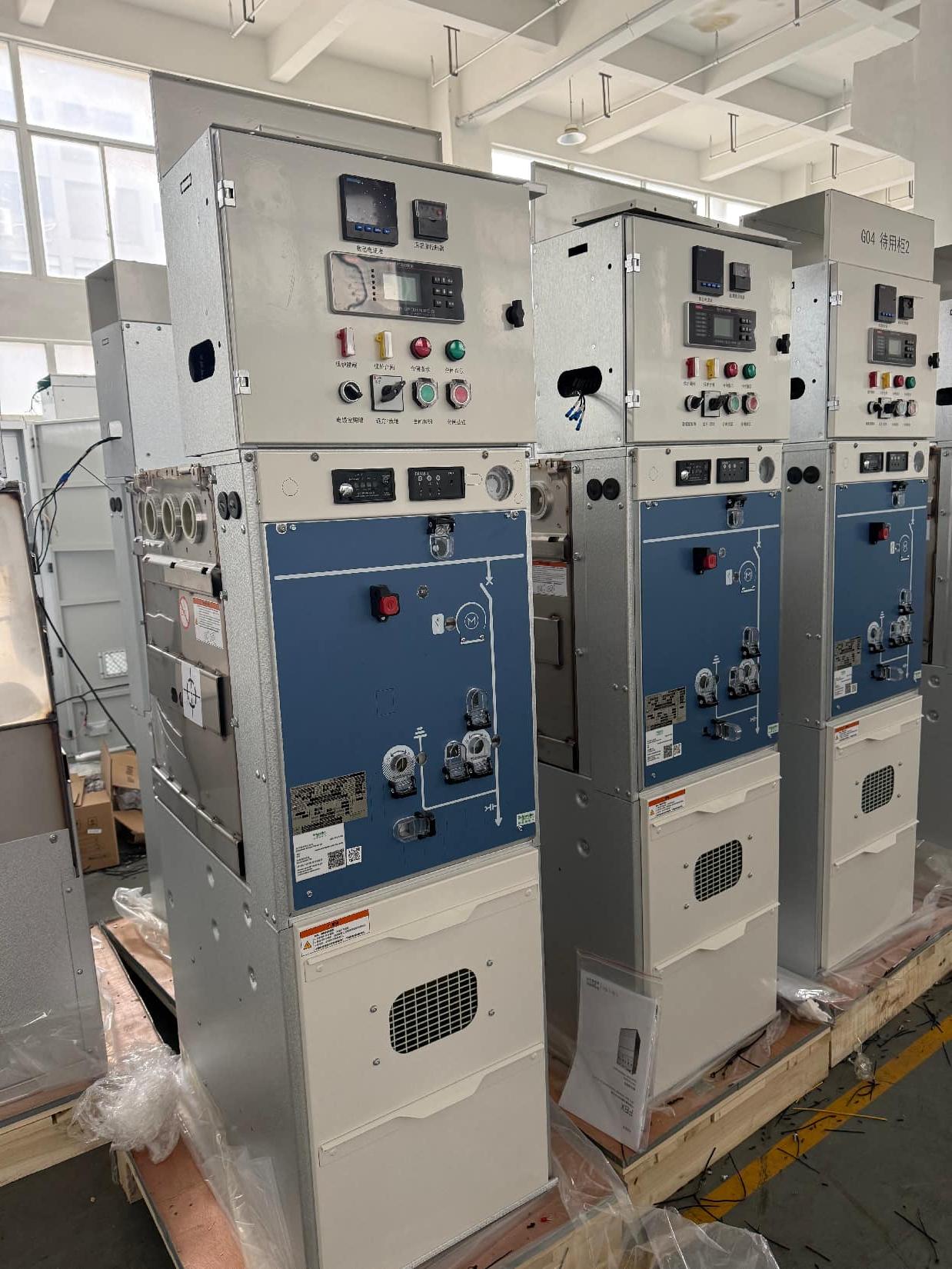
Metal-clad compartmentalization is often reduced to the idea of steel barriers separating live parts, but that misses the point. The real job is to contain an arc fault before it becomes a threat to anyone standing nearby. Each compartment—bus, breaker, cable—has to withstand pressure, heat, and flying debris long enough for protective devices to clear the fault. This isn't just about putting walls around components; it's about giving the switchgear a controlled failure path.
A well-designed compartment does more than separate. It channels hot gases away through dedicated vents, keeps insulation from accumulating moisture, and allows a technician to open one section without exposing live parts in another. The materials and fasteners matter too. Hinged doors, bolted covers, and gaskets all have to work together under short-circuit conditions, not just in a clean factory test.
On site, this translates into fewer forced outages. If a cable compartment develops a fault, the bus and breaker compartments can remain intact, so the damage is limited and repairs are quicker. Maintenance can often be done on one compartment while the rest of the switchgear stays energized. That's the real value: compartmentalization doesn't just protect equipment from the outside world—it protects the outside world from the equipment.
Interlock Systems That Make Operator Errors Nearly Impossible
Interlocks don't ask for attention or expect perfect judgment. They step in before an operator can make a mistake by physically or logically blocking a dangerous action unless a specific sequence of safe conditions is already met. A simple guard interlock on a machine door, for instance, cuts power to the rotating spindle the moment the door begins to open. There is no warning buzzer that can be ignored, no procedure to remember under pressure. The machine simply cannot run with the guard open, so the error never has a chance to happen.
Some designs go further and force the correct action before any risk appears. Two-hand control systems require both hands to press separate buttons simultaneously to start a press cycle, which means the operator's hands cannot be inside the point of operation when the ram comes down. Trapped key interlocks take a different route: a key must be removed from one lock and inserted into the next to authorize a sequence of operations, making it impossible to open a downstream access door while upstream energy is still isolated. These systems don't make workers more careful; they make the unsafe action physically unavailable, which is why they are so effective at eliminating whole categories of operator error.
Choosing the Right Internal Arc Classification for Your Site
Internal arc classification rarely begins with the equipment itself. It starts with the site: the room’s dimensions, the presence of non-technical personnel, and whether the switchgear sits in a locked substation or a shared utility corridor. A classification that works for a remote industrial plant may be dangerously optimistic for a hospital basement or a university campus. Before looking at test reports, map every point where a person could stand during an arc fault—including doorways, ventilation openings, and cable trenches—and decide how much exposure is actually possible.
The IEC 62271-200 framework splits internal arc performance into accessibility classes: A for authorized personnel only, B for areas where the public might be present, and C for pole-mounted equipment accessible from all sides. Choosing between them is not simply a compliance checkbox. Class B demands verification on all accessible sides, which often forces a larger enclosure or additional arc ducts. Class A may be sufficient for a fenced-off substation, but only if access controls are enforced every day, not just on paper.
Beyond the accessibility class, the real choice comes down to fault current and duration. A 25 kA classification for 0.5 seconds may look impressive on a spec sheet but tells you nothing if your site’s prospective fault level is 31.5 kA or the upstream protection cannot clear the fault that quickly. Match the internal arc rating to the actual protection study, not to a generic design standard. Then revisit the physical installation: anchor points, pressure relief paths, and ceiling clearance all influence whether the tested performance survives contact with your site’s layout.
Practical Maintenance Routines That Extend Service Life
Many equipment failures trace back to skipped basic checks rather than major part defects. A five-minute routine before each use—wiping down surfaces, verifying fluid levels, and listening for unusual sounds—prevents small issues from turning into expensive repairs. For rotating parts, a few drops of the correct lubricant at the recommended interval does more for longevity than any aftermarket upgrade.
Keep a simple logbook, even a digital note on your phone. Record dates, hours of operation, and any adjustments made. Over time, patterns emerge: a filter clogging faster than expected, a bearing running warmer than usual. Catching these trends early lets you replace a $10 seal instead of a $200 assembly. The log itself is not the goal; it is the habit of reviewing it weekly that pays off.
Do not overlook the unglamorous tasks. Check tire pressure on wheeled equipment, clean battery terminals, and inspect belts for glazing or cracks. Corrosion is a silent killer—spray exposed metal with a protective coating before storage, and store items off damp floors. These routines take less time than reading a warranty claim form, and they keep your tools and machines out of the scrap pile.
Retrofitting Intelligence Into Existing KYN28-12 Panels
Most KYN28-12 panels still run as isolated electromechanical units, with no visibility into contact wear, busbar heating, or partial discharge. Retrofitting intelligence starts by attaching non-invasive temperature sensors to critical joints and cable terminations, while compact current transformers or Rogowski coils tap into the existing secondary circuits. These additions pick up early signs of loose connections, oxidation, and insulation stress without disturbing the primary conductors or existing protection settings.
Because legacy panels rarely include a communication backbone, a parallel wireless sensor network often works better than trying to wire every compartment. Small battery-powered or energy-harvesting nodes placed inside the cable room, breaker compartment, and busbar housing send readings to a gateway mounted in the low-voltage section. The gateway buffers data locally, applies alarm thresholds, and forwards selected events to a control room or asset management system. This keeps the retrofit independent from the original relay scheme while still giving operators real-time condition data.
Once the sensors are in place, maintenance shifts from fixed intervals to condition-based decisions. Trends in temperature rise, breaker operation counts, and partial discharge levels reveal which panels need attention before a failure occurs. Since the existing interlocks, grounding switch, and mechanical safety features remain untouched, the upgrade can be phased across multiple feeders during routine outages. That makes it possible to bring older KYN28-12 switchgear into a modern monitoring environment without the cost and risk of full replacement.
FAQ
The KYN28-12 is an armored, withdrawable, metal-enclosed switchgear rated for 12 kV. It is built around a moveable truck that holds the circuit breaker, allowing quick isolation and replacement without de-energizing the entire busbar. Typical installations include power plants, substations, industrial plants, and large commercial buildings where 3.6–12 kV distribution is needed.
A standard cubicle has four dedicated rooms: the circuit breaker truck compartment, the busbar compartment, the cable compartment, and the low-voltage relay/instrument compartment. The grounded metal partitions contain arc faults and hot gases inside one compartment, protecting maintenance personnel and preventing a single fault from cascading into adjacent sections.
The mechanical and electrical interlocking system enforces five rules: preventing the breaker from being racked in or out while closed, preventing the breaker from closing unless it is fully in the working or test position, preventing the earthing switch from closing while the breaker is in service, preventing entry into the live cable compartment unless the earthing switch is closed, and preventing re-energization of an earthed circuit. This makes misoperation physically impossible rather than just discouraged.
Standard ratings are 12 kV rated voltage, 630 A to 3150 A rated current for the main busbar and branches, and 25 kA to 40 kA short-time withstand current (often 31.5 kA for many utility projects). Power frequency withstand is 42 kV for 1 minute, and lightning impulse withstand is 75 kV. The degree of protection is usually IP4X for the enclosure and IP2X between compartments.
The primary Chinese standard is GB/T 3906 (equivalent to IEC 62271-200). Many manufacturers also certify to IEC 62271-100 for the circuit breaker and IEC 62271-102 for the earthing switch. Buyers should request full type-test reports covering temperature rise, short-circuit breaking, and internal arc classification (IAC) if personnel safety near the switchgear is a concern.
Maintenance is mainly visual and mechanical: check for dust, moisture, and signs of overheating on busbar joints and cable terminations; exercise the breaker truck and shutter mechanism; lubricate moving parts with the specified grease; verify contact resistance and insulation resistance of the vacuum circuit breaker; and carry out a functional test of all interlocks and protection relays. Most utilities perform a minor inspection annually and a major overhaul after 10–15 years or after a high fault-current interruption.
Its modular withdrawable truck design reduces downtime, the fully armored compartments improve safety, and the wide range of rated currents and breaking capacities fits most MV applications. Chinese manufacturers have also developed a mature supply chain for vacuum interrupters and copper busbars, which lowers cost while still meeting international type-test requirements when specified and audited properly.
Conclusion
The KYN28-12 medium voltage switchgear has cemented its place as a workhorse in China’s power distribution networks, handling 12kV class operations with a reliability that belies its compact footprint. Far from being just another metal box, its compartmentalized design physically isolates the busbar, circuit breaker, cable, and low-voltage control sections, preventing fault propagation while allowing safe access to one compartment without de-energizing the entire panel. This metal-clad approach, combined with robust interlocks that block closing the breaker unless the door is shut, earthing switch in the correct position, and trolley fully racked in, turns what could be a routine operator mistake into a near impossibility. The result is a switchgear line that earns trust not through marketing claims but through a mechanical logic that punishes carelessness before it becomes an incident.
For engineers specifying a KYN28-12 installation, the internal arc classification is not a one-size-fits-all decision; sites with tight corridors or frequent human traffic may justify the stricter IAC A FLR rating, while remote substations might accept a lower class if blast relief ducts are already in place. Once commissioned, practical maintenance separates long-serving units from those that degrade early: monthly visual checks of contact heating, annual greasing of the racking mechanism, and thermographic scans under load catch issues before they force an outage. And for fleets already in service, retrofitting intelligent sensors and wireless temperature monitoring onto existing panels delivers the benefits of condition-based maintenance without the capital cost of full replacement, extending the KYN28-12’s relevance well into the age of the smart grid.
Contact Us
Contact Person: Hellen
Email: [email protected]
Tel/WhatsApp: 86-13634205622
Website: https://www.voltcabinet.com