

China Sewer Cleaning Equipment Company: How to Choose the Right Partner for Municipal Projects
2026-11-02
Every municipal maintenance team knows the stakes: a blocked sewer line can turn into a public health crisis within hours. The equipment you rely on shouldn't add to that stress. With China leading the world in sewer cleaning machinery, the real challenge isn't finding a supplier—it's finding a partner who understands the demands of city-scale projects, from build quality to after-sales support. One name that keeps coming up in conversations with municipal buyers is AMJET, a company known for durable, high-performance equipment tailored to public infrastructure. Before we explore how to evaluate China-based manufacturers, let's start with what actually separates a vendor from a true partner.
Municipal Fleet Compatibility: Matching Equipment to What Your City Already Runs
A new street sweeper or dump truck that doesn't share filters, tires, or diagnostic software with the rest of the yard creates hidden costs that never show up on a bid sheet. Matching equipment to what your city already runs is less about brand loyalty and more about keeping downtime low and the parts room sane. When a public works crew can pull a hydraulic hose or a set of brake pads off the shelf instead of waiting on a special order, the payoff appears in weekly maintenance logs, not just procurement presentations.
Operator familiarity matters just as much as mechanical fit. If every vehicle has a different control layout, service interval, or certification requirement, cross-training suffers and overtime climbs during storms or peak season. Cities that standardize on a handful of chassis types and compatible attachments, from salt spreaders to mower decks and patch rollers, can shift drivers between routes without a full retraining cycle. Then there is the fueling and charging side: adding a few electric units sounds forward-thinking, but if the yard lacks charging capacity or the mechanics aren't certified for high-voltage systems, those units sit idle while older trucks take the load.
Software compatibility is the quiet test of any fleet decision. Diagnostic interfaces, telematics feeds, and parts numbering systems should talk to the same platform your technicians already use, otherwise every fault code becomes a research project. Look at the age and lifecycle of what you currently run. A city operating mostly eight- to twelve-year-old diesel chassis should phase in replacements that share an engine family or at least a diagnostic handshake, rather than introducing a completely new platform that requires a dealer tech from two counties away at 2 a.m. during a snow event. Standardization doesn't mean freezing innovation; it means being deliberate about when a new machine can be serviced by the people who already work for you.
Field-Proven Durability: What Long-Term Contracts Actually Demand from Sewer Cleaners
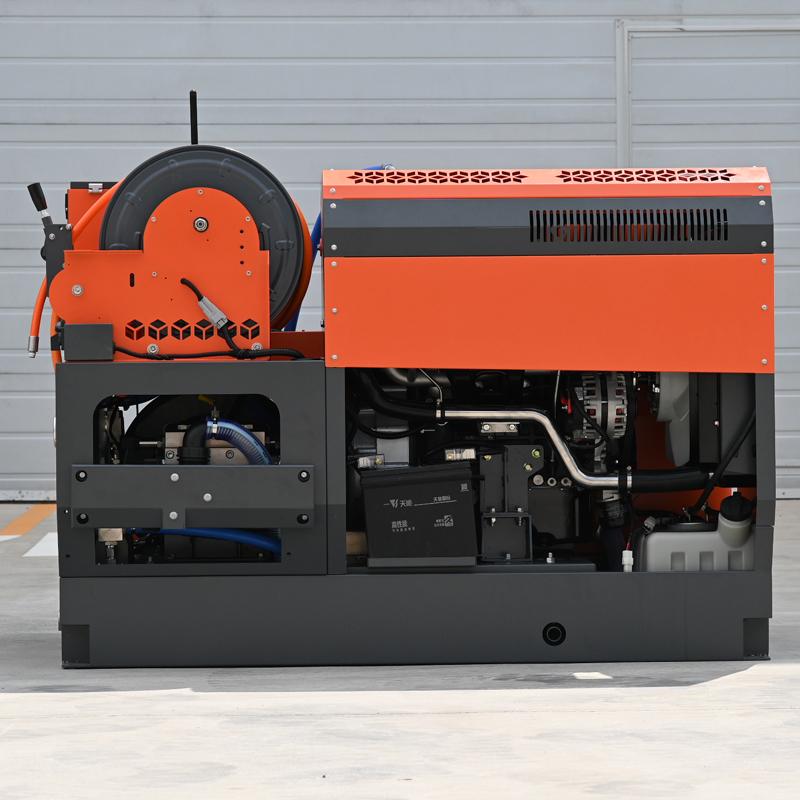
Municipal crews and private contractors rarely get to choose the easy jobs. A sewer cleaner that holds up for a month in a controlled demo can still fail halfway through a five-year service agreement once it faces hardened grease, root intrusion, and the kind of abrasive grit that settles in older collection systems. Long-term contracts don't simply ask whether a unit works on day one—they ask whether it can keep working after thousands of hours, across seasonal temperature swings, and with only routine maintenance squeezed between emergency callouts. That shift in expectations changes what actually matters: reinforced hose connections, sealed electrical enclosures that survive pressure washing, and pump components rated for continuous recirculation of debris-laden water rather than occasional use.
Field service records from extended municipal agreements show a pattern: the machines that stay on the job are rarely the ones with the most horsepower or the flashiest control screens. Instead, they're built around accessible wear points and modular parts that can be swapped without sending the whole unit back to a shop. A nozzle that can be changed with basic tools in ten minutes, a vacuum pump that doesn't lose suction after ingesting sand and small stones, a debris tank that resists pitting from hydrogen sulfide exposure—these are the details that determine whether a sewer cleaner earns its place on a multi-year contract. Contractors learn to look past marketing sheets and ask for tear-down intervals, parts availability timelines, and examples of similar units running past five thousand hours in comparable conditions.
The most demanding specifications come from agencies that have been burned before. They know a single seized bearing or a cracked manifold can idle a crew for a week and blow a maintenance budget. So their procurement language gets specific about what durability means: cycle testing under realistic solids loading, documented performance in sub-zero starts or high-humidity coastal environments, and a requirement that critical components—valves, filters, couplings—be sourced from suppliers with their own field-proven track records. In practice, that forces manufacturers to make engineering choices that don't show up in glossy brochures but become obvious during a hard winter or a heavy storm season. A sewer cleaner that can't handle those conditions won't survive the first contract renewal, no matter how good it looks on a demo lot.
Compliance Without Compromise: Navigating Local Safety and Environmental Codes
Operating across different regions means dealing with a patchwork of safety and environmental rules that rarely read the same way twice. What passes inspection in one county might trigger a stop-work order in the next, and that reality forces businesses to look beyond generic checklists. The key isn't to treat compliance as a hurdle to clear quickly, but to understand the local logic behind each regulation—whether it's about floodplain setbacks, chemical storage ventilation, or noise limits near residential zones. Skipping that deeper understanding often leads to expensive rework, and worse, erodes trust with the communities where you operate.
A practical approach starts with mapping every site-specific requirement before breaking ground or signing a lease. That might mean walking the property with a local code official, not just emailing a permit application, or hiring a regional environmental consultant who knows the unwritten expectations. Some companies find that building a simple internal matrix—listing each jurisdiction, its key rules, and the last update date—saves countless hours later. The real differentiator, though, is mindset: when teams see local codes not as obstacles but as a reflection of what the surrounding community values, decisions become clearer. You can still move fast, but you move informed, and that balance keeps both the project schedule and your reputation intact.
Spare Parts and Response Times: The Logistics Reality Behind Every Municipal Project
A water main breaks at 2 a.m. and the repair crew discovers the needed coupling is not in the city yard. The next available unit sits in a warehouse forty miles away, but the on-call supplier cannot confirm delivery before noon. That gap between failure and fix is rarely about the skill of the technicians; it is about how spare parts are positioned, tracked, and dispatched. Municipal systems run on thousands of components that wear out on unpredictable schedules. If a wastewater lift station loses a specific impeller, a single missing part can idle a whole neighborhood's service for days while procurement paperwork crawls forward.
Response times often look good on paper because they are measured from the moment a work order is opened, not from the first sign of trouble. A pump bearing screaming at 9 a.m. might not trigger an urgent order until a supervisor approves the diagnosis after lunch. Add delivery windows that assume normal traffic, and a four-hour repair becomes a next-day event. Many municipalities try to offset this by holding consignment stock with local vendors, but those agreements usually cover only common consumables. Specialized valves, control boards, or custom-machined shafts still come from regional distributors with lead times measured in weeks, not hours.
The most resilient cities treat spare parts logistics as an operational function, not a warehouse chore. They track mean time between failures for critical assets and stage a minimum number of high-failure items within fifteen minutes of the sites that depend on them. They also build mutual aid pacts with neighboring systems so that a rare part can be borrowed when a supplier cannot deliver. Response time is not a fixed target; it is the visible result of inventory depth, vendor contracts, and the willingness to preposition parts before the next outage exposes the gap.
Custom Engineering for Complex Sewer Networks: When Standard Units Fall Short
Off-the-shelf pump stations and prefabricated manholes assume a world of straight runs and predictable slopes. Real sewer networks rarely cooperate. You hit a buried utility, a bedrock shelf, or a legacy brick barrel that wasn’t on any drawing. That’s where custom engineering stops being a luxury and becomes the only way to keep flow moving without ripping up three blocks. We design around the obstacle, not through it.
Standard units also falter when the math gets strange — siphons under rail lines, dual force mains feeding a single chamber, or a junction where three different pipe materials meet at conflicting inverts. Cookie-cutter geometry forces flow backward or stalls solids. By shaping each chamber, weir, and drop connection to the actual hydraulic profile, custom fabrication turns a problematic node into a quiet, maintenance-free asset.
The payoff isn’t just fit — it’s longevity. A bespoke wet well with the right coatings, corrosion allowances, and access layout will outlast three generic replacements. When the network is the product of a hundred years of improvisation, the only sane response is engineering that respects each quirk instead of fighting it.
Total Cost of Ownership: How the Right Chinese Partner Reshapes Budget Planning
Procurement teams often fixate on the invoice price of a component, but that number rarely tells the full story. A partner in China with deep engineering roots can shift the entire cost curve by spotting opportunities early—whether it's rethinking a bracket to use less material without sacrificing stiffness, or resequencing a production step to reduce scrap. Those adjustments rarely appear on a quote sheet, yet they quietly trim dollars from every unit shipped.
Logistics and inventory posture matter just as much as labor rates. A supplier who understands regional port congestion, who packs containers with mixed SKUs without wasting volume, and who holds buffer stock near the assembly line can prevent the kind of expedited freight charges that blow up a quarterly budget. This is not about chasing the lowest bid; it's about engineering predictability into the cash outflow.
When quality issues surface—and they will—the right partner treats them as system failures rather than isolated defects. They trace a plating inconsistency back to a single bath maintenance interval, or a tolerance drift to tool wear that wasn't flagged. That root-cause discipline avoids the hidden cost spiral of reinspection, line stoppages, and customer returns. Over a product's life, those avoided disruptions reshape budget planning more than any negotiated unit price ever could.
FAQ
Focus on the manufacturer's track record with similar municipal contracts, whether they have in-house engineering and fabrication capabilities, and how they handle field support after delivery. Ask for reference sites where their units have been running for several years, and pay attention to build quality details like weld finishes, hose reel construction, and pump brands they integrate.
Look for compliance with ISO 9001 for quality management, and where applicable, CE marking if the equipment will be used in regions that require it. For explosion-proof or hazardous-area work, check for ATEX or IECEx certification on components. Municipal tenders often require documentation for load testing, pressure vessel certificates, and noise level reports.
Request detailed drawings and a bill of materials from previous custom builds. A strong partner will walk you through their design review process, offer modular chassis options, and adjust tank capacity, hose length, or pump flow rate to match your pipe diameters and access constraints. Avoid suppliers that only offer fixed catalog models.
After-sales service often determines the long-term cost of ownership. Ask how quickly they can dispatch a technician, whether they stock critical spare parts locally or ship from China, and if they provide training for your maintenance crew. A reliable partner should offer remote diagnostics and a guaranteed response time in the service contract.
Yes, the lowest quote can hide weaker hydraulic components, thinner tank steel, or generic pumps that fail under heavy municipal use. Compare the full specification sheet, not just the final price. Ask for the brands of key parts like the vacuum pump, high-pressure pump, and control valves, and calculate the cost per hour of operation rather than the upfront price.
Ask for case studies from cities or contractors with similar sewer network sizes. Contact at least two references and inquire about downtime frequency, ease of getting spare parts, and whether the manufacturer honored warranty claims. A credible partner will gladly share contact details of past municipal clients.
Request a video walkthrough of the production line, close-up photos of critical welds, and the test report for a completed unit. Look for consistent paint coverage, proper hose reel alignment, and labeled hydraulic lines. If possible, commission a third-party inspection during manufacturing to catch shortcuts before shipping.
Conclusion
Selecting a Chinese sewer cleaning equipment partner for municipal work demands more than comparing spec sheets or initial price tags. The first test is whether the machinery can integrate with what a city already operates, because hydraulic flows, hose reel layouts, and control interfaces rarely align across brands. A partner who understands fleet compatibility will ask about existing vehicles and work within those constraints instead of pushing a one-size-fits-all design. Long-term contracts also expose equipment to abrasive sludge, chemical runoff, and round-the-clock duty cycles, so durability must be proven through reference projects rather than catalog claims. And when local safety codes or environmental limits differ from export standards, the right supplier handles documentation and modifications up front, without treating compliance as an afterthought.
Operational continuity depends on spare parts inventories and response times. A low-cost machine becomes a liability if a failed pump or control module means waiting weeks for a shipment, so municipal buyers should evaluate local warehousing, remote diagnostics, and the partner's track record for emergency support. Many older sewer networks have irregular pipe diameters, low clearances, or limited access points that standard units cannot address. A capable Chinese manufacturer will offer custom engineering for nozzle configuration, boom reach, or noise attenuation without inflating lead times. Ultimately, total cost of ownership shifts the conversation from purchase price to lifecycle expenses: fuel consumption, scheduled maintenance, downtime penalties, and resale value. Choosing a partner who can map these variables against a city's budget cycle is what separates a transactional vendor from a long-term support system.
Contact Us
Contact Person: Mike
Email: [email protected]
Tel/WhatsApp: +86 19545555505
Website: https://www.amjeting.com/