

China Swiss-type Machine Manufacturer: The Ultimate Guide to Precision Turning
2026-11-02
Ask any precision machinist where the real competitive edge comes from, and Swiss-type turning always enters the conversation. But here's the twist: the best machines no longer have to come from Switzerland. China's Swiss-type machine builders have matured fast, and WINNRUI CNC is proof that precision doesn't have to carry a legacy price tag. This ultimate guide breaks down what to look for, what to avoid, and why Chinese manufacturers are rewriting the rules of high-volume, tight-tolerance production.
Swiss-Type Turning Without the Jargon
At first glance, Swiss-type turning sounds like a technique reserved for specialized workshops, but the underlying principle is easy to grasp. Instead of clamping a metal bar only at one end or between two centers, the machine lets the bar slide forward through a snug support that sits right beside the cutting tool. This keeps the workpiece from bending or vibrating while it’s being shaped, even when the part is long and slender.
That small difference opens up a lot of possibilities. Many everyday precision items—like small screws for eyeglasses, pins used in orthopedic implants, or shafts inside miniature motors—are far longer than they are wide. Cutting these on a typical lathe often leads to flexing, which ruins the shape. With Swiss-type turning, the material is always supported right where the action happens, so cuts stay accurate and the surface comes out smooth without extra finishing steps.
You can picture it by sliding a long stick through a loosely closed fist and shaving the end with a knife just beyond your fingers. Your hand acts as a steady guide, preventing the stick from vibrating while you cut. Swiss-type turning does the same thing mechanically: it feeds material through a close guide, cuts it, and then advances more material only as needed. That straightforward idea is why the method remains popular for small, precise, and skinny parts.
How Chinese Builders Redefined Precision Lathe Economics
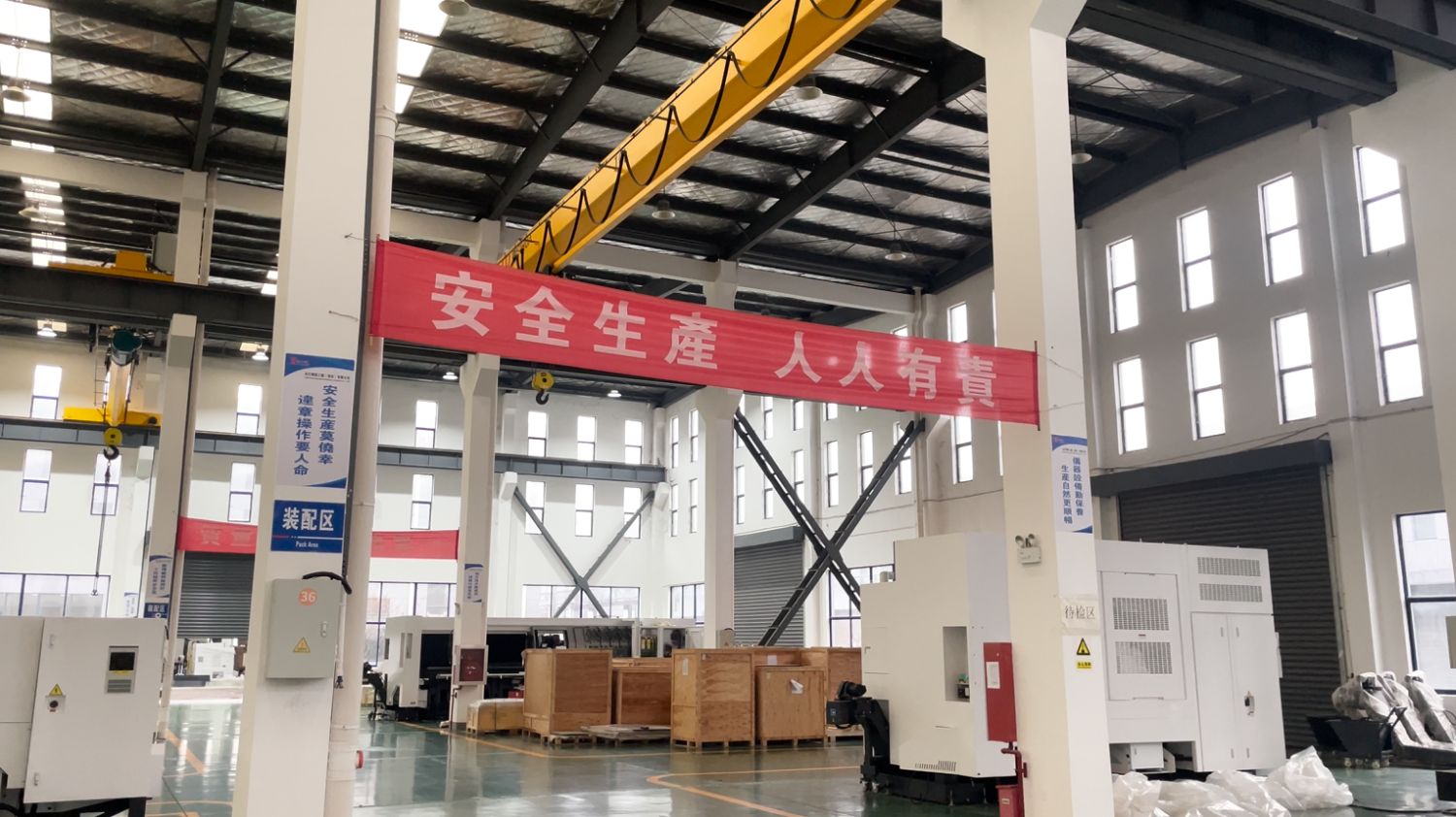
For decades, precision lathes carried a simple assumption: accuracy costs money, and lots of it. The machines that could hold tolerances within a few microns were the domain of established European and Japanese names, with price tags that put them out of reach for smaller workshops. Chinese builders flipped that logic on its head. They didn't just make cheaper copies; they restructured the entire cost equation. By rethinking component sourcing, modular design, and in-house production of critical spindles and guideways, they delivered lathes that hit the same tolerance brackets at a third or half the traditional price. This wasn't a race to the bottom on quality—it was a systematic demolition of the old pricing model.
The shift forced a broader rethink across the industry. Buyers who once assumed a five-axis precision lathe required a seven-figure investment began questioning every line item. Chinese manufacturers achieved this by simplifying non-critical structures, using cast iron bases that met stiffness requirements without over-engineering, and deploying real-time thermal compensation software that previously belonged only to premium machines. Their economics also leaned on scale: producing standard bed lengths and spindle configurations in massive batches cut unit costs dramatically. As a result, small-batch aerospace suppliers and automotive prototyping shops suddenly had access to turning capabilities that used to require a corporate-level capital budget.
The real impact, though, lies in how this redefined the value benchmark. Western and Japanese builders could no longer justify charging for brand legacy alone. They had to compete on measurable performance, service responsiveness, and genuine innovations—not just reputation. Meanwhile, Chinese lathe makers kept pushing into hybrid machines that combine turning with milling and grinding at price points that make single-purpose machines seem wasteful. The result is a market where precision is no longer a luxury tier but a standardized starting point. And that, more than any single machine spec, is how the economics of precision turning got rewritten for good.
Inside the Tolerance Zone: Real Feats of Sub-Micron Machining
Holding a sub-micron tolerance isn't a spec you meet once—it's a conversation with every heat source in the room. A spindle warming by half a degree can push a feature out of position more than the entire allowed error band. Shops doing this work don't just measure parts; they measure floor temperature, coolant temperature, even the thermal drift of the machine frame over hours.
Tool wear becomes visible differently at this scale. A cutting edge that looks sharp under a loupe may already be rounding enough to smear a few hundred nanometers of material instead of shearing it cleanly. Process developers lean on interferometers, air-bearing stages, and in-process probing not as luxuries but as the only way to know where the tool actually is relative to the workpiece. Some operations even pause to let micro-vibrations settle before a final pass.
The Material Question: Brass, Titanium, and Exotic Alloys
Walk into any watch enthusiast forum and you'll quickly find that the metal used for a case is more than just a shell — it's a statement about priorities. Brass, long favored for entry-level mechanical watches and vintage-inspired pieces, offers a warm golden hue that develops a unique patina over time. But it's also soft, prone to dents, and can trigger skin reactions for some wearers. Titanium flips the script entirely: it's about half the weight of steel, hypoallergenic, and surprisingly tough, yet its matte gray surface resists polishing and can look utilitarian to eyes accustomed to gleaming steel.
Then there are the exotic alloys that sit at the fringes of mainstream watchmaking. Materials like tantalum, with its bluish-gray undertone and corrosion resistance, or zirconium oxide ceramic, which is virtually scratch-proof but brittle on impact, demand entirely different manufacturing processes and price points. Some microbrands now experiment with CuSn8 bronze, which starts out looking like rose gold and gradually shifts toward deep brown or green depending on humidity and skin chemistry. The choice isn't purely aesthetic — each alloy behaves differently under CNC machining, affects the feel on the wrist, and even changes how the watch sounds when the case back is tapped.
What matters more than the material itself is how it aligns with the watch's intended life. A dive watch in marine bronze invites adventure and accepts that scratches become part of the story, while a titanium field watch is built for those who forget it's on their wrist until they need it. Exotic alloys like damask steel or cobalt-chrome offer a middle ground: hardened surfaces that resist daily wear without the weight penalty of traditional 316L stainless steel. The next time you pick up a watch, don't just look at the dial — turn it over, feel the temperature of the metal, and ask yourself why the maker chose that particular alloy for that particular case.
Sourcing Smart: Signs of a Shop That Won't Disappear
A shop that plans to stick around usually leaves a trail of real-world presence. Check how long the domain has been active, whether the about page names actual people, and if customer reviews sound like they were written by humans who bought real products. Fleeting pop-ups tend to recycle the same stock photos and broken English, while established stores often have quirks, minor imperfections, and a consistent tone across their site and social profiles.
Pay attention to how the shop handles contact and inventory. A reliable business will show a physical mailing address, a phone line that gets answered, or at least an email that responds within a day. Live stock counts, clear shipping timelines, and honest notes about backorders signal that someone is actually managing the warehouse. Shops that vanish usually hide behind generic forms and never mention delays until after you have paid.
Finally, look at payment options and return policies. Stores that use well-known processors with buyer protection, and that outline a straightforward refund process without fine print, are less likely to disappear with your money. If the only way to pay is a direct bank transfer or an obscure wallet, treat that as a warning. Longevity is built on trust, and trust shows up in the details of how a shop handles problems before they happen.
From Prototype to 100,000 Parts: Repeatability in Practice
A single prototype can hide a multitude of sins. When you make one part by hand, you can finesse a tight fit, tweak a dimension, or compensate for a slight warp without thinking twice. But the moment you commit to 100,000 parts, those manual adjustments vanish. Repeatability isn't just about hitting the same number on a drawing—it's about controlling every variable that influences material flow, cooling, tool wear, and operator handling. In injection molding, for example, a five-degree shift in barrel temperature might not show up in a short run, but across tens of thousands of cycles it produces a measurable drift in shrinkage, flash, and even surface finish.
Scaling from prototype to production volume demands that you convert craft into process. The tacit knowledge of a skilled technician—knowing exactly how hard to push a fixture or how long to wait before ejecting a part—doesn't scale. You need sensors, statistical process control, and automated inspection to catch deviations before they become scrap. A well-documented setup sheet with tight control limits is worth more than a hundred hero prototypes. When every shift follows the same start-up checklist, the same material drying time, and the same maintenance schedule, repeatability stops being a hope and starts being a measurable output.
The real test comes not on day one but on day ninety, when the mold has seen fifty thousand cycles, the raw material lot has changed twice, and the factory temperature swings with the seasons. Repeatability in practice means building a feedback loop that detects drift early—through periodic capability studies, gauge R&R, and real-time process monitoring—and then making small corrections before they become large defects. You don't chase the perfect part; you chase a predictable process. That's how the 100,000th part ends up as reliable as the first, even if nobody remembers who made the prototype.
FAQ
A Swiss-type machine feeds the bar stock through a guide bushing while the cutting tools move only in the radial direction. This setup supports the workpiece extremely close to the cutting edge, which drastically reduces deflection and vibration. That is why it excels at long, slender parts that would chatter or bend on a conventional lathe where the tool itself travels along the workpiece.
Chinese builders have invested heavily in imported spindles, linear guides, and control systems. They combine these high-grade components with aggressive pricing, rapid customization, and shorter lead times. Many also offer direct factory communication, which simplifies design changes and after-sales support compared to some long-established European brands.
Most modern Chinese Swiss-type machines hold tolerances within plus or minus 0.005 mm without heroic effort. With careful setup, sharp tooling, and stable temperature control, you can push closer to plus or minus 0.002 mm. Surface finishes often land around Ra 0.4 to 0.8 micrometers, but the exact result depends on material, cutting speed, and guide bushing condition.
Medical device makers use them for bone screws, dental implants, and surgical pins. Electronics manufacturers rely on them for tiny connector pins and sensor housings. Watchmaking, automotive fuel injection components, and aerospace fasteners also depend heavily on Swiss-type turning because these parts demand tight concentricity and very small diameters.
Ask for a detailed component list: spindle brand, control model, guide rail and ballscrew suppliers. Request sample machining on your actual part or a similar geometry, then inspect the results independently. A reliable manufacturer will also share customer references, offer a factory tour or live video walkthrough, and provide clear documentation on after-sales service and warranty terms.
The biggest traps are unusually low prices that hide cheap spindles, thin castings, or missing safety features. Some suppliers also lack export experience, leading to poor manuals, slow parts delivery, and weak technical support. Avoid these issues by specifying every key component in the contract, verifying the manufacturer's export history, requesting a detailed spare parts list, and insisting on remote or on-site installation assistance.
High-end Chinese models are absolutely built for continuous production. They come with automatic bar feeders, high-pressure coolant systems, tool life monitoring, and chip conveyors as standard or optional equipment. The key is choosing a machine with sufficient cast iron mass and a proven spindle cooling system, otherwise thermal drift will hurt consistency during multi-hour runs.
Guide bushing clearance must be checked regularly because worn bushings directly affect part diameter and finish. Keep hydraulic oil and cutting fluid clean, and monitor spindle temperature to catch bearing wear early. Lubricate all linear axes on schedule, record tool wear patterns, and recalibrate the machine after any crash or major service interval.
Conclusion
Swiss-type turning doesn't have to be buried in jargon. What Chinese manufacturers have done is strip the process down to what actually matters on the floor: a guide bushing supporting the bar next to the cut, tool slides arranged to shave seconds off each cycle, and thermal stability that keeps dimensions from drifting after lunch. That focus has also changed the economics. Instead of treating precision as an expensive add-on, builders treat it as the default, which means brass, titanium, and stubborn exotic alloys all fall under the same repeatable workflow. A well-run shop will show you a prototype next to a production part from a 100,000-piece batch and let the measurements speak.
The material question separates the dependable suppliers from those who disappear once the invoice clears. Exotic alloys expose weak fixturing and lazy tool changes quickly, so look for shops that track tool wear and share control charts, not just polished quotes. Staying power also shows up in small things: a metrology lab that gets recalibrated on schedule, operators who can explain why a tolerance slipped, and a documented path from first article to full production. When those signals line up, sub-micron machining becomes less of a claim and more of a daily routine.
Contact Us
Contact Person: Tim
Email: [email protected]
Tel/WhatsApp: +86 15522553731
Website: https://www.winnrui-cnc.com/