

Custom Shot Blasting Machine Manufacturer Delivers Precision Surface Finishing Solutions
2026-11-02
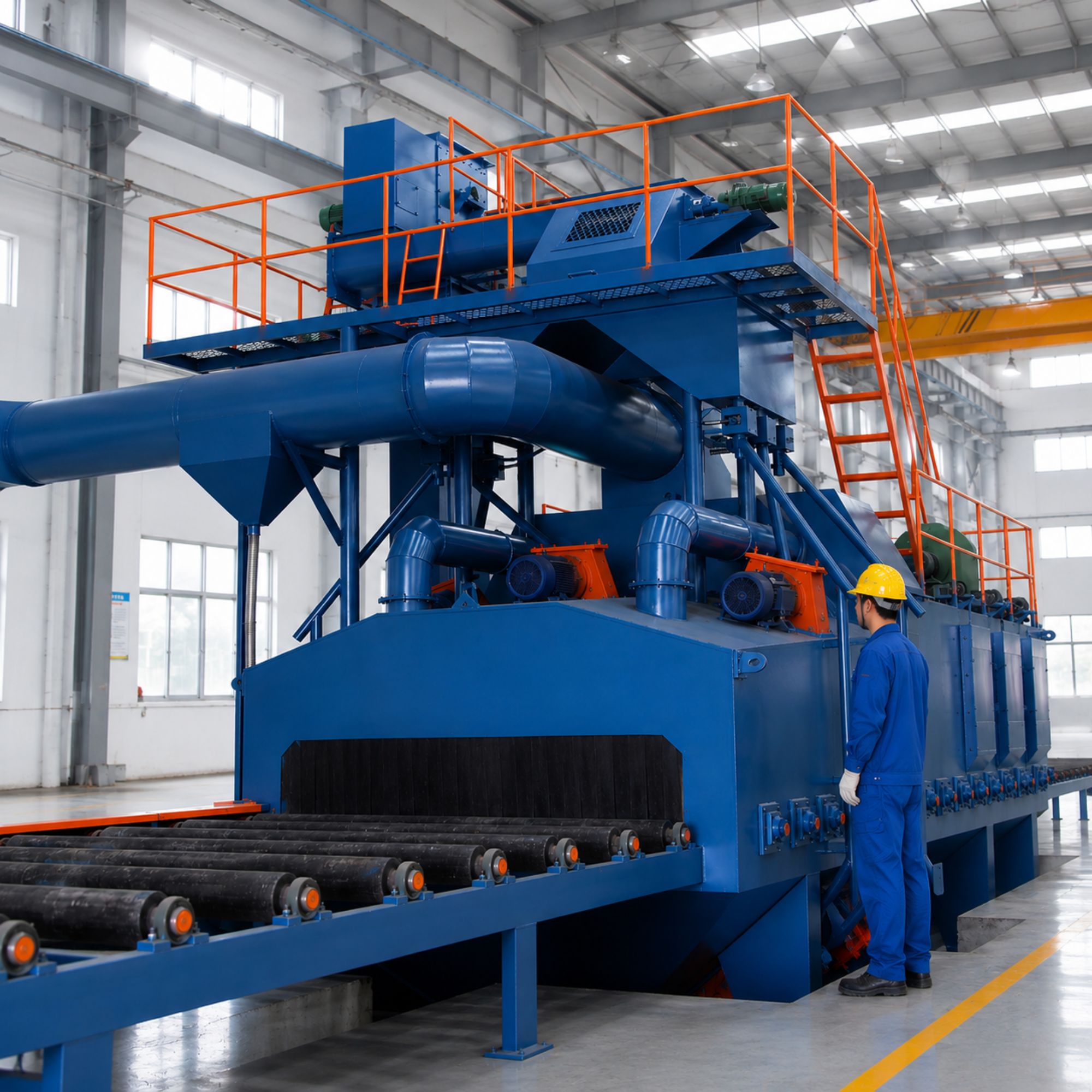
Rough edges, uneven profiles, and repeat rework are expensive signals that your blasting setup isn’t matched to the job. PuHua builds custom shot blasting machines for exactly this gap—turning precision surface finishing from a constant battle into a controlled, repeatable process. Here’s how they do it.
Matching Machine Design to the Part, Not the Other Way Around
Most shops still start with the machine they already own and then squeeze the part into it. That habit leads to extra setups, oversized stock, and tolerances that drift because the process fights the geometry instead of following it. A shaft with a deep internal bore gets turned, then moved to a mill for a second op, then sent out for honing—simply because no single machine in the building was chosen for that bore.
Reversing the logic means reading the part first—its material removal rate, wall thickness, surface finish, and how many times it has to be clamped. A thin-walled aluminum housing asks for light, repeatable clamping and a high-speed spindle, while a hardened steel bracket needs rigidity and torque more than speed. Those answers then dictate the spindle taper, axis travel, workholding interface, and even the coolant pressure—not a generic catalog spec sheet.
This approach can look more expensive on the quote, but it usually removes hidden costs. One shop making titanium implant parts replaced a standard VMC with a smaller, stiffer machine that had through-spindle coolant and a pallet changer matched to the part family. Cycle time dropped by a third and scrap from chatter disappeared. The real shift is cultural: stop asking “What can this machine do?” and start asking “What does this part need?”
Abrasive Flow Control That Keeps Tolerances Tight
Achieving tight tolerances in internal passages is less about removing material and more about controlling where abrasive media goes. By tuning media viscosity, extrusion pressure, and piston stroke speed, abrasive flow machining holds bore diameters within a few microns while blending intersecting edges and stripping away recast layers. The media itself behaves like a shear-thinning fluid—thickening under pressure to cut proud surfaces, then relaxing near the wall so already compliant zones don't get over-polished.
For manifolds with clustered cross-holes or a sudden change in cross-section, a closed-loop pressure differential monitor watches each part in real time. When the signal drifts, the system adjusts flow rate or media temperature on the fly, catching a localized overcut before it approaches the tolerance limit. That feedback keeps runs stable whether you're finishing a batch of fuel-injection nozzles or a one-off hydraulic servo body.
The payoff is a process that keeps tolerances tight without relying on operator judgment. Because the abrasive medium only flows through areas with excess material, it produces a uniform surface while leaving critical fit dimensions untouched. This passive constraint is what makes the technique valuable for valve seats, sealing faces, and small-bore intersections where a few microns separate a leak-tight assembly from a rejected part.
Why Standard Blast Cabinets Struggle with Thin-Walled Components
Thin-walled parts, like sheet metal brackets or tubing, are notoriously tricky in a standard blast cabinet. The main issue is heat buildup. When abrasive hits the surface at high speed, it creates friction. On thick steel, that heat dissipates quickly. But on a thin wall, it concentrates in a small area, causing warping or even cracking before the operator realizes what's happening.
Another problem is the aggressive media. Most standard cabinets are set up for heavy-duty work, using coarse grit that digs deep. That's fine for cast iron, but on a 20-gauge panel, it can easily blow through or leave deep pits. The operator ends up fighting the machine, trying to reduce pressure and distance, which only leads to uneven finishes and wasted time.
Finally, standard cabinets often lack the fine control needed for delicate parts. The air pressure, media flow, and nozzle size are tuned for maximum speed, not precision. Without adjustable settings or softer media options, thin-walled components either get damaged or require so much manual finesse that the whole process becomes slower than hand sanding.
Achieving Uniform Finish Across Large Batch Runs
Uniformity across large batch runs rarely fails because of the chemistry alone. It fails because current density, bath temperature, and additive depletion drift over the course of hundreds of identical parts. In a 400-piece plating run, the parts at the outer edges of the rack see a different electrical field than those packed in the center, and that difference shows up as visible banding or thickness variation. The same principle applies to spray coating: gun distance, atomizing pressure, and line speed all shift subtly as operators compensate for booth conditions, leaving the first twenty parts slightly drier than the last twenty.
A practical fix is to split the large batch into smaller control segments while keeping the same working solution or paint reservoir. Every 50 to 80 pieces, pull a designated test coupon from a fixed rack position and measure film thickness or gloss at three points. If the readings start to wander outside a pre-set band, adjust only one variable at a time—usually current or conveyor speed—rather than chasing the deviation with multiple corrections. For plating, adding a current thief or relocating the anode baskets often straightens out edge buildup without touching the bath chemistry.
Finally, keep a set of reference samples from the first approved run. Before starting each new batch, process one reference sample through the line and compare it under the same lighting. A simple visual check plus a thickness gauge reading catches most drift before it ruins a full production lot. Track the standard deviation of thickness across a rack, not just the average, because an average can hide a bimodal distribution where half the parts are too heavy and half too light. When the deviation doubles from baseline, stop the line and find the root cause instead of sorting through finished parts later.
The Role of Custom Fixturing in Repeatable Surface Prep
Custom fixturing does more than hold a part still. In surface prep, the way a workpiece is located, clamped, and presented to the abrasive or chemical process determines whether every pass removes the same amount of material in the same places. Off-the-shelf vises and generic stops tend to let small shifts compound: a part rocks a few thousandths here, a clamp flexes there, and suddenly the operator is chasing flatness or edge break variation that has nothing to do with the media. A purpose-built nest or clamp set eliminates that guessing by referencing the same datums every cycle, so surface finish and stock removal become predictable.
The payoff shows up most clearly on parts with thin walls, odd profiles, or secondary operations where re-gripping is unavoidable. A custom fixture can support fragile sections, isolate clamping pressure away from critical surfaces, and even present multiple faces in one setup. That reduces handling marks and lets the surface prep step run at a steady parameter window instead of being dialed up or down to compensate for movement. Over time, this consistency shrinks rework and makes the prep procedure easier to hand off between operators because the fixture, not individual technique, carries the repeatability.
It also changes how you diagnose problems. When a fixture controls location and pressure, deviations in finish or stock removal usually point to consumable wear, coolant condition, or machine drift, not to "how Bob clamped it." That clarity shortens troubleshooting and makes it worth investing in a dedicated fixture once a part family has stabilized. Even a simple machined nest with a consistent torque spec can outperform a universal clamp that gets adjusted by feel.
When Shot Blasting Needs a Light Touch
Not every surface can withstand the full force of traditional shot blasting. Thin sheet metal, delicate alloys, or freshly repaired components often warp, pit, or lose critical tolerances under aggressive media. That’s where a lighter approach comes in — using softer abrasives, lower air pressure, or finely tuned nozzle distances to clean and profile without compromising the workpiece.
A light-touch blast still removes rust, paint, and mill scale effectively, but it does so with careful control over impact energy. Operators often switch to materials like glass bead, walnut shell, or fine aluminum oxide at reduced velocities. The result is a uniform finish that preserves edge sharpness and dimensional accuracy, which matters enormously in aerospace, automotive restoration, or precision fabrication.
Knowing when to dial back the intensity is a skill born of experience. Watch for signs like excessive dust, surface discoloration, or sudden changes in sound from the blast stream. A lighter pass may take a bit longer, but the trade-off is a clean part that hasn’t been beaten into submission — and that’s exactly the outcome a craftsman wants.
FAQ
A custom machine is built around your part geometry, production volume, and finish requirements. Instead of forcing your parts to fit a standard cabinet, the manufacturer adjusts chamber size, nozzle placement, media delivery, and automation level. This usually means better coverage, less media waste, and fewer manual touch-ups.
It comes down to controlling blast pressure, media type, and exposure time. For fragile parts, we often use softer media like plastic or walnut shell, lower air pressure, and adjustable workpiece rotation. The machine can be tuned so the abrasive only removes the surface layer you want, without distorting thin walls or sharp edges.
We see a lot of demand from aerospace, automotive, medical device, and foundry sectors. Aerospace companies need exact profile depths for coating adhesion. Automotive plants want consistent deburring on transmission parts. Medical manufacturers often require ultra-clean finishes on implants without embedding media.
Look beyond the equipment spec sheet. Ask about their process development capability—can they run sample parts and document the results? A good partner will test your actual parts, recommend the right media and settings, and then build the machine around that validated process. Also check if they provide installation support and operator training.
Yes, if the controls are designed properly. A custom machine can include variable frequency drives for the blast wheel, adjustable air pressure, and quick-change media valves. That allows you to switch from aggressive steel grit for rust removal to fine glass bead for a satin finish without rebuilding the entire setup.
It can actually lower them. When the machine fits your parts and process well, you get less rebound wear, longer lasting liners, and fewer jammed media lines. Custom machines also tend to have better access panels and replaceable wear parts because the manufacturer designs around your specific maintenance workflow.
It depends on complexity, but most projects run between 10 and 16 weeks from design approval to delivery. Simple modifications to an existing platform might be faster. Full custom chambers with robotics and automated loading take longer. The key is to finalize the process parameters early so the build doesn't stall.
Conclusion
A lot of surface finishing shops default to standard cabinets and then struggle when parts don't fit, warp, or get blasted unevenly. Custom shot blasting machine manufacturers take the opposite approach: they study the part geometry first and build the machine around it. For thin-walled components, that means carefully tuned abrasive flow, lower air pressure, and nozzle angles that prevent distortion while still cleaning the surface. Precision flow control keeps tolerances tight by metering media exactly, so the same blast intensity lands on every square inch. Custom fixturing becomes the quiet hero here—holding delicate or awkwardly shaped parts in a fixed orientation so repeatable surface prep isn't left to operator guesswork. This kind of design-first thinking removes the guesswork and turns blasting into a controlled process rather than a gamble.
When a manufacturer has to run large batches, consistency usually falls apart by the tenth or fiftieth part. Custom machines solve that with automated media replenishment, rotating fixtures, and blast patterns that stay identical from the first piece to the last. Achieving a uniform finish across thousands of parts isn't about brute force; it's about control loops and predictable movement. Some applications need only a light touch—removing oxide or prepping a surface without changing the base material. Here, a custom setup can dial back pressure, switch to finer media, and use softer impact angles that standard cabinets simply can't replicate. The result is a surface finishing solution that fits the metal, the geometry, and the production volume, instead of forcing every job through the same narrow window.
Contact Us
Contact Person: Bruce
Email: [email protected]
Tel/WhatsApp: +86 15166629468
Website: https://www.povalchina.com/