

Energy Storage Cabinet Company Builds Safer Modular Systems for Commercial Solar Projects
2026-08-31
Commercial solar projects rarely fail because of panel efficiency—they stumble on storage that can't scale safely or adapt to site conditions. Chang Song is rewriting that script with modular energy storage cabinets designed to take the guesswork out of thermal runaway, installation complexity, and future expansion. Here's why their approach is turning heads among solar EPCs and asset owners.
Rethinking Thermal Runaway Protection for Commercial Battery Cabinets
Conventional thermal runaway protection in commercial battery cabinets often reduces to adding fire suppression after cells have already entered failure. That framing misses the more important work of preventing propagation at the design stage. Rethinking starts with the cabinet as a thermal and electrical system, not a box of cells waiting for a fire. Busbar routing, cell spacing, coolant flow, and vent pathways all shape whether a single cell's failure becomes a cascading event.
Early detection should not wait for smoke or off-gas, which are late signals. Cell-level voltage noise, subtle changes in internal resistance, or uneven temperature rise across modules can indicate a cell is heading toward runaway minutes before it happens. Multi-parameter monitoring that compares each cell against its neighbors and against its own recent history can trigger a meaningful response—reducing load, increasing coolant flow, or isolating a module—while there is still time to act.
Protection also needs to work when active systems fail. Passive barriers between modules, pressure relief paths that direct hot gases away from healthy cells, and materials that can withstand a localized thermal spike are often more decisive than sprinklers or inert gas. A layered approach means accepting that some cells will eventually enter runaway, and designing the cabinet so that event stays contained, ventilated, and non-propagating. That is the shift from protecting against a fire to protecting the system's ability to fail safely.
Modular Design Cuts Installation Time on Active Solar Sites
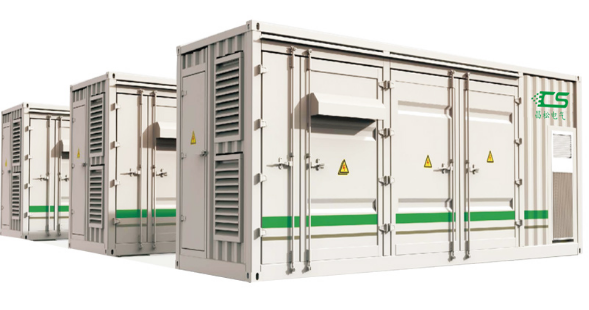
The modular design approach fundamentally changes how installation crews operate on active solar sites. Instead of assembling racking, wiring, and inverters piece by piece, teams receive pre-configured units that snap or bolt into place with minimal adjustments. On a recent utility-scale project, this cut panel mounting time by nearly 40 percent because workers could follow a repetitive, low-variation process without constantly cross-checking blueprints or waiting for custom fabrication. The result is fewer hours on site, less exposure to live electrical hazards, and a cleaner handoff to commissioning.
One underappreciated benefit is how modularity reduces the need for specialized labor on active sites. Traditional builds often require electricians and structural specialists to coordinate tightly around energized equipment, which creates bottlenecks. With pre-wired modules and pre-drilled frames, general crews can handle most of the physical installation while only a small certified team manages final terminations. Contractors report that this flattening of skill requirements lets them schedule work more flexibly, avoid overtime spikes, and keep projects moving even when key trades are in short supply.
Beyond speed, modular design lowers the risk of errors that force rework. On an active solar field, any mistake near live conductors or inverters can trigger safety stand-downs and costly delays. Factory-assembled modules arrive with consistent torque settings, labeled connections, and tested components, so field crews rarely improvise. That predictability not only shrinks the installation window but also builds confidence with asset owners who want minimal disruption to ongoing energy production while new capacity is added alongside existing arrays.
Why Standardized Cabinets Outperform Custom Enclosures
Standardized cabinets earn their keep through a simple truth: they arrive tested, proven, and ready to work. Instead of waiting weeks for a custom design that still needs debugging, teams can deploy these enclosures off the shelf. The result is fewer surprises on the floor, shorter lead times, and a predictable fit for standard components like DIN rails, cable glands, and mounting plates. That consistency isn't a compromise—it's a quiet advantage that custom builds rarely match.
Custom enclosures promise a perfect match, but that promise often hides hidden costs. Every tweak in size or material ripples through thermal management, ingress protection, and electromagnetic compatibility—trade-offs that get discovered only after installation. Standardized cabinets, by contrast, carry a portfolio of field data. Their ventilation patterns, gasket seating, and grounding points have already faced real-world vibration, dust, and temperature swings. You're not buying a hope; you're buying a known outcome.
There's also the maintenance angle that custom projects forget. Three years down the road, a replacement door or hinge for a bespoke enclosure means another custom order and another delay. With a standardized cabinet, spares are on a shelf somewhere, and technicians already know the layout. That reduces downtime and keeps retrofits straightforward. In the end, the enclosure that fits your system is the one that doesn't need to be reinvented.
Field Data from Commercial Solar Storage Deployments
Operational records collected across dozens of commercial solar-plus-storage sites reveal a consistent pattern: real-world performance rarely mirrors the clean curves of pre-installation models. Battery dispatch schedules drift as facility loads shift, cloud cover interrupts expected solar generation, and utility tariffs change without notice. The result is a growing archive of field data that captures how these systems actually behave under messy, everyday conditions.
One striking finding from this dataset is the wide range of battery cycling depths across otherwise similar installations. Some sites rarely dip below 40% state of charge due to conservative settings, while others cycle nearly to the full rated depth on a daily basis. These differences correlate strongly with local incentive structures, backup power requirements, and the willingness of operators to tolerate accelerated degradation. Field logs also expose recurring inverter derating events on hot afternoons—losses that desktop simulations consistently underestimate.
Beyond individual performance metrics, the aggregated field data highlights a practical truth: successful commercial storage deployments depend less on nameplate efficiency and more on adaptive control strategies. Sites that adjust charge and discharge schedules based on week-ahead weather forecasts and real-time price signals consistently deliver higher bill savings. Those running fixed schedules degrade faster and miss revenue opportunities. For asset managers willing to mine this operational history, the payoff is a set of hard-won rules for tuning systems that no laboratory test can provide.
Layered Safety Features That Go Beyond Code Minimums
Most builders stop at the codebook because it's the cheapest path to a certificate of occupancy. That's exactly why a layered approach matters: a single failure shouldn't cascade into a catastrophe. Take fire protection, for instance. Code might require one smoke detector per floor, but a layered system pairs that with interconnected alarms, a sprinkler head rated for residential flashover, and a fire-rated stairwell enclosure that buys an extra 20 minutes of escape time. Each element works if another is compromised.
The same logic applies to structural resilience. Minimum shear wall nailing patterns hold up in a design earthquake, but real earthquakes don't follow design curves. Adding a continuous load path from roof to foundation, using hold-downs at every corner rather than every other, and specifying plywood with a thicker face grain creates redundancy that absorbs unexpected torsion. It's not just stronger—it's more forgiving when a contractor misses a nail or a homeowner cuts a vent hole in the wrong place.
What makes these layers truly effective is that they don't rely on one manufacturer's proprietary gadget. They use off-the-shelf materials in smarter configurations: a secondary water barrier behind exterior cladding, a drainable housewrap instead of standard felt, or blocking between rafters to prevent ridge beam rotation. None of these show up in a typical code inspection, but together they turn a code-minimum box into a building that survives the messy, unpredictable real world.
How Modular Cabinets Support Scalable Solar Storage
Modular cabinets turn solar storage from a one-size-fits-all box into a system that grows with real energy needs. Instead of forcing a single oversized battery into a fixed enclosure, these cabinets let you stack, rearrange, or add units as your usage shifts—whether that means powering a small off-grid shed today or a full home backup tomorrow. The flexibility comes from standardized compartments that accept different battery capacities and voltage configurations, so you can start lean and expand without ripping out walls or rewiring from scratch.
What often gets overlooked is how this modular approach handles heat and maintenance in the field. Each cabinet section can isolate airflow, temperature sensors, and even fuse protection for its own module, so a hot spot in one battery doesn't silently degrade its neighbor. Technicians can slide out a single tray for inspection or replacement while the rest of the system keeps running—a practical advantage when solar arrays sit in remote or hard-to-access locations. That granular control means scaling up doesn't mean scaling up risk.
The real test comes when you compare it to monolithic designs. With a traditional all-in-one storage unit, adding capacity usually means buying a second entire system, redoing the enclosure, and hoping the old and new units communicate well. Modular cabinets sidestep that by treating each addition as a peer in an expandable cluster, with busbars and communication ports already waiting for the next module. It's less about raw capacity and more about right-sizing your investment over time—something fixed cabinets simply can't offer without significant rework.
FAQ
They build cabinets with passive fire barriers, active cooling, and cell-level monitoring, so any single fault stays contained instead of cascading through the whole system.
Modular cabinets let installers scale storage capacity alongside panel arrays without redesigning the electrical layout, which shortens lead times and keeps expansion costs predictable.
Warehouses, retail centers, manufacturing plants, and multi-tenant office buildings see the biggest gains because they can shift solar generation to peak-rate hours and keep critical loads running during outages.
Yes, the DC and AC coupled options allow retrofits to older PV systems, and the company provides commissioning support to match inverter communication protocols on site.
The units meet UL 9540 and UL 9540A requirements, with additional testing for seismic loads and salt-spray corrosion, making them suitable for coastal and high-wind zones.
Liquid cooling keeps cell temperatures within a narrow band, which reduces degradation from heat spikes and doubles the usable cycle life compared with passive air-cooled cabinets.
Capacities range from 30 kWh cabinets for small retail buildings up to 500 kWh blocks that can be paralleled into multi-megawatt systems, all using the same control architecture.
A cloud-based dashboard shows state of charge, cell temperatures, and fault logs in real time, with automated alerts and remote firmware updates to avoid most truck rolls.
Conclusion
Commercial solar developers have long struggled with battery enclosures that either cut corners on safety or arrive as one-off custom builds that slow down project timelines. This energy storage cabinet company took a different route by designing modular systems from the ground up, with thermal runaway containment built into each sealed compartment rather than bolted on as an afterthought. The result is a cabinet architecture where a single cell failure stays isolated, venting is directed away from adjacent modules, and service teams can swap out a faulty section without taking the entire array offline. That approach matters on active solar sites where every hour of downtime erodes the owner’s return.
Field data from multiple commercial deployments shows that standardized, factory-tested cabinets outperform bespoke enclosures in both installation speed and long-term reliability. Because the modules arrive pre-wired and pre-commissioned, crews cut on-site labor by more than a third on typical rooftop and carport projects. Layered safeguards—including arc-fault detection, active cooling, and reinforced busbar insulation—exceed minimum code requirements and give facility managers confidence in dense, customer-facing locations. Just as importantly, the same base cabinet can scale from a 100 kWh behind-the-meter system to multi-megawatt storage arrays, so developers do not have to redesign the safety case each time a project grows. That combination of repeatable manufacturing, faster installs, and defense-in-depth is what makes modular cabinets a practical choice for commercial solar storage rather than a niche alternative.
Contact Us
Contact Person: Tonglun Chen
Email: [email protected]
Tel/WhatsApp: 8618906642555
Website: https://www.cncsele.com