

Energy Storage Cabinet Company Elevates Backup Power with Modular Lithium-Ion Design
2026-11-16
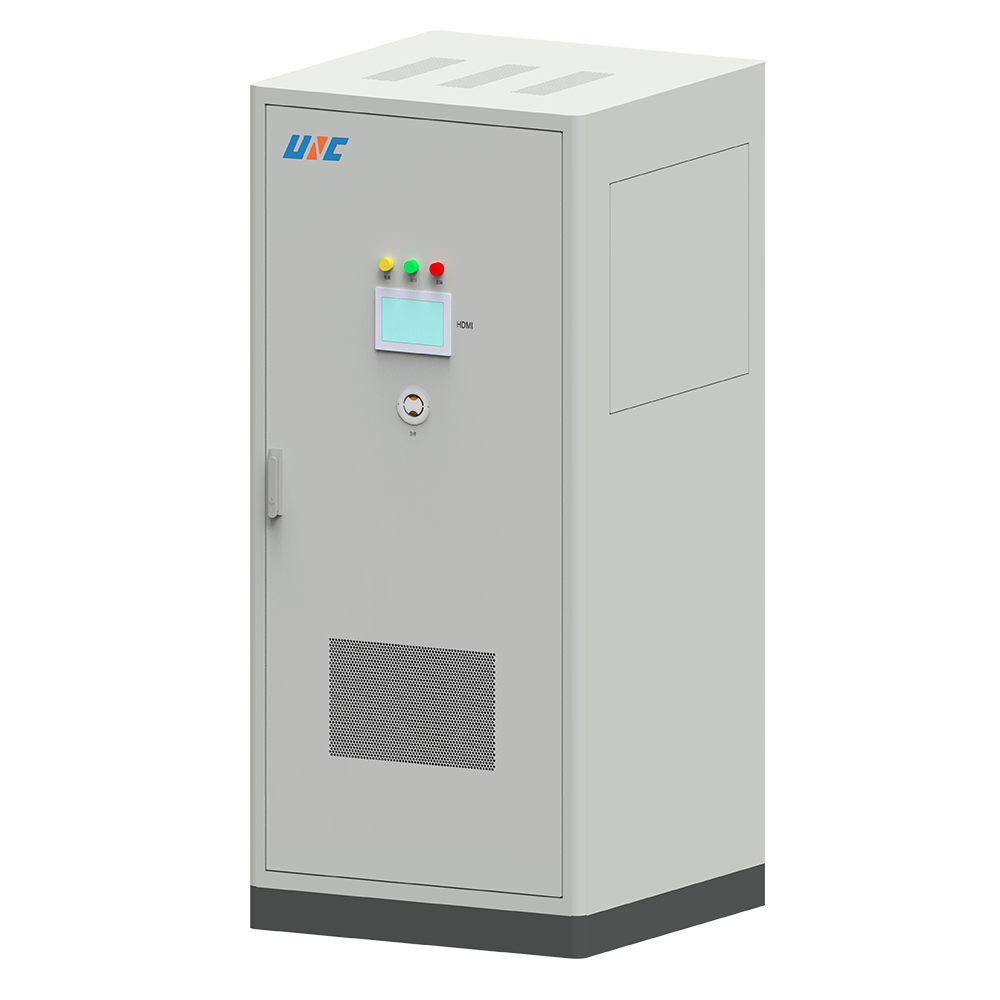
Outages don't wait for oversized battery rooms to come online. That's why UNC rebuilt the backup cabinet around modular lithium-ion blocks—each one swappable, stackable, and sized for the load you actually run. It's a shift away from rigid lead-acid banks toward something closer to building blocks for power resilience. Here's what makes that design tick.
Rethinking Backup Power: The Modular Shift
Backup power used to mean one big generator in the corner, waiting for the worst day. That model is quietly fading. Facilities are no longer willing to bet their uptime on a single, monolithic asset that must be sized for a peak load it might never see. Instead, the conversation has turned to scale, flexibility, and the cost of idle capacity.
Modular systems flip the old logic. Rather than one oversized unit, you deploy smaller, stackable blocks of power—each independently controlled, each adding or shedding capacity as demand shifts. If one module needs maintenance, the others carry the load. If your facility grows, you add modules instead of ripping out concrete pads and fuel lines. Redundancy stops being an expensive afterthought and becomes a natural property of the architecture.
What makes this shift compelling is not just engineering, but economics. Modular backup lets operators buy only the power they need today, then scale capital spend in step with real load growth. It also changes risk. A failure is contained, not catastrophic. For data centers, hospitals, and industrial sites tired of paying for insurance they never use, the modular approach turns backup power from a static insurance policy into a living, breathing part of the energy system.
Lithium-Ion at the Core: What's New
The lithium-ion cell has stopped being a one-size-fits-all chemistry. Recent shifts center on shrinking the inactive parts: thicker electrodes with graded porosity now push energy density past 300 Wh/kg without sacrificing rate capability, while laser-patterned current collectors strip away foil mass that never stored a single joule.
At the anode, silicon is finally moving beyond lab demos. Instead of blending 5-10% silicon oxide, manufacturers are adopting pure silicon nanowire mats and porous carbon-silicon composites that swell less and survive 1,000+ cycles. Pre-lithiation steps, once too costly, are becoming standard on high-nickel cathode lines to recover the first-cycle loss that used to quietly eat 8-12% of capacity.
On the manufacturing floor, dry electrode coating is cutting solvent use and drying energy by half, enabling thicker, crack-free cathodes. Meanwhile, localized high-concentration electrolytes are letting graphite anodes operate below -20°C without lithium plating, and cell-to-pack designs are eliminating module hardware to squeeze 15% more range from the same cell footprint.
Scalable Cabinets That Grow With Demand
Instead of committing to a fixed footprint from day one, these cabinets let you add vertical or lateral modules as your equipment list expands. The base frame has pre-drilled mounting points and pass-through cutouts, so a new bay can be bolted on without disturbing the existing cable runs. That means a two-post rack can become a four-post enclosure over a weekend, not a full infrastructure overhaul.
The real difference shows up in the hardware details. Telescoping rails, snap-in side panels, and adjustable depth brackets are designed to be mixed and matched. You might start with a shallow wall-mount unit for a patch panel and a small switch, then stack a deeper floor-standing section underneath when servers arrive. No custom fabrication, no waiting on a specialized integrator.
This approach also changes how you budget. Early-stage projects often overspend on empty rack space or end up discarding a cabinet that no longer fits. With a scalable design, the purchase grows in step with actual demand, and each additional module reuses the same grounding, cable management, and locking hardware. It is especially practical for edge computing closets, broadcast racks, and any site where expansion is driven by real workload rather than guesswork.
Built for the Unexpected: Real-World Resilience
Resilience isn’t about avoiding failure; it’s about how gracefully you bend when the ground shifts beneath you. Real-world systems face messy inputs—sudden traffic spikes, third-party outages, hardware degradation, or even a misplaced decimal in a config file. Those that hold up aren’t the ones with the most elaborate fail-safes on paper, but the ones that treat every layer as suspect and every recovery as a design feature. We built for the moment when the unexpected stops being an edge case and becomes just another Tuesday.
That mindset shows up in small, deliberate choices: retries with exponential backoff that don’t hammer a struggling dependency, circuit breakers that open before cascade failures take root, and health checks that actually probe the work a service does—not just whether its port responds. It also means accepting that users will keep clicking while a backend stumbles, so queues, graceful degradation, and clear partial-success signals matter more than a perfect uptime number. Resilience is less a badge you earn and more a habit you exercise when nobody’s watching.
What sets this approach apart isn’t a single clever trick, but an unwillingness to trust assumptions. We inject latency, kill nodes, and truncate payloads in staging not because we enjoy chaos, but because surprises in production are expensive. Over time, the system learns to shed load without dropping context, to restart without losing state, and to tell a coherent story even when pieces are missing. That’s the quiet confidence of real-world resilience: not that nothing will break, but that breaking won’t mean the end of the conversation.
Installation Without the Headaches
Setting up new software often feels like a puzzle with missing pieces—dependency conflicts, cryptic errors, and endless forum threads. But an installation process designed for real people changes that. You should be able to download, run a single command, and get to work without digging through configuration files or troubleshooting obscure environment variables.
The key is automation that respects your time. Pre-packaged binaries, self-contained dependencies, and clear fallback options eliminate most of the friction. If something does go wrong, the error messages should tell you exactly what happened and how to fix it—not leave you guessing. A smooth install isn't a luxury; it's the first impression of your entire product.
Reliability also matters. Re-running the installer should be safe, upgrades should never leave behind broken fragments, and uninstalling should be as easy as installing. When the process is predictable and transparent, you spend less time fighting the setup and more time doing what you actually intended.
The End of One-Size-Fits-All Energy Storage
Lithium-ion has long been the default answer for storing electricity, but that assumption is crumbling under real-world demands. A grid-scale storage facility in the desert faces different pressures than a hospital's backup system, an electric ferry, or a rural microgrid. Cycle life, response time, energy density, and tolerance for temperature swings all pull in opposite directions. Expecting a single chemistry or configuration to serve every case was convenient, but it is starting to look like a costly compromise.
The alternatives are no longer experimental footnotes. Flow batteries with their decoupled power and energy ratings make sense for eight-hour or multi-day discharges, while compressed air and thermal storage are proving themselves in regions with suitable geology or industrial waste heat. Flywheels and supercapacitors handle short, intense bursts that would degrade most electrochemical cells. Even within lithium-based systems, variations in cathode chemistry and cell design are multiplying to match specific duty cycles.
This fragmentation is not a sign of immaturity; it is the market finally reflecting the diversity of the tasks at hand. Utilities and developers are shifting toward portfolios that combine two or three storage technologies on the same site, letting each handle what it does best. The legacy of one-size-fits-all thinking is giving way to a more deliberate, site-specific engineering approach, and that shift is likely to define the next decade of grid modernization.
FAQ
Modular lithium-ion cells let users scale capacity in small increments, replace only faulty modules, and cut footprint roughly in half while delivering deeper discharge cycles.
Each module is lightweight enough for a two-person lift, so teams can install cabinets in tight electrical rooms without cranes, and swap a single module during scheduled downtime instead of replacing an entire string.
Retail, telecom shelters, small industrial lines, and office buildings with frequent short outages gain the most, since the system handles repeated partial discharges without losing capacity the way lead-acid blocks often do.
The cabinet includes cell-level fusing, a battery management system that watches temperature and voltage per module, and a steel enclosure with venting to direct any cell event away from the aisle.
It means users can right-size backup for longer runtimes without oversized rooms: for example, two cabinets can cover a 20 kW load for about 45 minutes, where older VRLA banks might need three racks and twice the floor space.
Yes, it talks to standard generator start relays and common hybrid inverter protocols, so it can ride through short outages, then signal the generator only when the battery drops below a user-set state of charge.
They provide a load profile review and a simple module count calculator, so facility teams can start with a base cabinet and add modules later without changing the enclosure, cabling, or permit scope.
Over a 10-year life, the lithium-ion cabinet usually avoids two lead-acid replacements and cuts cooling load because it tolerates higher ambient temperatures, yielding a lower total cost of ownership despite a higher upfront price.
Conclusion
Backup power has long been stuck with bulky, fixed-capacity systems that force facilities to overbuild or risk shortfall. This company's modular lithium-ion cabinets upend that logic. Instead of a single monolithic bank, the design splits storage into independent, hot-swappable modules. Each module packs high-density Li-ion cells with refined thermal management, so you can add or remove capacity without shutting down the whole array. That matters when demand creeps upward or a site reconfigures. The chemistry isn't just lighter and longer-lasting than lead-acid; it also delivers steadier voltage through deeper discharge cycles, which keeps critical loads running through extended outages rather than just covering a few minutes.
Resilience here isn't a marketing line. Field reports from storm-prone grids and unstable industrial feeds show these cabinets riding through voltage sags, surges, and sudden load shifts without tripping. Installation is deliberately unremarkable: pre-wired modules, color-coded connectors, and a footprint that slips through standard doorways. No crane, no custom concrete pad, no week-long commissioning. Because capacity is added in blocks, a small clinic, a mid-sized factory, and a multi-building campus can all draw from the same platform. That's the real break with one-size-fits-all storage — you buy what you need now and scale later without ripping out yesterday's investment. Backup power finally behaves less like a fixed appliance and more like a flexible tool.
Contact Us
Contact Person: Manager Leng
Email: [email protected]
Tel/WhatsApp: 8613764878967
Website: https://www.unc-energy.com