

Export 16kWh Energy Storage Battery Pack for Reliable Off-Grid Power Solutions
2026-11-02
Power outages don't have to mean going dark. For off-grid cabins, remote worksites, or backup at home, the 16kWh energy storage battery pack from UNC steps in when the grid steps out. Built to hold a serious charge and designed for real-world reliability, this export-ready unit turns stored energy into dependable power—no matter where you are. Curious how it keeps your essentials running? Let's dig in.
What Fits in 16kWh: A Reality Check for Off-Grid Loads
A 16kWh battery bank might sound like a lot until you start plugging in the usual household comforts. A single window air conditioner slurps around 1.2kWh per hour, so running it through a hot night eats over 10kWh before you even power the fridge, lights, or water pump. Add a standard electric water heater cycling a few times a day, and you are looking at another 4-6kWh gone. Suddenly that 16kWh is not a backup—it is a race against sunrise or the next solar charge.
Where 16kWh genuinely shines is with modest, deliberate loads. Think LED lighting (10W each), a laptop (60W), a DC compressor fridge sipping 1-1.5kWh daily, a router, and phone chargers. Assuming you respect an 80% depth of discharge, you have roughly 12.8kWh usable—enough for two days of those basics without sun. But toss in a microwave for 15 minutes (0.25kWh), a washing machine cycle (0.5-1kWh), or an induction cooktop boiling pasta, and you will feel the squeeze fast. It is not that these are impossible; it is that they force you to schedule around weather and battery state instead of flipping a switch.
The real check is not total energy, but peak draw and habit friction. A 16kWh system with a 3kW inverter can run a small chest freezer and a few lights simultaneously, but try starting a well pump while the toaster is on and you may trip the system. Resistive heating—space heaters, kettles, hair dryers—are the quiet killers. Swap them for propane, wood, or a heat pump, and 16kWh suddenly feels roomy. Off-grid success with this capacity comes down to a brutally honest load list, not wishful math.
Deep Cycling Without the Early Fade: What’s Inside
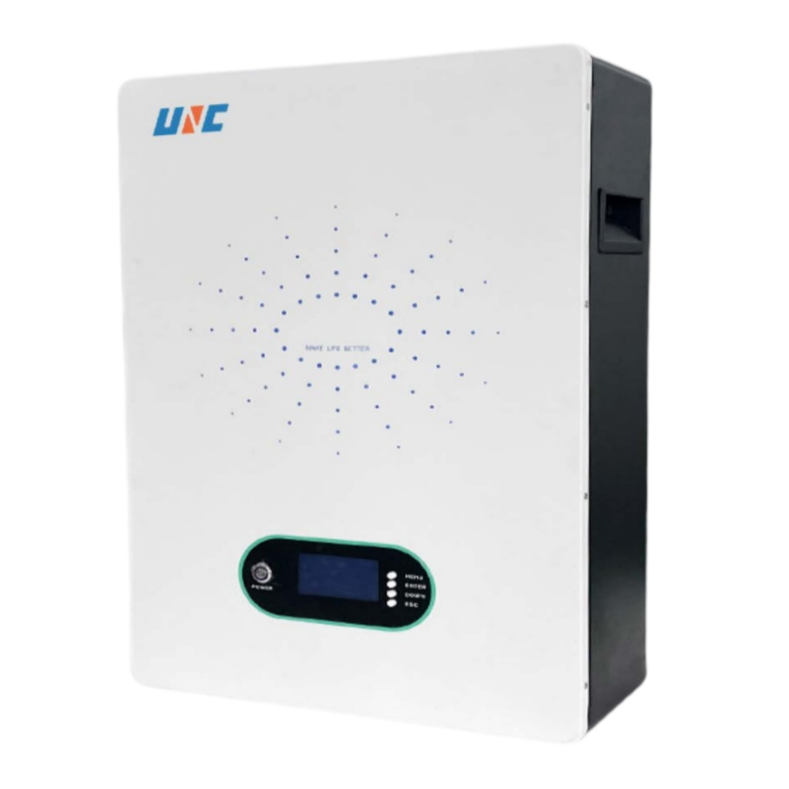
The usual culprit behind early capacity loss in deep-cycling cells is uneven lithium plating on the anode. Here, that issue gets tackled with a dual-layer graphite structure that spreads current density more evenly, plus a subtly modified electrolyte blend that keeps the solid-electrolyte interphase from thickening too fast.
Cathode particles are coated with a nano-scale ion conductor, which stops surface cracking during repeated full discharges. At the same time, the separator is engineered to hold onto just enough electrolyte near the electrode edges, so deep cycles don't leave dry spots that accelerate wear.
On the pack level, a lightweight thermal buffer plate sits between cell rows, absorbing heat spikes that normally push side reactions into overdrive. This keeps internal resistance stable over hundreds of deep cycles, which is why the fade curve stays nearly flat long after conventional cells would start dropping off.
From Mountain Cabins to Mobile Worksites: Where It Earns Its Keep
Up at a cabin without grid power, the real test isn't whether a machine can start—it's whether you can rely on it day after day. The constant hum becomes background noise as it runs the lights, keeps the fridge cold, and charges the tools you brought along. There's no need to ration power or time your usage around a weak charge, because the output stays steady even when the temperature drops and the altitude thins the air.
On a worksite, it's less about comfort and more about getting the job done before the crew loses light. Framing crews run saws and compressors off it, while a trailer office keeps laptops and battery chargers plugged in. The unit doesn't need a flat patch of concrete or protection from every gust—it sits out near the material pile, gets dusty, and still fires up the next morning without a complaint.
Then there are the in-between spots: a tailgate setup at a remote trailhead, a pop-up market booth, or a field kitchen during harvest. These aren't glamorous, but they're where gear either proves itself or gets returned. It handles the load swings when a coffee maker kicks on while a space heater is already running, and it doesn't throw a fault code just because someone plugged in an old extension cord with a loose end.
Thermal Runaway Is Not on the Menu: Safety by Design
Kitchens are full of things that can go wrong in spectacular fashion—open flames, hot oil, gas leaks. Yet the appliances we rely on every day rarely burst into flames because they’re built with failure in mind. Thermal runaway, the vicious cycle where heat builds faster than it can escape, is the kind of problem you design out before it ever reaches the countertop. It’s not an add-on or a last-minute patch; it’s baked into the shape of a heat sink, the spacing of a vent, the choice of a thermal cutoff that trips long before things get exciting.
Think of a battery pack in a cordless mixer or a motor in a high-speed blender. Each component has a thermal ceiling. Safety by design means mapping those ceilings and then building in margins that feel almost wasteful—extra airflow, thicker insulation, sensors that throttle power when temperatures climb. The goal isn’t to stop a fire once it starts; it’s to make sure the conditions for that fire never line up. A well-designed appliance doesn’t fight thermal runaway. It simply makes thermal runaway impossible to reach.
This approach shifts the conversation from “what happens if it fails?” to “how do we make failure boring?” Good safety engineering is quiet. It lives in the mundane details: a fuse that costs pennies, a fan curve that keeps air moving, a material that doesn’t warp under repeated heat cycling. When thermal runaway isn’t on the menu, you don’t need dramatic rescue features. You just need a design that respects heat as the enemy it is—and refuses to give it a seat at the table.
Installation Day: Tools, Time, and What You’ll Actually Need
You don't need a rolling tool chest for most installs. A cordless drill with a fresh bit set, a stud finder that actually works, a 4-foot level, and a pair of medium-grip pliers handle 90% of the job. Skip the fancy laser measurer unless you're mounting on tile or stone—a tape measure and pencil get it done faster.
Block out two hours, not the optimistic 30 minutes. The first 20 minutes go to locating studs, marking the wall, and digging out the right anchors for your wall type. Actual mounting takes 10 minutes if your marks are right. The rest is cleanup, adjusting for that sloped floor you didn't notice, and re-reading the instructions for the third time.
You'll need a pack of assorted wall anchors rated for your wall material, a small tube of spackle for the inevitable missed hole, and a roll of painter's tape to hold the template. A second pair of hands helps more than any gadget, but a folded towel on the floor can do the same job for leveling.
Battery Lifespan Math: Cycles, Warranty, and Real-World Wear
Most battery warranties lean on a simple formula: either a set number of years or a total cycle count, whichever arrives first. But that math rarely matches how cells actually degrade outside a test bench. A pack rated for 1,500 cycles to 80% capacity might lose that margin faster if it's regularly fast-charged, stored at full charge in summer heat, or cycled through deep discharges. The warranty is a legal hedge, not a promise of real-world endurance.
Cycle count itself is slippery. One full cycle can mean a single 100% to 0% drain, but partial discharges add up differently. Charging from 40% to 90% every day might tally as half a cycle on paper, yet the stress on the anode isn't linear. High state-of-charge storage and elevated temperatures accelerate side reactions that don't show up in a simple cycle counter. That's why two identical packs can hit the same cycle number with a 10% gap in remaining capacity.
In practice, the useful lifespan is less about the warranty's fine print and more about how the battery is treated during its first few hundred cycles. Keeping charge between 20% and 80% for daily use, avoiding aggressive DC fast charging when the pack is hot, and parking in shade can stretch real-world life well beyond the manufacturer's baseline. If the warranty promises 70% capacity after eight years, a gentle usage pattern might leave you at 85% instead—or the reverse if you treat every charge like a race pit stop.
FAQ
A full 16kWh charge easily covers a refrigerator, chest freezer, LED lights, a water pump, and a few small electronics for a full day. If you skip the freezer, the same charge can stretch into a second day without much effort.
That depends on your array size. With a 2kW solar setup and decent sun, expect a full recharge in about 8 to 10 hours. A 4kW array cuts that down to roughly 4 to 5 hours, and a backup generator can top it off even faster.
Yes, because it uses lithium iron phosphate chemistry and a built-in battery management system that guards against overcharge, overheating, and short circuits. Most owners place it in a utility room, basement, or attached shed with some ventilation, though it is safe enough for indoor mounting.
You can usually parallel up to four units to create a 64kWh bank, and some installations go as high as eight. That lets you start with one pack and expand later without replacing your existing inverter or wiring.
Very little. You should check the terminal connections once or twice a year for tightness, keep the unit dry and free of dust, and occasionally update the battery management firmware if your supplier releases a new version.
It handles cold better than many other chemistries, but below-freezing temperatures will reduce charge speed unless the pack has a built-in heating element. Many 16kWh models include low-temperature protection and internal warmers, so you can still operate through winter as long as the battery is not left buried in snow.
Most export-grade packs include a 5- to 10-year warranty and remote monitoring support. The supplier usually provides a local contact or direct line for troubleshooting, and replacement parts are shipped with customs documentation handled for you.
A 16kWh pack typically weighs between 150 and 190 kilograms. You will want at least two strong people, a heavy-duty hand truck, and a path without stairs. Some enclosures have built-in side handles or a pallet base for easier positioning.
Conclusion
The Export 16kWh Energy Storage Battery Pack redefines off-grid reliability by matching real-world energy demands without exaggeration. A careful look at what actually fits within its capacity—fridges, lights, power tools, communication gear—shows it covers essential loads for a cabin or mobile worksite through a full day and night. Inside, the pack leans on deep-cycling cell chemistry and a battery management system that resists early fade, so repeated charge-discharge cycles do not quietly erode usable capacity the way cheaper alternatives do. That engineering choice matters most where grid access is a memory, and every watt-hour has to count.
From mountain cabins to field trailers and remote job sites, this unit earns its place by surviving daily use without drama. Safety is not an afterthought: the enclosure and thermal controls are designed to keep runaway conditions off the table, which is exactly what you want when the nearest fire station is miles away. Installation stays practical—hand tools, a clear manual, and a realistic timeframe get the system mounted and wired. And the lifespan math backs the promise: cycle ratings, warranty terms, and honest expectations about real-world wear give buyers a clear view of what they are getting, rather than marketing fluff.
Contact Us
Contact Person: Manager Leng
Email: [email protected]
Tel/WhatsApp: 8613764878967
Website: https://www.unc-energy.com