

Export Membrane Filter Press Strategies for Global Markets
2026-11-02
Every year, thousands of membrane filter presses cross borders—yet only a fraction of exporters actually capture the markets they target. The difference rarely comes down to product specs on a datasheet. It comes down to how well a manufacturer reads the silent rules of each region: certification quirks in Europe, after-sales expectations in Southeast Asia, or the tender politics in Latin America. Sinou has spent years decoding these patterns, and the lessons aren't what most export manuals tell you.
Reading Local Sludge Rules Before Sending a Single Plate
Sludge rules are not the same from one town to the next, and even neighboring counties can have completely different definitions of what counts as acceptable material. Before you load a single plate onto a truck, pull up the local ordinance or call the environmental office. The last thing you want is to arrive at the facility only to find out your shipment is rejected because the moisture content is two percent over the limit.
Some areas require documentation that shows the sludge was tested for specific heavy metals within the last thirty days. Others want proof of pathogen reduction or a signed manifest before the plate even leaves your site. Skipping this step isn't just a paperwork headache; it can trigger fines or force you to store the material longer than you planned. The rules often mention exact thresholds for pH, solids content, and even how the sludge should be contained during transport.
A good habit is to treat the local rulebook as something that changes without much warning. What was allowed last spring might be restricted now, and a quick phone call to the regulator can save you from relying on outdated advice. Keep a short checklist of the current requirements for each jurisdiction you deal with, and update it whenever you get a revised permit or notice. That way, sending a single plate doesn't turn into an unexpected compliance lesson.
Choosing Distributors by Their Maintenance Team Not Their Territory
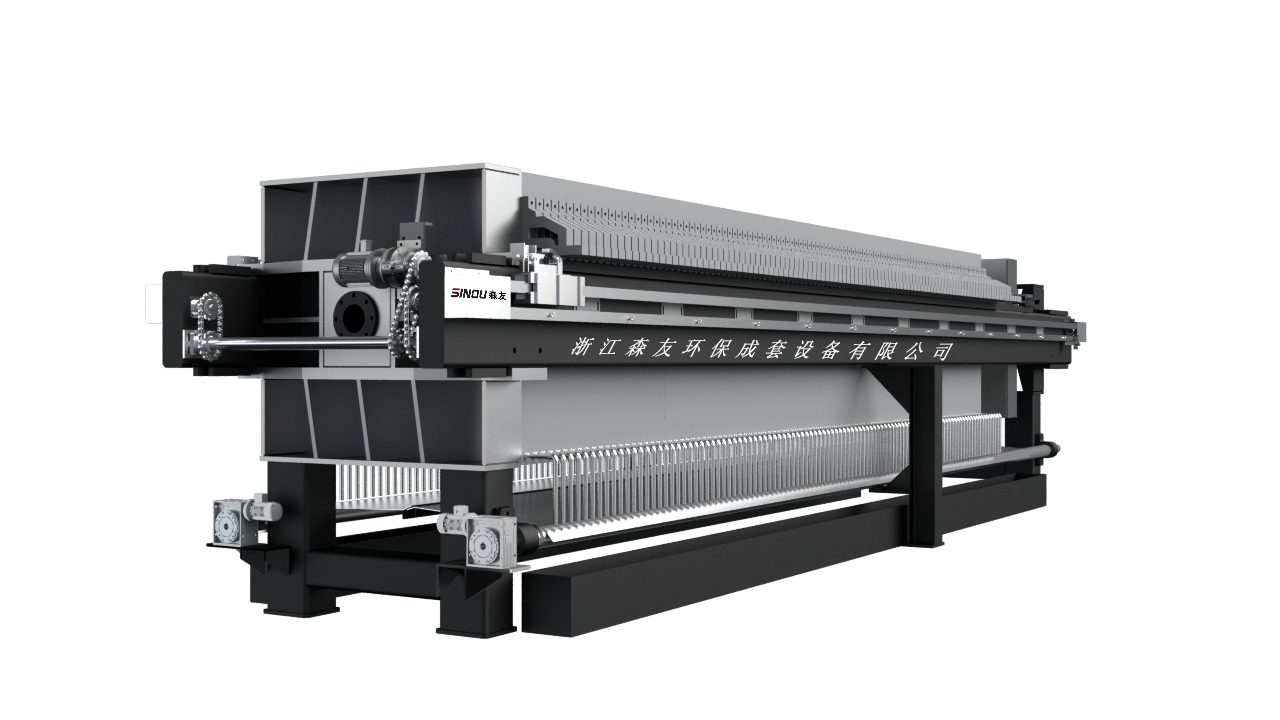
Territory maps often dominate distributor selection, but once the equipment is sold, it's the maintenance team that shows up at the customer's door. A distributor that only focuses on geographic boundaries may overlook the real question: who answers the call when a machine breaks down at midnight? If the maintenance crew is slow to respond or lacks technical depth, even a vast territory becomes a liability.
The quality of the maintenance team directly shapes whether customers renew contracts or recommend the product. A distributor with a smaller territory but seasoned technicians can often reach sites faster, diagnose issues more accurately, and even perform preventive maintenance before failures occur. That kind of trust compounds over time and matters more than simply expanding coverage. Conversely, a large-territory distributor may spread its maintenance resources so thin that individual customers receive less attention.
So when evaluating distributors, put maintenance team qualifications, average response time, spare parts inventory, and customer feedback ahead of territory size. Ask how many certified technicians they have and whether they offer 24/7 on-call support, instead of just asking how many provinces or states they cover. What truly sustains a long-term partnership is the people carrying the toolboxes, not the colored blocks on a map.
Sizing Membrane Chambers for Humid Versus Arid Operations
Sizing a membrane chamber starts with recognizing that water vapor behaves differently at the two extremes. In humid environments, the driving force for moisture transfer across the membrane is weak, so the chamber often needs a larger effective membrane area or a reduced packing density to avoid condensation pooling between sheets. This is not just a surface-area calculation; the internal geometry must allow for drainage channels that remain clear at dew point, which can add 15–20% to the chamber volume compared to a dry-climate baseline.
Arid operations invert the challenge. Low absolute humidity can cause some membrane materials to lose plasticization and shrink slightly, which tightens seals but also risks micro-tears if the chamber frame does not accommodate dimensional change. Here the sizing priority shifts toward providing a stable microclimate inside the enclosure: a slightly larger air buffer around the membrane stack, combined with baffles that slow inlet air, helps prevent dust accumulation and stabilizes local humidity before the stream reaches the active surface.
A practical approach is to avoid a single standard chamber dimension and instead use a climate-adjusted scaling factor. For sites with average relative humidity above 65%, increase the chamber cross-section by 10–15% and add sloped internal floors with dedicated condensate outlets. For sites with RH below 30%, add an internal humidification zone of 5–8% extra volume and specify gaskets rated for a wider temperature-humidity envelope. Field data from both types of installation consistently show that the added volume pays for itself in reduced cleaning cycles and longer membrane life.
Pricing Against Local Rebuild Shops Without Racing to the Bottom
Local rebuild shops often lean on low hourly rates and fast turnaround to win jobs. Matching them dollar for dollar rarely ends well—it cheapens your work and locks you into a cycle of shrinking margins. Instead, start by separating what customers actually pay for: your diagnostic accuracy, the quality of replacement components, and the confidence that the repair won't fail in six months.
Transparency is a stronger lever than most shop owners realize. Show customers exactly what a rebuild includes, down to torque specs and break-in procedures. Many local shops skip these steps or bundle them into vague labor charges. When you itemize your process—say, new gaskets, line boring, and measured clearances—the price difference stops looking arbitrary. It becomes a comparison between a guess and a documented procedure. This works especially well for engines, transmissions, and differentials where hidden damage is common.
Finally, resist the urge to win every quote. Set a floor based on your actual costs plus a reasonable margin, and hold it. Some customers will choose the cheaper shop—that's fine. The ones who stay tend to value reliability and will return for future work. Over time, that builds a reputation local rebuild shops can't touch without copying your standards, which they rarely do.
Shipping Spare Parts Kits Before the First Breakdown
A machine seldom gives warning before a critical part fails. That is why sending spare parts kits ahead of the first breakdown changes the entire maintenance game. Instead of waiting for a production line to stop, technicians can replace worn components the moment they notice unusual vibration or heat. The kits are packed for each specific asset, so every seal, bearing, and filter is already there. This approach prevents the frantic phone calls and overnight shipping costs that come with unexpected downtime.
The real advantage shows up in the warranty period. Most manufacturers cover parts but not the lost hours. By having a kit on the shelf from day one, a facility can swap a failing part during a planned lunch break rather than at 3 a.m. on a Sunday. Kits should include both high-failure items like belts and sensors, plus the small hardware that often gets overlooked: clips, O-rings, and shims. A missing two-dollar clip can hold up a repair just as long as a blown motor.
Building these kits takes a bit of field history. Talk to the operators who know which parts tend to wear together. Then group them by failure mode, not by part number. For example, a hydraulic pump kit might include the shaft seal, the backup ring, two filter elements, and torque specs printed on a waterproof card. The goal is simple: every breakdown should find the fix already waiting in a labeled bin, not in a supplier's warehouse across the country.
Documenting Installations to Win Contracts in Nearby Regions
Nearby regions rarely ask for a glossy brochure; they ask for proof that you have already handled their soil, their weather, and their permitting quirks. A meticulously kept installation log does that work. Instead of only photographing the finished array or duct run, record the pre-install site condition, the middle stage where brackets or anchors meet actual ground, and the post-install sign-off. When a town thirty miles over asks for evidence, you can pull up a folder that shows the exact frost depth, bracket spacing, and inspection notes from a job with similar topography. That turns “we can do it” into “here is where we already did it.”
The richest documentation is not polished marketing; it is field marginalia. Include a foreman’s note about moving a trench line to avoid an unmapped drain tile, a photo of the adjusted footing before concrete, and the client’s initials next to that change. Nearby evaluators recognize this as operational honesty. It also saves your crew from repeating mistakes because the notes become a living reference for future bids. When one county sees that you documented a revised anchor pattern due to ledge rock ten miles from their project, they stop worrying about your ability to handle their own rocky slope.
Make documentation a closing ritual rather than an afterthought. Within a day of finishing, open the job file and add three to five short lines: what worked, what changed, and what you would tell the next crew. Attach the final inspection report and a few unposed photos. Over a season, those small entries accumulate into a regional map of firsthand knowledge. In bid interviews, hand over a printed digest organized by distance from the new site. Nearby decision-makers see a contractor who treats past work as a reusable asset, not a one-time event.
FAQ
Prioritization should combine quantitative import data with qualitative factors like infrastructure project pipelines and enforcement of environmental regulations. Regions with tightening wastewater standards but underdeveloped local production, such as parts of Southeast Asia and the Middle East, often present faster adoption cycles than mature markets with entrenched competitors.
Pressure equipment directives and material contact certifications vary widely. Rather than treating compliance as a final step, involve a notified body during the design phase. Pre-testing plate materials for regional food-contact or industrial effluent standards avoids costly redesigns and can shorten market entry by several months.
Buyers in emerging markets often fear downtime more than initial price. A regional service partner with trained hydraulic technicians and local spare parts stock can be a stronger sales argument than a lower quote. Some exporters fund this by bundling a two-year service contract into the first purchase, reducing perceived risk.
Differentiation rarely comes from the press itself. Offer process audits that help customers reduce chemical consumption or sludge disposal costs before quoting equipment. Packaging the press with remote monitoring and a predictive maintenance schedule shifts the conversation from capital cost to total cost of ownership.
For projects under a certain value, a technically capable distributor with relationships in municipal water tenders is faster. For mining or chemical clients with customized requirements, a direct application engineer prevents specification mismatches. Many exporters use a hybrid: distributor for lead generation, direct engineer for final negotiation and commissioning.
Avoid discounting the base unit, which trains buyers to expect margin erosion. Instead, unbundle optional features—such as automated cloth washing or higher-grade plates—and let customers build a configuration within their budget. This keeps entry price competitive while protecting margin on upgrades.
Digital channels rarely close a sale, but they pre-qualify and educate. A well-structured site with engineering drawings, case studies by industry, and a configurator that estimates cycle times can reduce the number of unqualified quote requests and let sales engineers focus on serious buyers. The key is technical density, not traffic volume.
The biggest mistake is treating installation and training as a one-time event. Membrane filter presses require periodic plate tension checks and cloth replacement. Exporters that schedule remote check-ins at 90 days and 12 months catch small issues before they become warranty disputes. Shipping spare parts with the original order also prevents long lead times.
Conclusion
Success in exporting membrane filter presses rarely starts with the machine itself. It begins by reading municipal sludge handling codes before a single plate leaves the warehouse, because dewatering limits, polymer restrictions, and disposal classifications vary wildly between jurisdictions. A unit that passes inspection in one port can sit rejected in another simply for using the wrong gasket material or missing a local pressure certification. Once the regulatory picture is clear, distribution choices should hinge on a partner's service bench rather than their sales territory. A distributor with two technicians who understand diaphragm squeeze sequences and plate shifting will outperform a large network that only pushes boxes. Humidity is another quiet factor: chambers sized for arid-region cake dryness will underperform in coastal heat unless the squeeze pressure curve and core blow settings are adjusted for moisture-laden air. So the quoting stage must model both climates, not one generic datasheet.
On commercial terms, local rebuild shops often set the reference price, but chasing them destroys margin and brand trust. Instead, position the offer around total cost per dry ton, including plate life, cloth change intervals, and energy consumption during the membrane cycle. This shifts the conversation away from a bare unit price. At the same time, send a spare parts kit before the first breakdown occurs—not after. A crate with diaphragms, O-rings, proximity sensors, and control relays, packed alongside the press, turns panic calls into routine maintenance. Finally, treat every installation as a case study asset. Photograph the skid layout, record actual cycle times, and capture the operator's notes. Those documented results become the strongest sales tool when bidding for contracts in nearby regions, because plant managers trust a working reference more than a brochure.
Contact Us
Contact Person: HaiYan
Email: [email protected]
Tel/WhatsApp: +86 18957325588
Website: https://www.senyoubeton.com/