
Low-Dew-Point Wheel Desiccant Dehumidifier Unit Company: Key Factors for Selecting a Reliable Partner
2026-11-02
Selecting a low-dew-point wheel desiccant dehumidifier unit company isn't just about comparing airflow rates and rotor diameters. It's about trusting that your partner will keep moisture exactly where it belongs—out of your process. ROTER has spent years refining what matters: stable dew-point control, honest engineering support, and equipment that survives real operating conditions. Before you sign a contract, consider these key factors that separate a truly reliable partner from a vendor that only looks good on paper.
Pin Down Actual Dew-Point Stability in Variable Loads
Many dryers perform well under steady-state conditions, but real compressed air systems rarely stay that predictable. When demand swings sharply—think shift changes, intermittent tool usage, or batch processes—the actual dew point can drift far from the nameplate rating. The gap between laboratory performance and field behavior becomes painfully obvious once you start tracking it with a calibrated hygrometer over a few operating cycles. Variable loads expose weaknesses in thermal mass, refrigerant control, and regeneration logic that constant-flow testing conveniently masks.
Achieving genuine dew-point stability means looking beyond the spec sheet and measuring what happens during the first few minutes after a sudden load spike or drop. A dryer with marginal sizing or slow-responding controls will let moisture slip through during those transitions, even if the average reading looks acceptable. The only reliable way to pin down actual stability is to log dew point at the dryer outlet while deliberately cycling the air demand between low and high levels—mimicking your worst production day, not a steady ISO test point. That data reveals the true operating envelope and whether the system needs thermal storage, faster-acting valves, or a completely different drying technology.
Operators who ignore variable-load performance often end up compensating with oversized dryers or downstream desiccant filters, adding capital and maintenance costs without solving the root problem. Instead, focus on the control philosophy: does the unit modulate its energy input to match load instantly, or does it rely on a slow feedback loop that lags behind demand? The difference shows up as a fluctuating dew-point trace with peaks during load increases and valleys during recovery. Pin that behavior down first, and you can match the dryer to the process rather than crossing your fingers every time production ramps up.
Separate Real Rotor Expertise from Assembly-Only Vendors
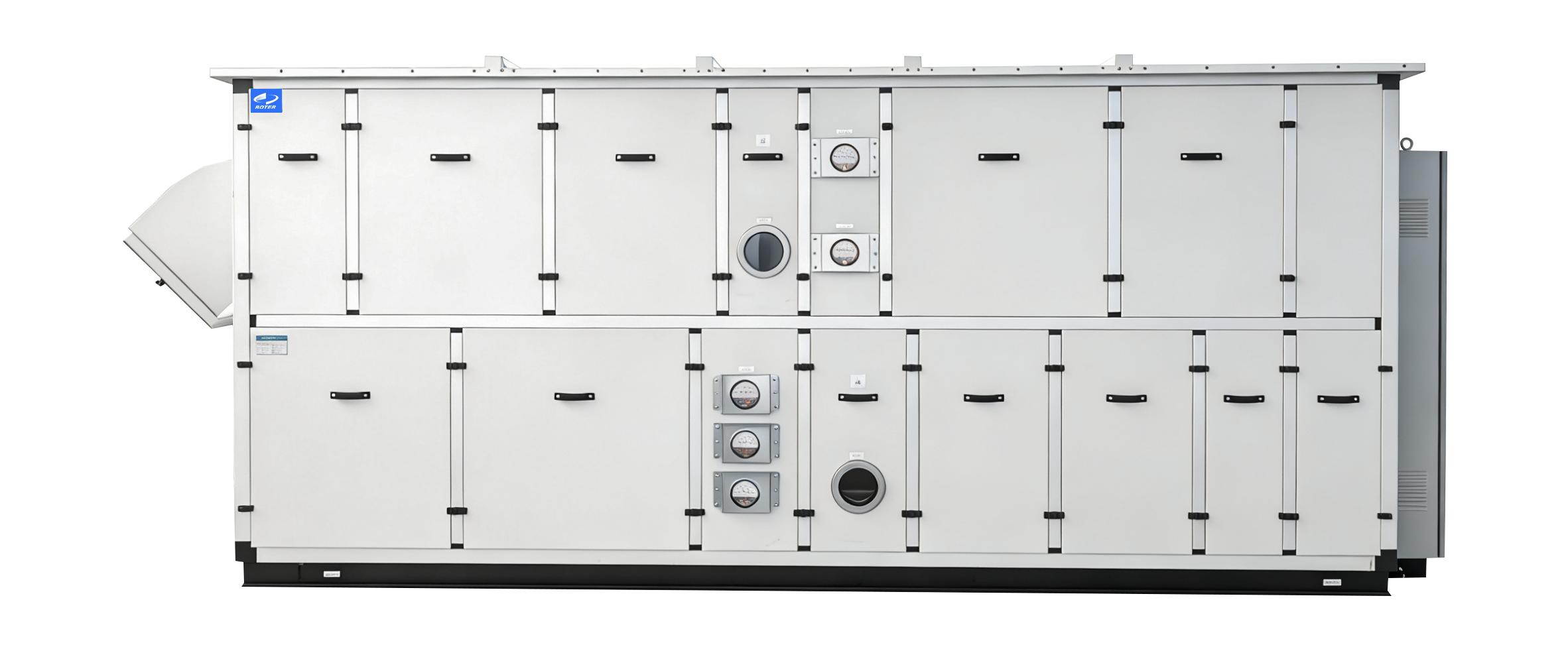
A vendor that simply bolts together off-the-shelf rotors and calls it a day can't offer the precision your application demands. True rotor expertise shows up in the details: balancing tolerances tighter than industry norms, material selection guided by thermal and stress analysis, and the ability to diagnose vibration issues before they leave the test bench. Ask for failure case histories and design iteration logs—assembly-only shops rarely have them, because they've never been forced to solve a rotor problem from first principles.
The gap becomes obvious when you request a custom modification. A real rotor specialist will push back on your spec if it conflicts with rotor dynamics, then propose a workable geometry change backed by calculations. Assembly-only vendors will quote whatever you send, then deliver a part that looks right but underperforms from day one. Look for in-house balancing machines, modal analysis capability, and engineers who can speak to critical speeds, bearing stiffness, and shaft whip. If the sales team can't explain why a particular lamination stack was chosen, you're not talking to a rotor expert.
One practical test: hand over the same rotor drawing to two suppliers and ask for a DFM review. The expert returns redlines on slot geometry, end-ring clearance, and shaft tolerances that reduce harmonics or improve heat dissipation. The assembly-only vendor returns a price and a lead time. That difference—between optimizing a rotor and merely fabricating one—is what separates a partner from a commodity supplier.
Test After-Sales Response Before You Sign
Before committing to a purchase, take a few minutes to send a simple inquiry to the seller's support channel. The speed and quality of the response you receive can reveal far more about the company than any warranty document. If it takes days to get a one-line reply that doesn't address your question, imagine how you'll be treated when a real problem arises after you've already paid.
Pay attention to the tone and substance, not just the response time. A helpful team will ask clarifying questions, offer specific solutions, or point you to relevant resources. Generic copy-paste replies or an immediate push toward a paid upgrade are red flags. You want to know that the people behind the product actually understand it and care about your experience.
This pre-purchase test also works for hidden costs and refund policies. Ask directly about what happens if the product fails, how returns are handled, and any recurring fees. A transparent, detailed answer shows confidence in the product. Hesitation, vague language, or pressure to sign before answering should make you walk away.
Compare Controls Depth, Not Just Hardware Specs
When comparing synths, a spec sheet tells you about polyphony, filter types, built-in effects. But the real difference often shows up once you start reaching for knobs. Two instruments can share nearly identical voice architecture, yet one feels immediate and expressive because its front panel gives you direct access to envelope stages, oscillator mixing, and modulation routing. The other hides those same parameters in a menu, forcing you to stop playing and break the flow. That gap doesn't appear in a list of hardware specs, but it defines how you actually use the instrument day to day.
Depth of control also means how far a single physical gesture can go. A row of endless encoders might look impressive, but if each knob is hardwired to one parameter and there's no way to reassign or scale its range, you hit a wall quickly. Better to look for macro controls, per-part mod matrices, and freely assignable faders that let you shape multiple destinations from one movement. Compare how many parameters you can touch without shifting pages, how fast you can map a controller to a DAW, and whether performance controls like aftertouch or expression inputs are treated as first-class citizens. These practical details matter more than a slightly higher LFO count or an extra octave of keys.
Review Projects That Mirror Your Humidity Challenge
A humidity problem rarely exists in isolation, which is why reviewing projects with similar moisture loads can reveal failure points that specs alone won’t show. Instead of matching only the target relative humidity range, pay attention to daily fluctuations, wall assembly choices, and how operators responded when dew point shifted during shoulder seasons. Those details often expose whether a solution was robust or merely lucky.
Look for projects that share your material vulnerabilities rather than just your building type. A museum storage retrofit and a pharmaceutical drying room might struggle with the same vapor drive through a concrete slab, even though their setpoints differ. Reading through post-occupancy notes, sensor logs, and maintenance complaints can highlight where control strategies drifted after commissioning—especially when occupancy patterns or outdoor conditions changed.
Don’t expect to transplant a design wholesale; use these reviews to build a short list of decision rules. Note which fixes held up under partial-load conditions, how redundancy was handled, and whether the team accounted for condensation at transitions between conditioned and unconditioned zones. That kind of pattern recognition tends to come from cross-industry comparisons more often than from single case studies.
Demand Transparent Testing Data and Documentation
Transparent testing data and documentation aren't just nice-to-haves—they're the foundation of trust in any technical or scientific claim. Without open access to raw results, methodologies, and reproducible protocols, stakeholders are left guessing whether the numbers reflect reality or marketing. The demand here is simple: release the full testing record, including failures, anomalies, and the exact conditions under which each measurement was taken.
What often gets overlooked is how documentation shapes downstream decisions. Engineers, regulators, and end users rely on clear test logs to spot edge cases, compare performance across versions, and hold vendors accountable. A sparse PDF with cherry-picked charts doesn't cut it. We need versioned datasets, calibration details, and plain-language summaries that explain why a test was designed a certain way and what the results actually imply for real-world use.
Pushing for this level of transparency flips the usual dynamic: instead of asking “why should you share everything?”, the question becomes “what do you have to hide?”. Companies that embrace full disclosure often find it speeds up debugging, builds lasting credibility, and turns testing from a black box into a collaborative tool. The alternative—guarded, incomplete reports—only breeds suspicion and slows down the entire ecosystem.
FAQ
Look beyond brochure specs. Check the rotor's substrate and desiccant composition—silica gel vs molecular sieve blends behave differently below -40°C. Ask for third-party test data showing actual outlet dew point under varying regeneration temperatures and process air loads. The frame sealing system and purge sector design often determine whether the unit can hold -60°C dew point without leakage. Request detailed drawings of the cassette and drive mechanism; cheap units often have poor sealing that bleeds moisture back into dry air.
Don't rely on a single data point. Request a witnessed factory test with a calibrated dew point meter at the exact process air conditions you'll run. Better yet, ask for a list of existing installations operating at similar dew points and contact those end users directly. Ask about long-term drift—does the unit hold -70°C after two years or only on day one? A good manufacturer will also provide a performance guarantee tied to actual inlet conditions, not ideal lab settings.
The rotor is the core. For -60°C or lower, a standard silica gel rotor won't cut it; you need a molecular sieve or hybrid desiccant with high adsorption capacity at low relative humidity. Ask the supplier for the isotherm curves of the desiccant, not just a material name. Rotor construction matters too—fluted media with high surface area and low pressure drop, plus a robust hub and spoke system to prevent warping. Inexpensive rotors often lose structural integrity after repeated thermal cycling, leading to uneven air distribution and moisture breakthrough.
Look for a partner that treats commissioning as a joint project, not a one-time delivery. They should offer on-site dew point verification after installation, provide training for your maintenance team on desiccant rotor care and regeneration heater calibration, and maintain a local stock of critical spares like seals, bearings, and drive belts. Ask about their average response time for service calls—under 48 hours is reasonable. Avoid companies that outsource all service to third parties; you want direct accountability.
Extremely important, because ultra-low dew point applications rarely fit a standard catalog unit. The supplier should be willing to engineer around your specific airflow, available regeneration heat source (electric, steam, or waste heat), and footprint constraints. Can they integrate pre-cooling or post-cooling coils, humidity sensors, and PLC controls from different vendors? A reliable partner will produce full custom GA drawings and electrical schematics for approval before fabrication, not just tick boxes on an order form.
ISO 9001 is a baseline, but dig deeper. Ask if they pressure-test the dehumidifier casing and inspect rotor seal clearances during assembly. For pharmaceutical or food applications, check for cGMP-compliant manufacturing and maybe ATEX or IECEx ratings if solvents are present. A good QC program includes leakage testing of the entire air path at the rated static pressure, verification of regeneration heater output, and documented rotor runout measurements. Ask to see a sample inspection report from a recent build.
Specific project depth. A general HVAC maker might have one or two dry room jobs, while a specialist has dozens of installations below -40°C in lithium battery, pharmaceutical, or petrochemical plants. Ask for a reference list with dates, dew point targets, and contact names. Listen for how they discuss purge air optimization, desiccant regeneration energy recovery, and dew point sensor placement. A true specialist will also warn you about common pitfalls—like moisture ingress through duct penetrations or sensor calibration drift—before you encounter them yourself.
Conclusion
When evaluating a low-dew-point wheel desiccant dehumidifier manufacturer, don't settle for catalogue promises. Push for actual dew-point stability under shifting loads—many units drift once airflow or moisture load fluctuates, and that's where the real performance shows. Equally important is digging into who actually builds the rotor. A company that simply assembles purchased components rarely understands regeneration temperature tuning or desiccant saturation limits. Ask how their control logic adjusts reactivation heat and rotor speed in real time; the depth of that programming often matters more than a spec sheet full of impressive numbers.
Before signing anything, simulate a service call. See how fast they respond, whether they offer remote diagnostics, and if spare rotors or seals are actually available. Then request references from projects that faced humidity challenges similar to yours—pharmaceutical cold rooms, lithium battery dry rooms, or food packaging lines behave differently. Finally, demand raw test data: dew-point curves at part load, chamber leakage rates, and validation documents. A supplier who hesitates to share that information probably hasn't tested it thoroughly.
Contact Us
Contact Person: Rhea
Email: [email protected]
Tel/WhatsApp: +8618800560886
Website: https://www.rotorairtech.com