

MNS Switchgear Supplier Guide to High-Quality Low-Voltage Switchgear Solutions
2026-11-02
When low-voltage distribution leaves no room for error, the supplier behind your MNS switchgear matters as much as the hardware itself. This guide cuts through common sales talk to show what high-quality MNS solutions actually require—from modular flexibility and short-circuit withstand to lifecycle service. Along the way, you'll see how MOLDVOLT turns those requirements into everyday engineering practice. If you've ever wondered why two MNS-style panels can look similar yet perform completely differently under fault conditions, the next few minutes will give you a clearer lens for evaluating suppliers.
Reading MNS nameplate data without missing critical ratings
MNS nameplates pack a surprising amount of data into a small space, and the real risk isn't misreading a single value but skipping past one that doesn't match your usual checklist. Most technicians glance at voltage and current, then move on. Yet the short-circuit withstand rating, the degree of protection, and the busbar current rating are often printed in smaller type or placed near the edge where the eye tends to jump. If you don't force yourself to scan line by line, those numbers vanish.
A few values deserve extra attention because they are frequently overlooked. The rated insulation voltage (Ui) and rated impulse withstand voltage (Uimp) can sit next to more familiar figures, and they matter as much for safety margins as the main voltage rating. Pay attention to Icw and Ipk if the switchgear will face fault conditions; those short-time and peak withstand currents are not interchangeable with the breaking capacity. Also check the IP code and the busbar cross-section or rated current, since both are easy to pass over when you're focused on the outgoing circuit data.
A practical way to avoid missing anything is to photograph the nameplate straight on, then zoom in on each quadrant while comparing the values to the project documentation. Read every field out loud or write it into a checklist, even the ones you think you already know. If the nameplate shows a rating that doesn't match the drawings or the order specification, stop and verify before you accept the equipment. That pause is cheaper than discovering a mismatch after installation.
Busbar joints and temperature rise: overlooked failure points
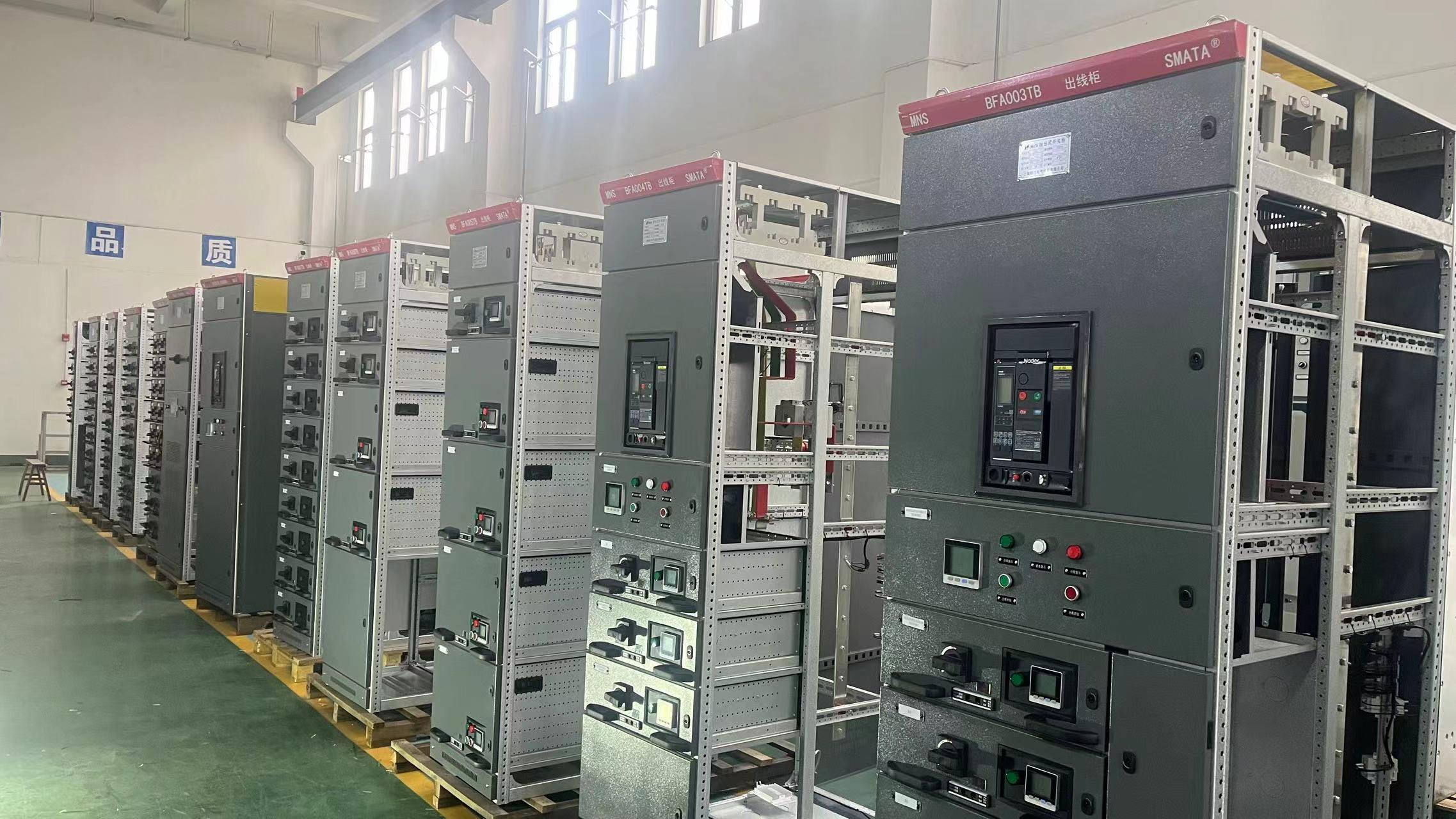
Most thermal failures in busbar systems don't start in the conductor itself, but at the bolted or clamped joints where two sections meet. Joint resistance is often higher than the base busbar resistance, and it degrades over time due to oxidation, creep, and loosening under thermal cycling. A joint that measured within specification during commissioning can drift into a dangerous range after just a few hundred load cycles, especially in environments with vibration or wide temperature swings.
Temperature rise at these points is rarely uniform. The outer surface may stay relatively cool while the internal contact interface runs hot, giving maintenance crews a false sense of security during infrared inspections. This hidden hotspot accelerates oxide growth and further increases resistance, creating a feedback loop that can lead to localized melting, arcing, or complete joint separation.
Ignoring joint health because the overall busbar run shows acceptable resistance is a common mistake. A handful of degraded joints can push total system losses and temperature rise well beyond design limits, even when the busbar sections themselves remain electrically sound. Regular torque verification, use of proper contact compounds, and periodic thermal imaging focused specifically on joint areas are the only practical defenses against these subtle but destructive failure points.
When to choose fixed or withdrawable MNS modules
Choosing between fixed and withdrawable MNS modules often comes down to how much downtime you can tolerate. Fixed units are bolted directly into the busbar system, which makes them more compact and less expensive up front. If the application is relatively stable—like a feeder circuit that rarely needs isolation or component replacement—this design makes practical sense. You simply don't pay for the extra mechanics of a draw-out carriage you won't use.
Withdrawable modules start to make sense when every minute of downtime carries a direct cost. Sliding the unit out, testing it on a spare slot, and replacing a breaker or contactor in minutes is a practical advantage that fixed units cannot match. Critical processes, frequent reconfiguration, or environments where visible isolation is required for safety all push the decision toward this style. The added cost and cabinet depth are not drawbacks in those cases—they are the price of keeping the line moving.
A middle path is common in larger installations: fixed modules for stable, non-critical outgoing feeders, withdrawable modules for incoming mains, motor control centers, or any circuit where a single fault could cascade. This mixed approach balances budget with operational resilience, letting the duty cycle and risk profile of each circuit dictate the choice instead of a blanket rule.
Arc fault containment in compact low-voltage rooms
Space constraints in compact low-voltage rooms amplify the destructive potential of an arc fault. With equipment packed tightly together, the release of thermal energy and pressure has fewer paths to dissipate, which can lead to rapid temperature spikes, structural damage, and a higher chance of secondary faults. Traditional ventilation or blast relief methods often fall short because ducting and clearance zones simply do not exist in these installations. As a result, every square centimeter of the room must be evaluated for how it will behave during the first milliseconds of an arc event.
A practical approach starts with arc-resistant switchgear and panel designs that redirect the pressure wave away from operator areas. Internal barriers and dedicated vent channels route hot gases toward a safe discharge point, typically through the top or rear of the enclosure. In parallel, fast-acting optical sensors or pressure detectors can trip the upstream breaker within a few milliseconds, cutting off the fault before it develops into a sustained plasma discharge. These measures are especially useful in compact rooms because they reduce the need for large standoff distances that simply are not available.
Layout decisions also play a major role in containment. Locating the most fault-prone equipment near dedicated exhaust paths and keeping access corridors clear of potential blast zones lowers the risk to personnel during inspection or switching. Some designs use compartmentalization with reinforced partitions, so an arc in one section cannot easily propagate to adjacent cubicles. Remote racking and monitoring further minimize the need for personnel to stand in front of energized gear, making the tight space safer without requiring additional floor area.
Factory testing versus site testing: what to demand from a supplier
When you're negotiating with a supplier, the distinction between factory testing and site testing often gets blurred. Factory testing happens in the controlled environment of the manufacturing facility, where the supplier has full command over equipment, conditions, and calibrations. It's their home turf, and the results tend to reflect that advantage. Site testing, by contrast, throws the equipment into the real world—your facility, your power supply, your ambient conditions, your operators. The same machine that passed every check on the factory floor can stumble the moment it's bolted into place on your production line.
That's why what you demand from a supplier should be precise and non-negotiable. Insist that the factory test certificate lists every parameter relevant to your actual operating conditions, not just the generic ones they print by default. Ask for raw data, not just a pass/fail stamp. Then, before you sign off on the final payment, require a site acceptance test that mirrors your real production load and environment. If a supplier resists this, or tries to dismiss discrepancies as 'normal installation effects,' treat that as a red flag. A responsible supplier will already have a procedure to reconcile factory and site results, and will want to close that gap rather than hide it.
The real leverage comes when you make the acceptance criteria clear at the quotation stage. Specify exactly what constitutes a pass in your environment—voltage tolerance under load, vibration limits, temperature rise, noise, whatever matters for your operation. Then hold them to it. A factory test is a promise, but a site test is proof. Demand both, and make sure the contract gives you the right to withhold acceptance until the equipment performs at your site as well as it did at theirs.
Lifecycle cost of MNS switchgear beyond the purchase order
The sticker price of an MNS switchgear barely scratches the surface of what you will actually pay over its service life. What separates a genuinely cost-effective installation from a budget trap is how the equipment behaves once it is bolted to the floor and energized. MNS's modular drawer design, for instance, lets you swap a feeder or motor starter in minutes without de-energizing the entire board. That single design decision eliminates the need for a full shutdown during routine changes, which in process-critical facilities can translate into six-figure savings per avoided outage. The real cost conversation starts not with the purchase order, but with how many hours of production you will never lose.
Operational expenses dominate the lifecycle curve, and here the MNS architecture quietly works in your favor. The vertical busbar arrangement and ventilated compartment design keep temperature rise low, which directly reduces resistive losses inside the panel. Over a decade, those losses add up to a noticeable line item on your energy bill. More importantly, the optional condition monitoring sensors embedded in critical joints give you a continuous view of hot spots and contact wear. Instead of scheduling maintenance by calendar guesswork, you intervene only when the data says a joint is degrading. That shifts your spending from fixed, routine labor to targeted, just-in-time fixes—lowering both manpower hours and the probability of a catastrophic failure that would dwarf any initial savings.
End-of-life and mid-life reconfiguration costs are often ignored until they bite. MNS's standardized, bolt-together compartments mean you can add a new feeder or upgrade protection relays without replacing the entire switchgear lineup. A drawer removed from one section can be reinserted into another after a simple rating check, giving your asset a second life elsewhere in the plant. When the time finally comes to decommission, the high recyclability of copper and steel in the frame returns a meaningful scrap value, and the absence of exotic composite materials keeps disposal fees low. None of these factors appear on the initial quotation, yet they determine whether you pay once or keep paying for the next twenty-five years.
FAQ
MNS refers to a modular, low-voltage withdrawable switchgear system originally developed by ABB, though many manufacturers now produce compatible designs. It's common in power distribution for industrial plants, commercial buildings, and infrastructure projects where reliable power management and quick maintenance matter most.
Look beyond brochures. Ask for type-test certificates, internal arc classification details, temperature rise test reports, and examples of installations in similar environments. A supplier that provides full documentation and lets you inspect their fabrication process is usually more trustworthy than one that only emphasizes low price.
Key differences include busbar material and plating quality, the precision of the withdrawable unit mechanics, interlocking reliability, internal separation forms (up to Form 4), and attention to cable termination space. High-quality panels also maintain consistent dimensional tolerances and easier access for maintenance without compromising safety.
Not at all. Some suppliers only produce standard configurations, while others can adapt busbar ratings, enclosure protection (IP), internal arc withstand, and special metering or communication compartments. Before ordering, confirm whether the supplier can handle your specific single-line diagram and any local grid code requirements.
Regular visual inspections, torque checks on busbar joints, cleaning of ventilation openings, and verifying the operation of shutters and interlocks are usually needed. A well-designed MNS panel reduces maintenance time because the withdrawable modules can be removed easily, and clear labeling plus front-access design prevents unnecessary downtime.
Internal arc containment is critical for personnel safety in installations where operators work near energized equipment. While not every application demands the highest arc class, high-quality suppliers provide arc-tested designs and can advise you on whether your facility's risk profile justifies the added cost.
Ask how they test each panel before dispatch, who performs the final inspection, what warranty period they offer, and how quickly they can supply spare parts or technical support. A supplier that maintains a local service team or provides remote diagnostics is usually more reliable in the long run.
Yes, because the modular design allows you to add or replace functional units without major shutdowns. However, this depends on the supplier's engineering discipline: busbar sizing, spare compartment space, and consistent documentation make expansion straightforward, while poorly planned panels often lead to costly retrofits.
Conclusion
Reading the MNS nameplate is never a formality; it is where hidden assumptions about voltage, current, and short-circuit ratings surface before they turn into field failures. A high-quality low-voltage switchgear supplier trains engineers to spot derating factors, ambient temperature limits, and auxiliary supply details that often get skimmed over. The same discipline applies to busbar joints, which are frequently the weakest thermal link in an assembly. Temperature rise at a joint does not announce itself until corrosion, loosening, or uneven contact pressure has already done damage. Asking for documented torque values and post-installation infrared scans from the supplier is not excessive; it is the difference between a switchboard that lasts twenty years and one that fails quietly after a few load cycles.
Choosing between fixed and withdrawable MNS modules should hinge on operational reality, not catalog preference. Fixed designs cost less upfront and suit compact rooms where arc fault containment demands minimal internal volume. Withdrawable modules, however, pay for themselves during maintenance windows and future reconfigurations. A supplier worth trusting will not push one option; they will walk through fault ratings, room geometry, and how site testing aligns with factory test reports. Factory type tests are only meaningful if the site installation respects the same busbar spacing and ventilation path. Finally, lifecycle cost extends well beyond the purchase order: spare parts availability, local service response, and the ability to upgrade protective relays without replacing entire cubicles define the real price of ownership. This is what separates a genuine MNS specialist from a box builder.
Contact Us
Contact Person: Hellen
Email: [email protected]
Tel/WhatsApp: 86-13634205622
Website: https://www.voltcabinet.com