

OEM Dry Type Transformer Benefits and Key Selection Factors
2026-11-21
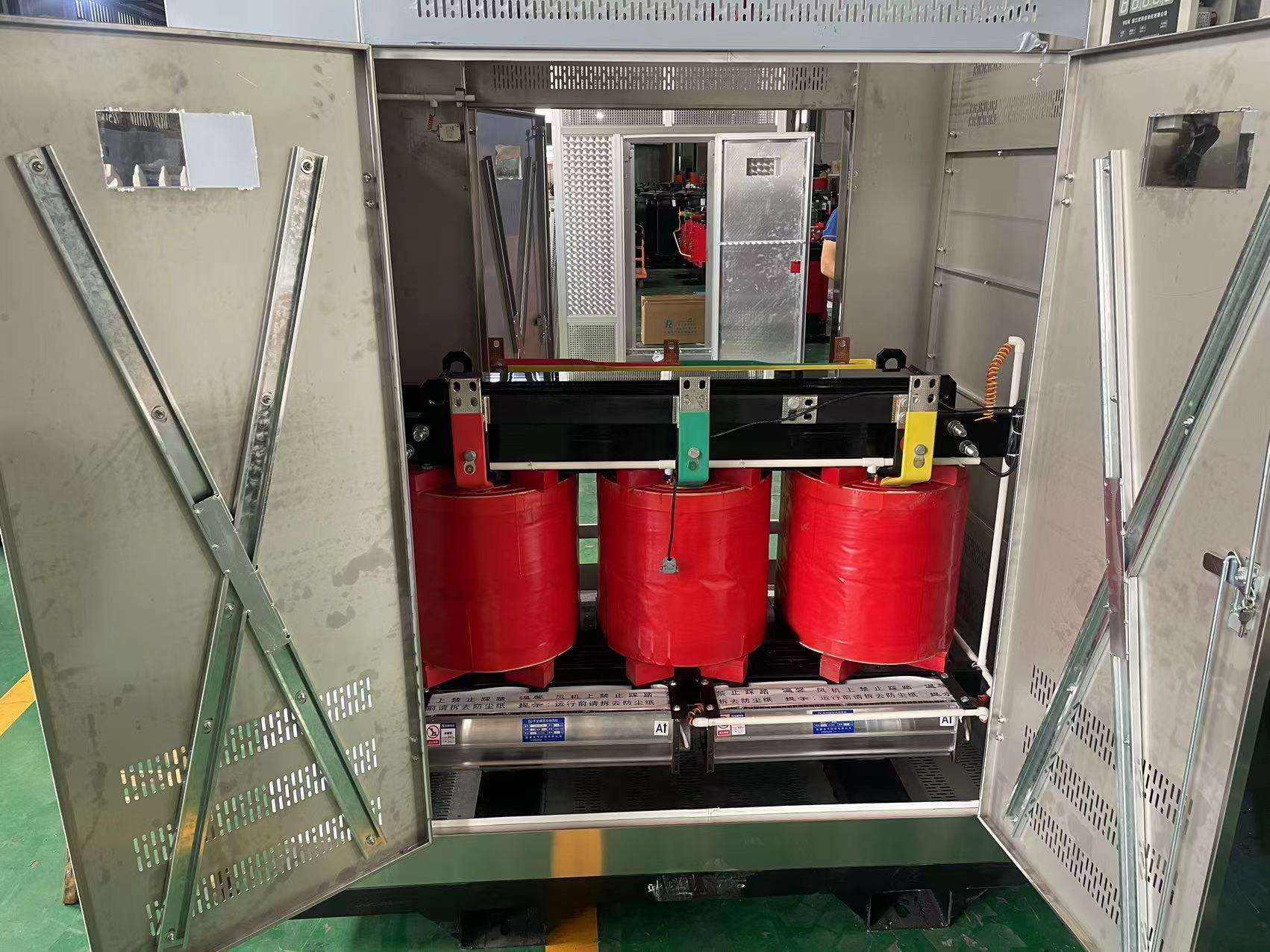
Most transformer buying guides open with the same tired warning about overloads and heat. This one starts with a question: are you actually specifying the right dry type transformer for the OEM equipment you ship, or just reusing a familiar spec and hoping the operating environment behaves? The answer shapes warranty costs, panel footprint, noise complaints, and long-term reliability more than most buyers admit. In this post, we break down the real benefits of OEM dry type transformers and the selection factors that separate a dependable build from a costly compromise. Along the way, we will show how XIAOPAI approaches these design choices without turning every project into a custom-engineering detour.
What Actually Changes When You Move Away from Oil-Filled Units
Moving away from oil-filled units isn't just a swap of insulating medium; it changes how the equipment breathes, ages, and behaves under thermal stress. Dry-type or cast-resin designs eliminate the liquid's heat capacity and natural convection patterns, so hotspots appear faster and cooling relies almost entirely on airflow. That shift means temperature monitoring placement matters far more, and what used to be a slow oil sample trend becomes a real-time thermal image you have to trust without a backup lab analysis.
Maintenance routines get turned upside down as well. No oil top-ups, no dissolved gas analysis, no leak containment, and no periodic filtration. Instead, you inherit concerns around surface contamination, moisture absorption in windings, and partial discharge activity inside voids that can't be seen from the outside. The visual cues disappear, so condition assessment depends on instruments like partial discharge detectors and infrared cameras, which demands a different skill set from the typical oil-handling crew.
Footprint and installation logic also shift. Without the need for bund walls, oil pits, or fire suppression systems tied to flammable liquid, layouts open up, and units can sit closer to load centers or even indoors. But that freedom comes with trade-offs: reduced overload capacity, sensitivity to humid or dusty environments, and sometimes higher harmonic losses. The real change is not a simpler transformer; it's a different failure pattern, a different inspection rhythm, and a different way of listening to what the equipment is trying to tell you.
Why Nameplate Ratings Rarely Tell the Whole Sizing Story
A nameplate rating is a snapshot taken under a narrow set of assumptions: fixed voltage, a standard ambient temperature, and a steady load. Real installations rarely cooperate. The same motor stamped 10 HP can run hot and fail early when asked to start a high-inertia fan in a cold barn, or when it sits in an unventilated corner pushing a conveyor that surges every few minutes. Sizing by the nameplate alone ignores the gap between laboratory conditions and the messy, fluctuating reality of a drive.
Load type matters more than the number on the plate. Centrifugal pumps and fans follow variable-torque curves, so a motor barely above the rated power may work fine at full speed. But a crusher, hoist, or positive-displacement pump demands full torque from the first instant, often under repeated starts or momentary overloads. In those cases, a “properly sized” machine on paper can be electrically adequate and mechanically marginal at the same time.
The useful approach is to treat the nameplate as a reference point, not a decision. Build in thermal headroom, account for altitude and supply voltage swings, and check the actual duty cycle before finalizing frame size, conductor ampacity, and overload protection. That usually means choosing a larger frame or a more robust insulation class than the nameplate math alone would suggest, and it is why experienced engineers keep their own sizing margins rather than trusting the stamp.
Thermal Class Choices That Determine How Long the Unit Lasts
The thermal class of an insulation system is often mistaken for a simple specification line, but it quietly sets the pace of aging inside the unit. A Class B system, rated for 130°C, will not behave like a Class F system rated for 155°C under the same operating stress. The choice reaches beyond a number on a nameplate; it dictates how rapidly the winding insulation loses mechanical strength, how much margin remains during overloads, and whether the unit can still hold together after years of thermal cycling.
In practice, many manufacturers offer multiple thermal class options for the same frame size, which shifts the expected service life rather than the basic output. A higher class does not simply mean a better unit in every case. It means the materials, varnish, and lead wires were selected to survive a hotter internal environment. If the actual operating temperature stays moderate, a lower class may last just as long. But if the application runs near peak load for extended periods, a step up in thermal class can be the difference between a replacement in a few years and a unit that remains serviceable for a decade or more.
The overlooked factor is that thermal class works alongside the average winding temperature, not independently of it. A unit with a Class H rating still ages faster if it constantly runs above its temperature limits, while a Class F unit with conservative loading can outlast it. This is why maintenance records and load profiles matter more than a single label. Choosing the right thermal class is less about chasing the highest rating and more about matching the insulation's endurance to the actual heat the unit will face over its working life.
The Enclosure and Cooling Specs That Get Skipped Too Often
Most build guides obsess over GPU length and radiator size, then overlook the details that actually decide whether a case breathes. The distance between a front intake fan and a solid glass panel, the real clearance above a tall VRM heatsink, and whether those filtered vents can pass enough air at low RPM are the kinds of numbers that rarely make the headline list.
A spec sheet may say seven fan mounts, but the usable count drops fast once cables, drive cages, and a 360mm radiator enter the picture. Checking only the advertised fan slot total is how you end up with a top exhaust blocked by an EPS cable or a bottom intake starving against a PSU shroud. The better move is to map the actual path from intake to exhaust, not just count brackets.
Cooling clearance gets the same treatment. A tower cooler listed at 165mm can still be a problem when the side panel has acoustic foam or a recessed cable channel. Similarly, an AIO with a thick radiator plus push-pull fans looks fine on paper until the RAM slots or motherboard shroud demand a front-mount compromise. Measure the space after considering what surrounds the mount, because the raw number almost never tells the full story.
How Harmonic Loads and Duty Cycles Rewrite Efficiency Math
Efficiency ratings are usually calculated with a clean sine wave and a steady load, but that fiction collapses once a drive feeds a motor through a rectifier or a converter runs in burst mode. Harmonic currents circulate through windings and bus capacitors without delivering useful torque, while core losses climb at higher frequencies in ways a single 50/60 Hz efficiency number never captures. The result is that input watts and output shaft watts no longer line up by a simple ratio, because some of the energy is spent heating steel and copper that only exists in the harmonic model.
Duty cycles add another layer. A load that spends ten seconds near 120% of rated torque and fifty seconds idling is not thermally equivalent to a constant 30% average load, even if the arithmetic average looks the same. Switching losses in IGBTs and diodes peak during the high-torque window, then the cooling system gets a chance to recover, so the effective junction temperature and conduction resistance drift through the cycle. That forces efficiency to be computed as an integral of instantaneous loss over the actual duty profile rather than read from a single operating point.
Once those harmonic and duty-cycle terms are included, a drive that carries a 95% nameplate efficiency may deliver noticeably less under a rectifier-heavy, stop-start load. The practical fix is to treat efficiency as a weighted function of load spectrum and waveform distortion, then size conductors, magnetics, and heat sinks for the peaks that dominate cumulative loss. Designers who ignore this rewrite tend to end up with equipment that meets the datasheet but still runs hot in the real application.
Questions Worth Asking an OEM Before Custom Engineering Starts
Before signing off on a custom build, ask the OEM how much of the core platform can remain untouched. Some vendors quietly push a full redesign because their margins improve, while a competent team should be able to reuse existing boards, enclosures, or firmware modules. Get them to walk through exactly which subsystems change and why, and have them point to the cost and schedule impact of each change rather than accepting a bundled estimate.
Dig into how prototypes will be handled and who owns the test failures. A vague “we’ll validate it internally” isn’t enough. Ask about the number of prototype rounds included, the turnaround time after you submit feedback, and whether thermal, EMC, or regulatory testing falls on you or the OEM. The answer often reveals more about the working relationship than the engineering quote does.
Finally, clarify what happens after the first production batch. Some OEMs deliver the design files but keep firmware locked behind an NDA or tooling clause. Ask about ownership of source files, firmware binaries, test fixtures, and whether you can take the design elsewhere without penalty. These questions feel uncomfortable early, but they prevent expensive surprises later.
FAQ
A standard unit often forces you to adapt the installation around the transformer. An OEM design works the other way. You can define the footprint, voltage taps, impedance, losses, enclosure finish, and even the location of cable entry points so the equipment lands in the project without extra field rework.
The practical difference comes from eliminating fluid sampling, leak checks, and containment barriers. For most indoor installations, keeping the coils clean, verifying torque on connections, and making sure ventilation openings stay clear covers the bulk of ongoing care. The interval between those checks depends heavily on dust, humidity, and load conditions.
Harmonic loads, inrush current, available fault current, altitude, and ambient temperature are common oversights. Enclosure ventilation and sound level can also become major problems after the unit is installed. Specifying those early prevents a design that meets kVA on paper but runs hot, noisy, or close to its limits in the real environment.
It comes down to size, losses, and budget. Copper usually allows a more compact design with lower losses, which can matter in tight electrical rooms or when total ownership cost is the priority. Aluminum tends to be lighter and less expensive up front, so it makes sense when space and efficiency targets give you room to work.
That depends on where they will live. A ventilated indoor enclosure is fine for a clean, dry room. Outdoor or wash-down areas need a weatherproof rating, gasketed openings, corrosion-resistant finishes, and sometimes strip heaters to prevent condensation during idle periods.
They use solid insulation rather than combustible liquid, which lowers fire risk and removes the need for oil containment. That is often the deciding factor in hospitals, schools, commercial high-rises, and transit projects where the transformer sits close to people or critical systems.
The unit price can be slightly higher because you are paying for specific engineering and nonstandard construction. But if the alternative is reworking conduits, enlarging a room, adding sound barriers, or accepting higher losses, the bespoke unit often wins on installed cost and long-term performance.
Conclusion
Moving away from oil-filled designs changes more than just the cooling medium. Without oil, there are no containment pits or leak monitoring, and fire risk drops enough to simplify placement indoors near loads. But the real sizing conversation starts with actual loading profile rather than kVA on the nameplate. A transformer that looks oversized on paper may run hotter than expected under continuous harmonics or short, repetitive overloads. Thermal class then becomes a lifespan decision: a 220°C insulation system may tolerate more thermal aging, but only if the enclosure and airflow allow heat to leave. Ventilation openings, fan packages, and ambient conditions often matter as much as the insulation rating.
Efficiency calculations shift when harmonic content is high because standard loss figures assume a mostly sinusoidal load. An OEM should be asked how losses change under the expected harmonic spectrum and duty cycle, not just at 50% or 100% load. Enclosure details also deserve early attention: indoor ventilated, outdoor weatherproof, and forced-air options each impose different clearance, noise, and maintenance constraints. Before custom engineering begins, useful questions include whether the design has been tested with similar load profiles, what temperature rise is assumed at the planned altitude, and how the core and coil construction handles thermal cycling. These factors together determine whether a dry type unit will run reliably without overbuilding it.
Contact Us
Contact Person: Kellen Chen
Email: [email protected]
Tel/WhatsApp: 8613806536768
Website: https://www.cnxiaopai.com