

OEM Heavy-Duty Conventional Lathe Factory Buying Guide for Machine Shops
2026-11-02
If your shop floor still runs on manual iron that shrugs off 12-hour shifts, this guide is for you. Buying a heavy-duty conventional lathe from an OEM factory isn't about picking the cheapest spec sheet—it's about finding a machine that won't quit when the roughing gets real. We've put together the questions most machine shops forget to ask, along with the answers that separate a solid workhorse from a costly gamble. At the end, you'll see why shops serious about uptime keep WINNRUI CNC on their shortlist.
What a Factory's Foundation Casting Tells You About the Whole Machine
When you walk past the massive foundation castings of an industrial machine, it's easy to overlook them as simple chunks of metal. But look closer at the casting's surface finish, the consistency of its wall thickness, and the subtle marks left by the mold-making process. A foundry that produces rough, uneven castings with visible porosity or cold shuts is usually cutting corners elsewhere too. On the other hand, a smooth, well-veined casting with neatly trimmed flash and uniform texture signals a manufacturer that controls its sand quality, pouring temperature, and cooling rates with real discipline.
The story doesn't end at the surface. Cut into a factory's foundation casting and you'll find traces of its internal architecture—ribbing patterns, stress-relief radii, and the way heavy sections transition into thinner webs. A casting designed with sharp internal corners or abrupt thickness changes will concentrate stress and crack under repeated load, no matter how good the machining is later. Factories that care about long-term machine life will add generous fillets and tapered transitions, even if it means slightly more metal and a bit more machining time. That internal care shows up in how quietly and reliably the whole machine runs years down the line.
Finally, consider the casting's dimensional stability after rough machining. A foundation casting that's been properly stress-relieved—whether through thermal cycling, vibration, or natural aging—will sit flat on its mounting pads without shims or forced alignment. If you see a factory's assembly team fighting a casting with pry bars, hammer taps, or excessive jacking screws, that's a telltale sign of internal residual stress. It means the casting will slowly warp as the machine operates, throwing off spindle alignment, gear mesh, and slide way geometry. The foundation casting isn't just a base—it's a physical record of the factory's metallurgical knowledge and its respect for the machine's entire service life.
Spindle Runout and Bearing Preload: The Real Finish Deciders
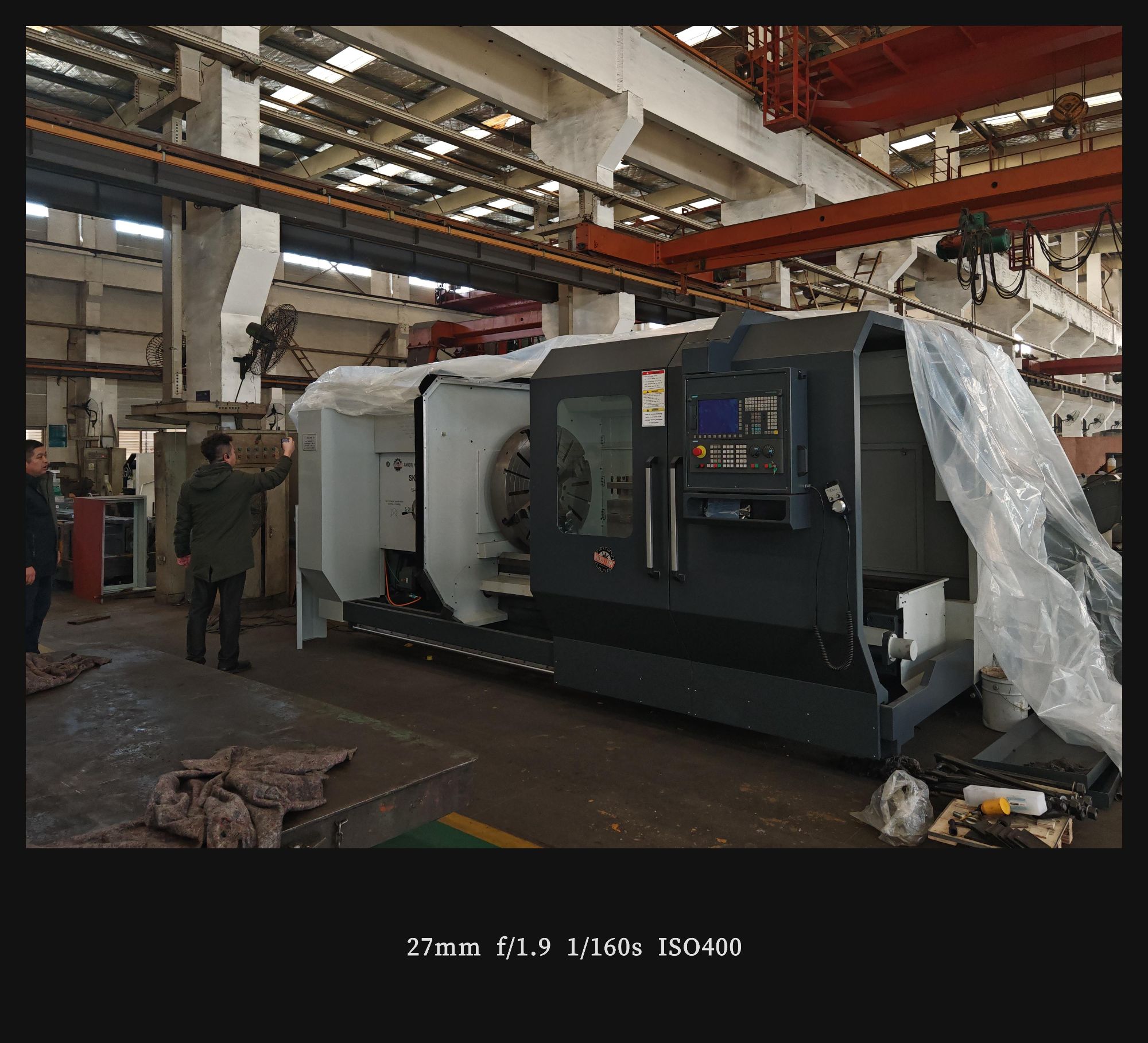
Ask most machinists what determines surface finish and they'll point to feed rate, tool geometry, or coolant concentration. But the real story often lives inside the spindle itself. Runout—even a few microns of eccentric rotation—turns a sharp cutting edge into a microscopic hammer, leaving behind a telltale pattern of uneven peaks and valleys. You can chase it with slower speeds and lighter cuts, but if the tool tip orbits off-center, every pass carries that wobble straight into the workpiece. What's worse, runout rarely stays constant; it shifts with thermal growth, drawbar force, and toolholder wear, making it a moving target on long production runs.
Then there's bearing preload, the quiet force that holds the spindle's rotating assembly in place. Too light, and the spindle floats—allowing axial and radial play that magnifies chatter and degrades roundness. Too heavy, and you're building friction, heat, and premature wear, which eventually shows up as thermal drift and a dull, smeared finish. The sweet spot is a preload that keeps the balls or rollers in constant contact under load, maintaining stiffness without starving the bearing of lubrication. When preload is dialed in correctly, runout becomes more predictable, and the cutting edge stays where it belongs. That's when a finish stops being a gamble and starts being a spec you can actually hold.
Manual Gearbox Quirks That Only Show Up After 500 Hours
You think you know a gearbox after the first week, but the real personality comes out later. Around the 500-hour mark, the synchros start whispering. Second gear no longer takes a cold start without a double-clutch. It's not broken, just opinionated. You learn to pause half a beat before slotting third, or it'll buzz through the lever like a disgruntled wasp.
The clutch pedal develops a memory too. The bite point drifts slightly lower after long highway runs, then returns to normal the next morning. On warm days, the throwout bearing chatters at idle in neutral until you rest your foot on the pedal. None of this shows up on a test drive. It only surfaces after months of daily rhythm, when your left leg already knows the gearbox better than your brain does.
Reverse gear becomes a negotiation. You have to hold the lever against the gate for a full second before it agrees to engage. Release it too early and it'll pop out with a metallic clack that sounds expensive but never is. These quirks aren't faults; they're the manual's way of telling you it's been paying attention to how you drive.
Tailstock Dovetail Fit and Why It Causes Most Taper Errors
The fit between the tailstock upper and lower castings often gets overlooked, yet it has a direct hand in most taper errors. When you offset the tailstock to cut a taper, that adjustment relies on a dovetail slide that must hold its set position under load. If the dovetail is loose, worn, or unevenly clamped, the upper section can shift sideways or twist the moment cutting pressure hits the center. The result is a taper that changes partway along the cut or a diameter that creeps from one end to the other, even though the dial said you were dialed in.
A common failure shows up as a soft lock: the clamping bolts feel tight, but the dovetail faces aren't actually making full contact. High spots or burrs let the upper casting rock slightly instead of seating flat against the lower base. That rocking may be only a couple of tenths at the tailstock quill, but over a long shaft it becomes several thousandths of taper. Many machinists chase this by re-measuring the offset, only to find the reading has moved after the part is cut.
The best fix is to check the dovetail with layout blue and scrape or stone the high spots until the contact pattern is even across both angled faces. If the lathe has a gib on one side of the dovetail, adjusting it can remove most of the play without a full rebuild. Once the dovetail locks down repeatably, taper errors that seemed random often disappear, leaving only simple, predictable adjustments for actual offset work.
Factory Customization Requests Worth Making Before Deposit
Most factories will agree to almost anything before the deposit lands. That window is your strongest negotiating position. Instead of haggling over a few cents per unit, lock in requests that affect long-term quality and reorder consistency. Ask for a pre-production sample built on the exact production line, not a hand-made prototype. Request that raw materials be photographed and held aside for your batch, with a clear label system so later reorders don't drift into a different shade or weight. Specify edge finishing, thread tension, glue type, or packing density — the details that rarely appear on a standard spec sheet but show up in returns and complaints.
Another set of requests worth making involves tolerances and rejection rights. Define acceptable defect rates for stitching, printing, or dimensional variance before you sign. Ask the factory to send checkpoint photos or a short video at first-off, mid-run, and final audit — many will do this at no extra cost if it's part of the original agreement. If your product needs a specific carton size, inner divider, or moisture barrier, have that written into the deposit terms rather than mentioned later as a 'small change.' These upfront asks signal that you're serious about consistent output, and they force the factory to price real capability instead of promising flexibility they can't deliver once production starts.
The Pre-Delivery Bed Alignment Check You Should Witness
Before signing off on a new bed, spend a few minutes watching how the frame and mattress meet. A quick visual pass can reveal gaps, shifted slats, or a center support that doesn't actually touch the floor. These details are easy to miss when the room is busy, but they directly affect how the bed feels night after night.
Ask the delivery team to remove the mattress once and check the foundation underneath. Look at the joints, the hardware, and whether every leg sits evenly on the ground. If the bed has adjustable bases or drawers, cycle them a few times—not just once—to hear for squeaks or feel for resistance. A properly aligned bed shouldn't shift or creak under normal hand pressure.
Don't accept a rushed “it'll settle” answer. Beds don't self-correct misaligned rails or bowed slats. If you see a problem, have it noted on the delivery slip before the crew leaves. You're not being picky; you're making sure the product you paid for actually works the way it should from the first night.
FAQ
Start with the casting. Ask if it's a one-piece, stress-relieved iron bed and how long it was aged. If they say less than six months of natural aging, push for proof of vibration stress relief. On a visit, run a straightedge along the ways and look for an even contact pattern. Check if the guideways are induction-hardened and ground, not just milled. Any uneven wear or soft spots here will show up as taper within the first year.
Don't settle for a glossy test sheet. Warm the spindle up under load and recheck runout at the nose and inside the taper. Ask what bearings are used—adjustable tapered rollers with a separate thrust bearing handle heavy cuts better than a single-row ball setup. Run through every speed range; if you hear a harmonic whine that changes pitch under load, it's often a sign the preload wasn't set right at assembly.
Focus on the torque curve, not the motor horsepower sticker. A gear-driven headstock with hardened, ground gears will hold low-speed torque longer than a belt drive. Check the lowest usable speed—if it doesn't drop below 30–40 RPM without stalling or chattering, heavy threading and large-diameter facing will be miserable. Also ask if the factory uses oil-bath lubrication for the gears or just splash; heat buildup at low speed will shorten gear life.
Quill travel and locking design. A short-travel tailstock forces you to reposition constantly when drilling deep holes. Check if the quill has a ground finish and a real anti-friction bearing, not just a plain cast bore. Apply moderate pressure with the lock engaged—if you see deflection or the tailstock creeps sideways, the casting or lock is too light. For long shafts, ask about an easy-offset feature for taper turning and a follow rest with roller tips instead of bronze pads.
Yes. Inspect the lead screw for straightness and ask how the half-nut is machined. A sloppy half-nut shows up as thread drift on long parts. Check if the feed rod is keyed or splined—splined wears less and slips less under heavy feeds. Also verify the threading chart matches the actual gearbox ratios; some factories lift charts from other models without confirming the gear train. On longer beds, ask about wipers or telescopic covers to keep chips off the screw.
Ask for a test report that names the standard used and shows measurements from a laser interferometer or precision level, not just a stamped certificate. Request readings for bed straightness, spindle-to-tailstock alignment, and cross-slide squareness. On a factory visit, look for hand scraping marks on the underside of the carriage and cross slide—it's the fastest tell. If they assemble with only grinding and shims, long-term alignment will drift.
A wider bed and gap bed insert give you room for large diameters without losing rigidity. Ask about power rapid traverse on the saddle—it saves your arms on long parts. A rear tool post is useful for parting and chamfering without re-fixturing. For heavy shafts, roller-type steady and follow rests beat bronze tips. Also confirm the electrical cabinet is rated for your local voltage and phase without derating the motor; some OEMs quietly downsize the motor to match cheaper components.
Run the spindle unloaded at each speed for 15–20 minutes, then check oil temperature and bearing noise. Level the lathe on a solid foundation and recheck bed twist with a precision level before cutting anything. Take a test bar between centers and measure taper over 300 mm—this exposes tailstock misalignment quickly. Feel the carriage handwheel effort across the bed; tight spots often mean the saddle was shimmed unevenly at the factory.
Conclusion
A heavy-duty conventional lathe starts with its foundation casting, and that single component tells you more about the machine than any glossy brochure. Look at the casting's wall thickness, ribbing pattern, and the way stress-relief was handled—if the factory won't walk you through their aging process, you're gambling on twist that will resurface after the first year of heavy cuts. From there, move to the spindle. Runout measured at the nose with a tenths indicator is a start, but bearing preload is what separates finishes on long shafts from constant chatter. A properly preloaded spindle on a manual machine should feel warm, not hot, after a 30-minute run at top speed. Then there's the gearbox. Most buyers never test the levers under load, and that's where the real story hides. After 500 hours, poorly machined shift forks and soft detent springs turn a crisp gear change into a hunt-and-grind routine. Ask the factory to run the headstock through every speed combination with a brake load applied—if they hesitate, move on.
Tailstock problems ruin more taper work than any other single issue. The dovetail fit between the tailstock base and upper casting is often ground just well enough to pass a quick visual, but not well enough to hold center alignment when you offset for taper turning or push a big drill. Watch how the tailstock locks down: if it shifts more than a couple tenths on the dial when the clamp handle is thrown, you'll fight taper errors forever. This is also the moment to request factory customizations before you wire the deposit. Things like a longer cross-slide, a four-way tool post instead of a lantern, or a spindle bore sized for your typical bar stock are far cheaper when the machine is still on the assembly line. And before any crate leaves the floor, insist on a witnessed bed alignment check. The factory should place a precision level on the carriage and run it the full length of the bed, then show you the graph on V-way straightness and twist. If they won't let you attend that test, you're buying a promise, not a machine tool.
Contact Us
Contact Person: Tim
Email: [email protected]
Tel/WhatsApp: +86 15522553731
Website: https://www.winnrui-cnc.com/