

OEM Telescopic Combined Flood Control Boards: A Complete Guide to Modern Flood Defense
2026-11-23
Most flood defense advice starts with sandbags and ends with regret. OEM telescopic combined flood control boards offer a different ending: modular panels that expand, lock, and adjust to the site instead of forcing the site to adjust to them. This guide explores how modern telescopic systems perform in real conditions, why OEM configurations matter, and how Jianghe Flood Prevention is helping teams move from reactive sandbagging to planned, reusable protection.
Why Rigid Flood Walls Keep Losing
The problem starts with how forces are absorbed. A rigid wall does not bend or give; it takes the full impact of moving water and debris in a single, concentrated blow. Even when the wall is rated for a certain flood height, the real-world load often includes tree trunks, vehicles, or chunks of concrete that strike with far more energy than static water pressure alone. Once a crack forms, the entire barrier becomes compromised because there is no flexibility to redistribute the stress.
Soil and foundation behavior also works against these structures. Water pushes against the wall, but it also saturates the ground behind it, weakening the support that keeps the wall upright. Rigid designs tend to fail at the base or at panel joints, not in the middle of the wall itself. Engineers call this a geotechnical mismatch: the wall is strong, but the earth around it is not, so the system fails where the two meet.
Maintenance is another quiet failure point. Rigid walls often rely on seals, gaskets, or temporary inserts that must be installed before a flood arrives. In a real emergency, those parts are misplaced, damaged, or simply not deployed in time. A permanent-looking wall can create a false sense of security, leading communities to skip evacuation or storage preparations. When the wall then underperforms, the loss is worse than having no wall at all.
Inside a Telescopic Combined Board
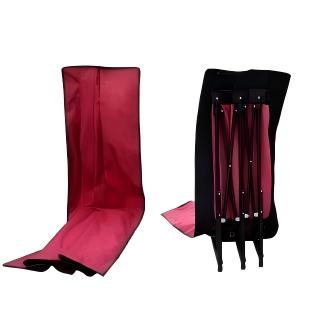
Removing the outer shell exposes a pair of interleaved stainless rails rather than a single sliding track. Each rail is actually three nested segments, and when the board extends, a leaf spring at the end of the inner section presses outward against the middle channel. That tension is what keeps lateral wobble low even with the board fully stretched.
The middle layer carries the terminal blocks and the copper bus runs. Instead of rigid strips, the copper is stamped into a repeating corrugated pattern, so the flexing concentrates at the folds instead of the solder joints. A side-mounted latch holds the sections together; only after releasing the slider does an internal wedge retract and allow the layers to shift against one another.
Sealing is handled by a continuous gasket tucked into the segmented seams. When the board is collapsed, the gasket sits compressed; once extended, it still bridges the gap because its lip is captive in both adjacent channels. All fasteners are hidden beneath the rails, which leaves no exposed screw heads on the working surface.
What OEM Really Changes on the Ground
The phrase "OEM" gets thrown around as if it means the same factory, same parts, same process with a different badge. In practice, changing the OEM label often rewires the production floor more than the marketing deck. A new OEM agreement usually forces a review of the bill of materials: suppliers may stay, but tolerances, materials, and test cycles get renegotiated because the brand on the box carries its own warranty and failure thresholds. That alone can shift lead times, packaging, and even the sequence of subassembly steps.
On the ground, you notice it in quieter ways. Tooling gets recalibrated for a slightly different chassis bracket or connector housing. Firmware forks appear because one OEM wants a specific sleep-state behavior or a diagnostic routine that another does not. Documentation changes ripple into service manuals, spare part catalogs, and regional compliance folders. What looks like a simple rebadge from the outside is usually a chain of small engineering and logistics decisions that affect how the product is built, tested, and supported years after it leaves the line.
The difference becomes most visible when something fails. A replacement part marked with the OEM code may not be identical to the generic version, even if it came from the same plant. It might have a revised seal material, a different torque spec on a fastener, or a barcode tied to a warranty system. These are the changes that rarely make it into launch announcements, but they are the reason a device feels consistent under one brand and slightly off under another.
Choosing the Right Configuration for Your Site
A setup that handles a small personal project without issue can start to strain once traffic climbs and content becomes more complex. Instead of reaching for the most advanced options right away, look at how the site is actually used day to day. Think about how often pages change, whether visitors arrive in predictable bursts, and how many people will be editing or publishing at the same time. Matching the configuration to those patterns tends to produce a more stable experience than chasing a long list of features you may never need.
Maintenance habits matter just as much as initial performance. The wrong choice often shows up weeks later, when routine updates become slow, backups grow awkward, or small fixes require help from a specialist. If the people managing the site are comfortable with technical details, a more hands-on setup can work. If not, simpler defaults and fewer moving parts usually save time and reduce frustration. Either way, the configuration should fit the team you have, not the team you wish you had.
Leaving a little headroom is useful, but too much complexity can become its own burden. A practical approach is to test a basic setup first, note where it slows down or complicates everyday work, and then make targeted adjustments. Use a staging copy to try changes before they affect the live site, and pay attention to small failures that repeat. Over time, the best configuration often feels unremarkable: traffic moves smoothly, updates stay routine, and the site simply works without constant intervention.
Real-World Deployment and Maintenance Pitfalls
Shipping code to production is rarely a matter of copying what worked on a developer laptop. Environment variables get renamed, system libraries drift, file permissions tighten, and suddenly a service that passed every test refuses to start. One common failure is treating servers as long-lived pets: somebody applies a manual fix to get through an incident, the change is never recorded, and the next deployment silently wipes it out. Locking dependencies, building immutable artifacts, and keeping environment differences explicit in configuration files tends to prevent more outages than any clever code optimization.
Maintenance often breaks in less obvious ways. Database migrations look fine in staging until they hit a production table that is orders of magnitude larger and lock it for twenty minutes. Log levels that seemed helpful during development become a flood, burying the one authentication error that actually matters. Teams also tend to automate the rollout but leave rollback as a manual scramble. If the rollback path is not practiced, it should not be counted as a plan.
After deployment, the monitoring setup is frequently too shallow. A health check that returns 200 only proves the process is alive, not that checkout latency has doubled or the connection pool is nearly exhausted. Slow disk I/O, growing queue depth, and rising retry rates usually appear before a hard failure. Comparing these signals against a pre-release baseline, even for a few hours, catches problems while there is still time to decide whether to fix forward or roll back.
Where Modular Flood Defense Is Heading Next
The next wave of modular flood defense is moving away from purely static barriers toward systems that sense and react before water arrives. Manufacturers are embedding pressure sensors and tilt meters directly into panels, letting a wall report its own stress levels and tell maintenance crews exactly which connectors are weakening. That shift turns a passive line of aluminum into something closer to a distributed instrument, and it matters more than most people expect because failures in flood hardware are rarely sudden; they start as small misalignments that go unnoticed until a surge exposes them.
At the same time, the idea of a one-size-fits-all barrier is losing ground to kits designed around specific neighborhood geometries, drainage patterns, and failure points. Instead of selling a fixed length of wall, suppliers are beginning to offer configurable cells that can follow curb lines, wrap around transformer vaults, or seal off underpass entrances without heavy earthworks. This pushes the cost discussion away from price per meter and toward how quickly a small crew can stage a dry crossing in a place that previously needed sandbags and pumps.
There is also a quieter shift in materials and logistics. Some prototypes now pair high-strength fabrics with rigid folding frames, while others use recycled polymer composites that survive repeated saltwater exposure without corrosion. The common thread is not a futuristic material but a simpler goal: reduce the number of tools, people, and minutes needed to make a barrier operational. If the next generation delivers on that, modular flood defense will become less of a specialty product and more of a routine piece of urban infrastructure, pulled from storage when a forecast crosses a threshold rather than treated as an emergency measure.
FAQ
They are modular barriers built from interlocking panels that slide or extend to form a continuous flood wall. The boards stay compact in storage and are assembled only when water levels start to rise, then taken apart and stored again after the threat passes.
OEM means a manufacturer produces the telescopic boards according to another company's specifications or branding. A buyer can define panel dimensions, aluminum grade, gasket material, hole patterns, and even finish color. The factory handles extrusion, cutting, drilling, and assembly while the client supplies the product under its own name.
Sandbags demand heavy manual labor, leak through gaps, and create a disposal problem after the water recedes. A telescopic board system locks together with compression seals, can be deployed by a small crew in minutes, and remains reusable for many years. It also occupies far less storage space for the same length of protection.
Most designs use 6061-T6 or 6063-T5 aluminum for the structural frame because it resists corrosion and keeps each panel light enough to handle. Sealing strips are typically EPDM or neoprene. Where extra strength or chemical resistance is needed, manufacturers may add stainless steel reinforcement or switch to composite panel sections.
Yes, but a lot depends on how well the base is prepared. Many systems include adjustable foot plates, wedge blocks, or flexible bottom seals that handle minor surface irregularities. For steeper terrain, stepped or angled connector pieces are often supplied so the wall stays continuous and the joints do not open under water pressure.
Rinse off silt and debris, inspect gaskets for cuts or flattening, lubricate locking pins, and check panels for dents or bent edges. Store them flat or upright in a dry space away from direct sunlight. A quick test of the seals before the rainy season catches most problems early.
For a doorway or small opening, two trained people can usually set up the barrier in under ten minutes. Longer wall runs take more time because the base channel must be positioned, panels inserted one by one, and clamps tightened in sequence, but a practiced crew can often protect several hundred feet within a few hours.
Yes. Because many of these systems are built to order, manufacturers can produce panels in increments that match a specific basement stairwell, loading dock, or utility room opening. The main limits come from structural load calculations and the weight a crew can safely maneuver, not from a fixed range of catalog sizes.
Conclusion
Rigid flood walls often look permanent but lose their advantage because they cannot adapt to uneven ground, settlement, or shifting water pressure. Telescopic combined flood control boards take a different route: stacked or sliding sections allow height to be adjusted on site while keeping individual parts light enough to handle and store. Inside these systems, the real work happens at interlocking joints, compression seals, and tension points that spread the load across the frame instead of concentrating it in one solid barrier. OEM involvement changes what actually reaches the ground. A manufacturer working to local site conditions can alter board width, coating thickness, gasket material, and anchoring details so the defense matches the expected debris load, flood duration, and available crew skill, not just a generic catalog spec.
Choosing a configuration should start with threshold height, access width, and how often the team will deploy it. A simple demountable system with fewer parts often outperforms an impressive-looking option if local crews cannot realistically install it under pressure. Common deployment and maintenance failures include warped boards from uneven storage, blocked base drainage, and anchors that loosen after repeated cycles. Modular flood defense is now moving toward fewer loose components, better self-aligning seals, and materials that tolerate salt, silt, and contaminated runoff. The longer-term shift is not about building higher walls but about making them easier to deploy, inspect, and repair after the water recedes.
Contact Us
Contact Person: Kristin Zhang
Email: [email protected]
Tel/WhatsApp: +8615366239752
Website: https://www.jianghecn.com/