

PET Honeycomb Dry Truck Body: Why China Exporters Lead the Market
2026-07-07
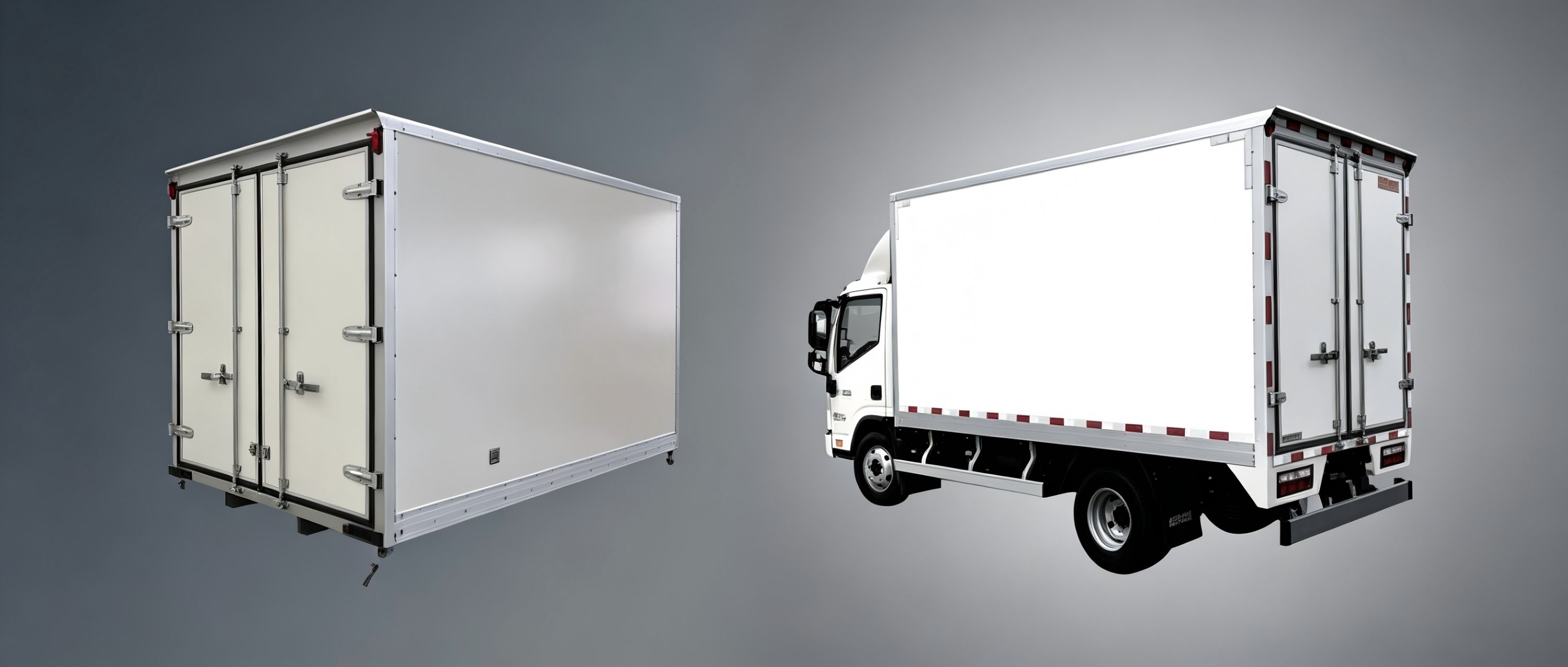
In the world of modern logistics, the right truck body can make or break supply chain efficiency. But what if the secret to a lighter, tougher, and longer-lasting dry truck body isn't hidden in a high-tech lab, but in the manufacturing hubs of China? From advanced PET honeycomb technology to precision engineering, China's exporters have quietly set the global standard. Leading this wave is Whole Chain Tech, a name that's become synonymous with innovation and reliability in transport solutions. So, what exactly gives these PET honeycomb dry truck bodies their edge—and why should fleet managers worldwide take notice? Let's dive deep into the story behind the market leadership.
Material Innovation Behind PET Honeycomb Panels
At the core of PET honeycomb panels lies a blend of recycled polyester fibers and a specialized thermosetting resin. The fibers, often sourced from post-consumer plastic bottles, are cleaned, melted, and spun into a non-woven fabric that forms the cellular structure. This process not only diverts waste from landfills but also creates a lightweight yet rigid core material. The honeycomb geometry is achieved through precise expansion and curing techniques, which align the fibers into a network of hexagonal cells. This structure distributes stress efficiently, giving the panel remarkable strength-to-weight ratios without relying on heavy or non-renewable materials.
What sets these panels apart is the integration of heat-activated bonding agents that eliminate the need for additional adhesives between the core and the facing layers. During production, the thermoplastic properties of PET allow the surface skins to fuse directly to the core under controlled pressure and temperature. This monolithic bonding creates a seamless interface, reducing delamination risks and improving long-term durability. The material innovation also extends to fire resistance; intumescent additives can be incorporated into the resin, allowing the panel to meet stringent safety standards without compromising its lightweight nature or recyclability.
Beyond structural performance, the ongoing evolution in PET panel technology focuses on enhancing acoustic and thermal insulation through micro-perforations and variable cell sizes. By manipulating the fiber density and cell geometry during expansion, manufacturers can fine-tune how the material absorbs sound and resists heat flow. This adaptability makes the panels suitable for diverse environments—from quiet office partitions to temperature-sensitive transportation interiors. Moreover, the entire panel remains fully recyclable at the end of its service life, closing the loop in an approach that embodies circular economy principles.
How China’s Factories Achieve Unmatched Production Speed
The staggering pace of Chinese manufacturing isn't just about cheap labor—it's a finely tuned ecosystem where proximity is everything. In industrial clusters like those in the Pearl River Delta, a single factory can source every component—from plastic molds to microchips—within a few hours’ drive. This geographic density slashes lead times and allows for rapid prototyping that rivals anywhere on the planet. When a product design changes overnight, entire supply chains can pivot by morning, a kind of industrial agility that took decades to perfect.
Automation is another accelerant, but not in the way most imagine. Chinese factories don't just install robots; they integrate them into deeply customized workflows that blend human dexterity with machine consistency. Small teams constantly tweak production lines, using real-time data from low-cost sensors to squeeze out every second of efficiency. There’s a relentless experiment-first mentality, and because the cost of failure is low in a high-volume environment, breakthroughs happen fast. This isn't about replacing workers—it's about augmenting them.
Then there’s the sheer scale of the workforce's adaptive capability. Migrant workers often transition between factories and industries with ease, bringing skills and rapid learning. Combined with management practices that prioritize output over rigid procedure, the system bends without breaking. The result is a production tempo that feels less like a planned process and more like a living, breathing organism constantly optimizing itself.
Balancing Weight Reduction with Structural Integrity
Shedding unnecessary mass from a structure isn't just about swapping steel for lighter alloys. It demands a granular understanding of load paths and failure modes. Real-world weight reduction means identifying regions that carry only minimal stress during peak loading scenarios, removing material there, and then strategically reinforcing high-stress nodes. This might involve using topology optimization software to generate organic-looking geometries, followed by iterative finite element analysis to verify that local buckling isn't introduced. The result is a component that often looks fragile but performs with surprising resilience.
The art lies in avoiding the trap of achieving a lightweight part that excels in finite element analysis but fails under real-world conditions. Drafting in generous fillet radii to combat fatigue cracking, accounting for minor manufacturing flaws that can dramatically lower the actual strength of slender sections, and designing against multi-axis vibration that laboratory tests might miss—these considerations separate a paper exercise from a reliable structure. It’s about building in robustness that isn’t apparent on a specification sheet but emerges during years of service life.
When weight savings start to challenge fundamental stiffness, a shift in design philosophy often becomes necessary. Rather than relying on a solid beam’s resistance to bending, you might introduce cable-stayed elements or pre-loaded tension ties that convert bending moments into axial loads. This approach not only cuts weight further but can actually boost the overall stiffness-to-mass ratio. The key is treating the structure as a complete system where small tweaks in geometry or load sharing can unlock performance margins that isolated material substitutions could never achieve.
Custom Orders Without the Custom Price Tag
Bespoke doesn’t have to break the bank. We’ve streamlined our production process so that tweaking colors, materials, or dimensions comes at little to no extra cost. Whether you’re after a slight size adjustment or a completely unique finish, our flexible approach means you get a one-of-a-kind piece without the premium price tag typical of custom work.
Traditional customization often means long lead times and inflated invoices, but we do things differently. By working closely with a network of skilled artisans and using modular design principles, we can swap components and finishes without starting from scratch. The result? A tailor-made product that fits your space, style, and budget perfectly—often delivered in the same timeframe as our standard range.
Think of it as personalization built into the process, not bolted on at the end. From choosing sustainable materials to getting the exact measurements for that tricky corner, every order gets the same careful attention. You get the satisfaction of something made just for you, minus the sticker shock.
Meeting International Standards Through Rigorous Testing
Our commitment to quality is reflected in the exhaustive testing protocols we employ. Every product undergoes a series of assessments that mirror real-world conditions, ensuring durability and performance are never compromised. We don't just check boxes; we push materials to their limits, simulating years of wear in accelerated timeframes.
Compliance with global benchmarks is verified through independent laboratories and in-house trials. By aligning our processes with ISO, ASTM, and other recognized frameworks, we guarantee consistency and reliability. These rigorous evaluations leave no room for error, giving our partners confidence in every shipment they receive.
Beyond mere certification, our testing philosophy is woven into the design phase itself. Prototypes are subjected to stress, environmental, and safety tests early on, allowing us to refine and perfect before full-scale production. It's this proactive approach that turns international standards from a goal into a baseline.
Supply Chain Strengths That Keep Deliveries on Track
A resilient supply chain isn’t built on luck—it’s forged through strategic redundancy and real-time visibility. By diversifying supplier networks across regions, disruptions in one area can be absorbed without cascading delays. Simultaneously, live tracking tools embedded at every handoff point turn potential bottlenecks into manageable blips rather than full-blown crises.
Inventory precision plays a quiet but critical role. Instead of relying on broad-brush safety stock, smart allocation uses demand-sensing algorithms to position high-risk items closer to end users before they’re even ordered. This shift from reactive restocking to anticipatory placement keeps fulfillment cycles tight even when external conditions waver.
Collaboration with logistics partners goes deeper than contractual terms. Shared contingency playbooks, cross-trained teams, and pre-cleared alternative routes mean that when a port snarl or weather event hits, the response is immediate and coordinated—without the usual scramble. These relationships act as a shock absorber, turning what could be a delivery standstill into a minor routing adjustment.
FAQ
A PET honeycomb dry truck body is a cargo compartment built using panels that have a core made from polyethylene terephthalate (PET) in a honeycomb structure, sandwiched between outer layers. It’s designed for dry freight, offering a lightweight yet durable alternative to conventional materials like steel or aluminum.
The honeycomb design provides excellent strength-to-weight ratio, distributing stress evenly while keeping the panels thin. This makes the truck body resistant to impacts and bending, yet significantly lighter, which directly improves payload capacity and reduces wear on the vehicle.
China’s lead comes from a combination of advanced manufacturing capabilities, large-scale production, and continuous investment in materials technology. Chinese companies have perfected the lamination and bonding processes for PET honeycomb, allowing them to produce high-quality panels at volumes that others struggle to match, while also adapting quickly to custom specifications.
Key advantages include weight reduction, corrosion resistance, better thermal insulation, and easier repair. Unlike steel, PET doesn't rust, and it’s more resilient than fiberglass. The panels also dampen vibration and noise, and they can be recycled at the end of their life, making them a smarter long-term investment.
Reducing the truck body’s weight directly lowers the overall mass of the vehicle, meaning the engine uses less fuel to move it. For logistics fleets, even a 10% weight reduction can lead to significant savings in fuel costs over time, making PET honeycomb a practical choice for improving operational efficiency.
Yes, PET is fully recyclable, and the production process for honeycomb panels often uses recycled PET from bottles. Also, because the lightweight panels improve fuel economy, they help cut down carbon emissions. At the end of the truck body’s service life, the materials can be reclaimed and reused, reducing waste.
Reputable Chinese exporters follow international standards like ISO 9001 for quality management and often obtain certifications such as CE or AWS for welding and materials. They also perform rigorous testing—impact resistance, load bearing, and weathering—to ensure the truck bodies meet the demands of different regions and road conditions.
They leverage economies of scale, streamlined supply chains, and localized research and development. By sourcing raw materials in bulk and automating production lines, costs stay low without cutting corners on core quality. This efficiency, paired with supportive export policies, allows them to deliver a product that balances affordability and reliability.
Conclusion
The dominance of Chinese exporters in the PET honeycomb dry truck body market stems from a unique blend of material science and manufacturing agility. At the core is the innovative use of PET honeycomb panels, a thermoplastic composite that fuses a honeycomb core with fiberglass-reinforced skins. This material slashes weight by up to 60% compared to traditional steel or aluminum alternatives, yet maintains exceptional rigidity and impact resistance. Chinese factories have perfected a continuous lamination process that bonds these layers in a single, high-speed production line, slashing lead times without compromising panel uniformity. The result is a truck body that not only boosts fuel efficiency through weight reduction but also withstands the brutal vibrations and load stresses of long-haul transport. Engineers fine-tune cell density and skin thickness to match specific cargo requirements, ensuring that structural integrity never becomes a trade-off for lightness.
Beyond the core product, Chinese exporters thrive by offering customization without the premium costs that usually accompany it. By leveraging an integrated supply chain—from PET resin production to CNC routing and assembly—they streamline everything under one roof, eliminating middlemen and reducing waste. This allows them to accommodate unique dimensions, door placements, or branding elements at near-standard pricing. Rigorous testing protocols ensure compliance with international benchmarks like ISO and ECE, with every batch undergoing peel strength, shear resistance, and fatigue cycle evaluations. Reliable logistics networks built on long-term carrier partnerships mean that even bespoke orders arrive on schedule, whether bound for Europe or Southeast Asia. This combination of technical precision, cost efficiency, and dependable delivery has made Chinese PET honeycomb truck bodies the go-to choice for fleet operators worldwide who refuse to choose between performance and affordability.
Contact Us
Contact Person: Ethan
Email: [email protected]
Tel/WhatsApp: +86 13963964935
Website: https://www.wholechaintech.com/