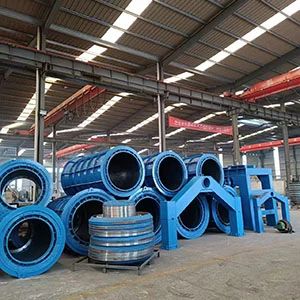

Precast Wall Panel Equipment Manufacturer: Top Choice for Quality Production Systems
2026-11-02
Ask any precast plant manager what keeps them up at night, and you'll hear the same answer: equipment that can't keep pace with production demands. That's where Qianfeng Electromechanical Equipment enters the picture—not as just another manufacturer, but as a partner that builds quality into every wall panel system from the ground up. Here's what to look for when choosing a precast wall panel equipment supplier, and why the right choice pays off long after installation.
Panel Accuracy Starts With Frame Rigidity, Not Just Software
Panel accuracy is often marketed as a software triumph, but the real foundation sits in the physical frame. A display can run the finest calibration algorithms, yet if its chassis flexes under heat or pressure, those pixel-perfect corrections drift almost immediately. Rigidity keeps every layer aligned, from backlight to glass, so the software’s adjustments land exactly where they were computed.
Think of the frame as the skeleton that holds the panel steady during operation. When a monitor warms up, materials expand; without a stiff structure, that expansion bends the panel by fractions of a millimeter. Those tiny shifts are enough to turn a uniform gray into visible patches. A rigid frame resists that warp, locking geometry in place before the software even starts its work.
This is why some budget displays measure well in the lab but drift after an hour of use. The frame wasn’t built to resist thermal load or uneven mounting pressure, so the panel’s own weight introduces warping. High-end designs reinforce edges with metal cores, bonded layers, or cross-bracing—details that never show on a spec sheet but directly preserve the accuracy software promises.
Why Most Precast Lines Fail During Peak Production
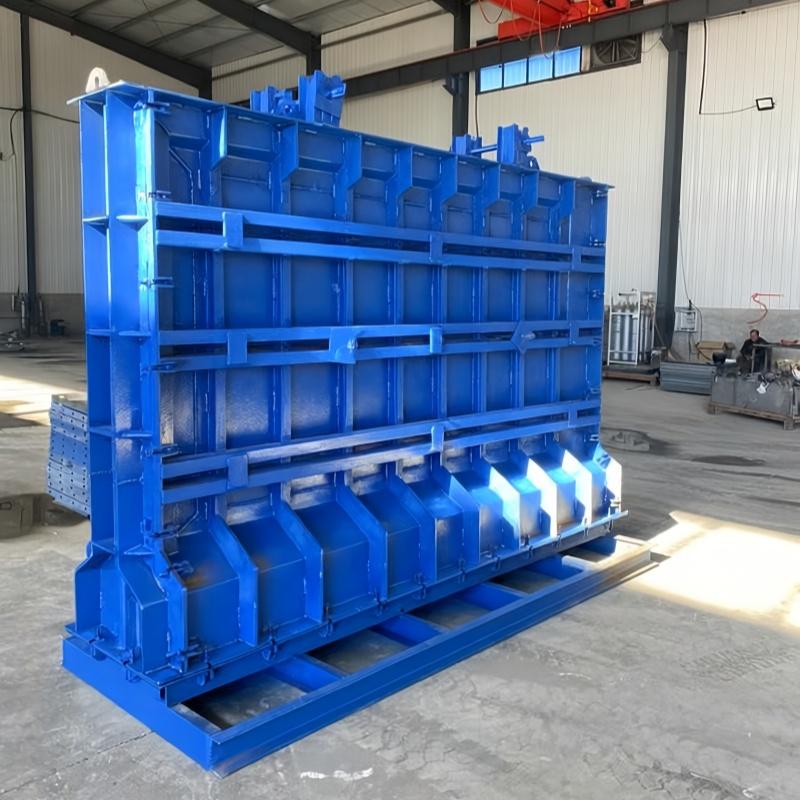
Most precast operations don’t fail at peak production because orders dry up or the crew suddenly forgets how to pour concrete. They fail because the internal rhythm breaks down. The casting bed gets blamed, but the real choke points are almost always support functions that were sized for average days: overhead crane cycles, curing chamber doors opening too often, rebar cages arriving late from the bending station. Once one of these falls behind, the whole line slows to the speed of the weakest link, and delivery dates start slipping even though everyone is working harder.
Another common trap is treating a surge as the new normal and planning only for more hours or more bodies. Precast has hard physical limits—initial set time, stripping strength, mould turnaround, and yard space organized by curing age. When those limits get compressed to meet a peak schedule, quality quietly erodes. Surface cracking, dimensional drift, misplaced embeds. The rework that follows eats more capacity than the extra shifts ever added, so effective output actually drops while the plant looks busier than ever.
Prevention isn’t about moving faster; it’s about building rhythm and small buffers between critical stations. Plants that handle peaks well pre-stage moulds and cages, stagger curing loads, and have spare parts for mixers and cranes already on the shelf. Without that buffer, a single breakdown or a delayed concrete delivery doesn’t just stop one station—it cascades through the entire line and turns the rest of the week into firefighting.
Mold Changeovers That Take Minutes, Not Shifts
Traditional mold changes that eat an entire shift are no longer acceptable in most plants. With quick mold change systems, a crew can swap injection molds in under ten minutes without breaking a sweat. The trick is converting internal setup tasks into external ones—preheating molds, staging tools, and verifying material while the press still runs. One plant cut changeover from 90 minutes to 7 simply by preloading mold carts and using color-coded quick connects.
Magnetic clamping and hydraulic wedge clamps eliminate bolt turning altogether. A single operator can release and lock a mold with the push of a button, no torque wrenches or uneven clamping risks. Pair that with a common mold height standard and centering rings, and the mold drops into place every time. The real savings show up in small-batch production, where three or four changeovers a day used to devour capacity.
Don't overlook the human side. Teams that rehearse changeover steps with a pit-crew mentality hit times that surprise management. Video review of a slow changeover often reveals 20 minutes lost to searching for hoses or waiting on a crane. Simple shadow boards, labeled lines, and a checklist that fits on a pocket card can shrink minutes further. The goal isn't just speed—it's making the next run start clean and stable.
Curing Methods That Reduce Cycle Time Without Cracks
Cutting curing time usually backfires when temperature climbs too fast, but a staged thermal approach changes that. Ramp the concrete to around 50–60°C only after initial set, hold it for a few hours, then cool gradually. This keeps the internal temperature gradient low enough to avoid microcracking while still pushing strength development well ahead of ambient curing.
Internal curing offers another way to shorten schedules without surface cracks. By adding pre-wetted lightweight fines or superabsorbent polymers, the mix supplies water from within, offsetting self-desiccation in low water-to-cement ratios. That means you can apply external heat sooner and pull forms earlier because the concrete is less prone to the autogenous shrinkage that typically causes fine cracking.
For precast plants, pairing a mild steam cycle with a calcium nitrate-based accelerator often trims several hours off the demolding time. A short preset period at ambient temperature, followed by a slow temperature rise and a controlled cool-down, lets the accelerator work without creating thermal shock. This combination keeps cycle times tight while maintaining crack-free surfaces, even in thinner sections.
Built for Your Local Climate, Not a Showroom
Most gear looks great under flat, climate-controlled lighting. But real life happens in damp basements, salty coastal air, or sub-zero winters. That’s why every material and seal here is chosen for how it behaves after years of local weather—not for how it photographs on a display rack.
We test against the actual conditions your region throws at it: sudden temperature swings, high humidity, driving rain, even the fine dust that settles into every hinge. If it can’t shrug those off quietly, it doesn’t make the cut. What you get is something that feels a little less polished in the showroom, but a lot more reliable where you actually use it.
That trade-off is intentional. A product built for your zip code’s worst week will always outlast one tuned for a perfect showroom afternoon.
The Real Cost of Downtime: What to Ask Before Buying
Downtime rarely shows up as a line item on an invoice, but it quietly eats into payroll, customer trust, and missed revenue. Before signing off on any new system, ask the vendor how they measure availability—not the marketing number, but the one tied to real penalties or service credits. If they hesitate, that's your answer.
Dig into recovery, not just prevention. A platform that promises 99.9% uptime still means roughly eight hours of potential disruption a year. Ask what happens during those hours: Who gets paged? How fast can data be restored? What's the actual rollback path when an update breaks something? The answers reveal whether you're buying resilience or just a dashboard.
Finally, put a dollar figure on an hour of downtime for your own operation—lost orders, idle staff, support tickets, SLA penalties. Then ask the vendor to match that against their failover architecture and support response commitments. If the math doesn't hold up, the cheapest option is often the most expensive one.
FAQ
A top manufacturer distinguishes itself through precision engineering, robust steel frames, and automated vibration systems that ensure uniform concrete compaction. Beyond machinery, they offer process consulting—everything from mix design adjustments to mold flow analysis—so the final panels meet tight dimensional tolerances without costly rework.
We provide complete production lines: tilting molds, battery molds, carousel systems, curing chambers, concrete distributors, and PLC-controlled handling equipment. Each line can be configured for solid, sandwich, or double-wall panels, depending on your project requirements.
Consistency comes from automated batching, controlled vibration frequencies, and temperature-managed curing. Our systems log real-time data on compaction time, curing temperature, and lifting sequences, so operators can spot deviations before they affect output.
Yes, we design modular layouts that adapt to existing halls or limited space. For non-standard geometries—like curved facade panels or openings—we engineer custom mold sets and adjustable side forms without sacrificing cycle time.
We don't just hand over manuals. Our team commissions the line, trains operators on-site, and remains available for remote diagnostics. Spare parts are stocked regionally, and we schedule preventive maintenance visits to keep uptime above 95%.
Lower costs come from reduced manual labor, fewer rejected panels, and energy-efficient curing. For example, our insulated curing chambers cut steam consumption by roughly 30% compared to conventional designs, while automated mold cleaning extends mold life.
We have supplied lines for residential high-rises, industrial warehouses, and infrastructure sound barriers. Recent projects include a 40-story apartment complex requiring 3,000 panels per month, and a distribution center needing 12-meter double-wall panels with embedded conduits.
We offer remote pre-installation planning, then send a multilingual engineering team to supervise setup. Training includes both classroom instruction and hands-on production runs, and we leave behind detailed video guides and a direct line to our support engineers.
Conclusion
When evaluating precast wall panel equipment, the difference between mediocre output and consistently high-quality production often comes down to the frame itself. Panel accuracy doesn't start with software; it starts with a rigid, well-engineered structure that holds tolerances under repeated casting cycles. Many lines fail during peak demand because their frames flex or their mold systems can't keep pace. The best manufacturers design for rapid mold changeovers that take minutes rather than shifts, keeping your crew moving instead of waiting. That kind of uptime isn't a luxury—it's the foundation of a profitable precast operation.
Beyond the frame, curing methods matter more than most buyers realize. Properly engineered curing reduces cycle time without inducing thermal cracks, which means you can push production without sacrificing panel integrity. Equipment should also be built for your local climate, not a controlled showroom environment—humidity, temperature swings, and even coastal salt air affect long-term performance. Before purchasing, ask hard questions about downtime: what does a failed hydraulic line or a misaligned mold cost per hour? A top choice for quality production systems answers those questions with robust design, local support, and components that keep running when peak season hits.
Contact Us
Contact Person: Bill
Email: [email protected]
Tel/WhatsApp: 8615063653526
Website: https://www.qianfengjd.com