

Prefabricated Steel Buildings Supplier: What to Look for Before You Commit
2026-11-02
A prefabricated steel building is only as good as the supplier behind it. That’s a hard truth many project owners learn too late. Whether you're planning a warehouse, factory, or commercial space, committing to the wrong supplier can mean structural compromises and budget blowouts. Before you sign anything, here’s what actually deserves your attention. At GETO, we've built our reputation on the details that others overlook.
How Much Can You Actually Customize?
Let’s cut through the marketing fluff: most platforms offer a handful of color swatches and a logo slot, then call it a day. Here, the ceiling is genuinely higher—but it’s not infinite. You can reshape the layout down to the grid, swap out every text style, and even inject your own CSS if you know your way around a stylesheet. The catch? The core engine remains the same for everyone, so don’t expect to rewrite the underlying logic. What you get is a very wide sandbox, not a blank universe.
For the visual tinkerers, the real joy is in the details: spacing sliders, hover states, animation curves—things that usually come locked behind a “pro” tier. You can save custom blocks and reuse them across pages, which means after an initial setup weekend, you stop fighting the interface and start fine-tuning. If you’ve ever felt boxed in by rigid templates, this feels like loosening a collar button you didn’t know was choking you.
That said, there are hard limits. Complex dynamic features—like a fully custom checkout flow or a proprietary recommendation engine—still require external code and a developer’s hand. But for 90% of personal projects and small business sites, the built-in flexibility covers more ground than you’d expect. The honest answer? You can customize a lot, but the last mile always belongs to you and your own ingenuity.
What Does the Fine Print Say About Steel Coatings?
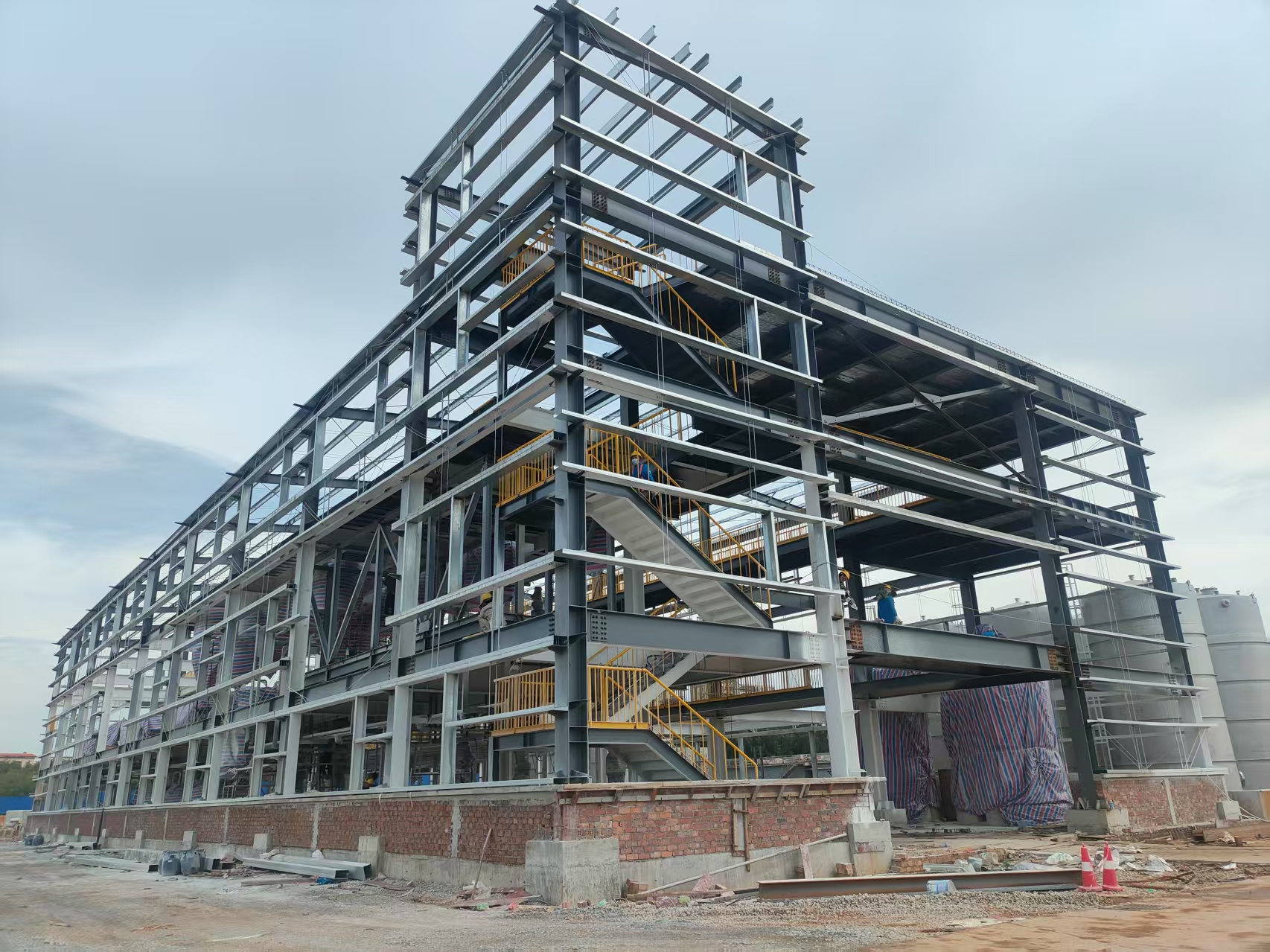
Anyone who has skimmed a coating datasheet knows the headline numbers get all the attention—salt spray hours, dry film thickness, adhesion ratings. But the real story often hides in the footnotes and application notes. Those tiny paragraphs routinely narrow the performance window to ideal lab conditions: a perfectly blasted surface, exact humidity, a narrow temperature band. What the fine print doesn't spell out is how quickly things change once the coating meets a real job site with dew on the steel or a welder's spatter nearby. The difference between a five-year coating and a fifteen-year one can come down to a single sentence that says "not intended for immersion" or "requires a minimum 3-mil profile."
Another hidden layer in the fine print concerns surface preparation and repair obligations. Many coatings claim excellent edge retention or corrosion resistance, but the accompanying notes quietly state that the steel must be free of mill scale, soluble salts, and even trace oils. If a contractor skips the specified soluble salt testing or uses a recycled abrasive that leaves contamination, the coating's performance becomes a gamble. The fine print often places the burden on the applicator to prove the surface was clean enough, yet rarely explains what "clean enough" means in practical, measurable terms. It is not uncommon to see a warranty denied because a single hold point—like a dew point check before each coat—was not documented.
Warranty clauses themselves are a masterclass in fine print. They typically exclude damage from mechanical abrasion, UV degradation beyond a certain gloss loss, or edge corrosion on sharp corners, which are exactly the first places a coating fails in the field. Some manufacturers will prorate the warranty based on the thickness actually applied, meaning a spot that measured 2 mils under the specified DFT gets only a fraction of the coverage. Reading these clauses before specifying a system can feel tedious, but it is the only way to know whether a "20-year coating" truly means two decades or just a marketing phrase backed by a pile of exclusions. The fine print is not there to mislead—it is there to define the narrow set of conditions under which the product performs as advertised.
Can Their References Speak to Projects Like Yours?
It’s tempting to get excited when a candidate lists a well-known company as a reference, but that name alone doesn’t tell you whether the person can actually speak to the kind of work you do. If your project is a fast-moving startup build and their reference comes from a heavily regulated corporate environment, the insights may not translate at all. Ask yourself: has this reference seen the person handle the same messiness, speed, or technical constraints you’re dealing with? If not, the recommendation is mostly noise.
The real test is whether the reference can go beyond generic praise and talk about specific moments that mirror your project’s demands. For instance, if you’re hiring for a role that requires rescuing an unstable legacy system, a reference who can describe the candidate debugging a failing production service at 2 a.m. is far more useful than one who just says “they’re a great team player.” Before you give the reference too much weight, ask them pointed questions: What exactly did this person build? What broke, and how did they respond? What did you learn about their judgment under pressure?
A strong reference for someone else’s project might be weak for yours, and that’s perfectly normal. The goal is not to collect impressive names but to find people who have watched the candidate operate in conditions close to your reality. When a reference can draw a direct line from past work to your current challenges, that’s when the recommendation earns its place in your decision.
How Transparent Is the Delivery Timeline?
When you place an order, the first thing you see is an estimated delivery window — usually something like “5 to 7 business days.” But what happens after that? In many cases, the timeline you’re given at checkout is based on average historical shipping speeds, not real-time tracking of your actual package. If a carrier delay or inventory issue occurs, you might only find out when the expected date comes and goes. Some companies are more upfront, sending proactive updates if a promised date slips, while others quietly revise the window on the tracking page without notifying you. The key difference lies in whether the timeline is treated as a static promise or a living estimate that reflects the journey of your order.
A truly transparent delivery timeline goes beyond a single date on a confirmation email. It shows the stages: order processed, picked and packed, handed to carrier, in transit, out for delivery. Each stage should carry its own timestamp, visible to you without having to dig through carrier websites or call support. The best experiences don’t just show where the package is; they also explain why a delay happened — weather, customs, high volume — and then give a revised date with a short reason attached. This kind of granularity builds trust because it treats you as someone who understands that logistics are complex, rather than just hoping you won’t notice a missed deadline.
That said, transparency has its limits. No retailer can predict every snowstorm or port backup. What matters is how quickly and honestly the update reaches you. Some businesses still rely on batch notifications sent once a day, so a package marked “delayed” at 9 AM may not trigger an email until 6 PM. Others push real-time changes to your phone the moment a scan updates. If you’re comparing two shops with similar products, the one that shows a live map, gives a reason for any change, and adjusts the promised date before the old one expires is the one that actually respects your time. Delivery transparency isn’t just about the final arrival — it’s about whether you feel informed every step of the way.
Who Handles the On-Site Assembly?
On-site assembly usually falls to a dedicated installation crew that arrives with the product or shortly after delivery. Rather than relying on the customer to decipher manuals, the supplier coordinates a small team of trained technicians who bring their own tools, alignment jigs, and levelling equipment. Their job extends beyond bolting parts together—they verify clearances, check for transit damage, and make fine adjustments so doors, drawers, and moving components operate without binding.
For more complex or custom builds, a project supervisor from the manufacturer may remain on site to direct the process and resolve any discrepancies before they become visible. In some cases, a local subcontractor handles the physical work under that supervisor's guidance, which keeps schedules tight without sacrificing quality. Either way, the client typically signs off on a short commissioning checklist once assembly and cleanup are finished.
Does the Warranty Cover Real-World Wear?
Most warranties sound reassuring until you read the fine print. Everyday scuffs, fading from sunlight, and the slow breakdown of stitching from regular use often fall outside standard coverage. If you plan to use the product daily rather than keeping it in a closet, you need to know whether the warranty treats normal wear as a defect or as expected aging.
Some brands explicitly exclude "wear and tear" and only cover manufacturing flaws that show up within the first few months. Others take a more realistic stance, covering worn zippers, thinning fabric, or cracked hardware after years of regular use. The wording around "normal use" matters—if the policy defines it narrowly, even a popped seam from sitting down too many times can be rejected.
Before buying, check whether the warranty mentions specific stress points like straps, soles, or hinges. A promise to repair or replace items that fail under ordinary conditions is a stronger signal than a blanket lifetime guarantee that quietly excludes the parts most likely to break. The difference often comes down to whether the company sees wear as proof of a product doing its job or as a reason to deny a claim.
FAQ
Watch for vague answers about steel gauge, unclear delivery dates, or pressure to sign before you can review engineered drawings. A reliable supplier will openly discuss load requirements, local permit needs, and past project references without dodging specifics.
Ask for sample calculations or stamped engineering documents for a building similar in size and snow or wind load to yours. If the supplier cannot provide these before you commit, you may end up paying extra for a local engineer to rework the design.
Get written confirmation on door and window rough openings, eave height, roof slope, insulation system compatibility, and whether the kit includes all fasteners, trim, and sealants. Missing any of these can lead to surprise change orders later.
A cheap kit becomes expensive if your crew struggles with unclear assembly instructions or missing parts. Suppliers who offer direct technical support, detailed erection manuals, and responsive parts replacement save you days of downtime and costly errors.
Look for a minimum 25-year rust-through warranty on wall and roof panels, a separate structural warranty of at least 30 years, and a clear written process for claims. Be wary of verbal promises or warranties that only cover the steel but not the coating.
Ask where the steel is fabricated, whether the supplier stocks standard components, and how they handle material shortages. A realistic timeline includes a buffer for engineering approval, production, and freight—not just the date the truck leaves the factory.
Request photos and contact information for at least three completed buildings similar in use to yours—whether that’s a farm shop, warehouse, or riding arena. Follow up with those owners to ask about missing parts, delivery delays, and how the supplier handled problems.
Yes. Clarify who pays for freight, unloading equipment, permit drawings, anchor bolts, concrete design, and any required field modifications. A trustworthy supplier lists these line items in the quote instead of burying them in fine print after you’ve paid a deposit.
Conclusion
Committing to a prefabricated steel building supplier means pressing beyond glossy brochures and asking the questions that surface only after the contract is signed. Customization is rarely as open-ended as sales teams imply; you need to know whether the supplier adjusts bay spacing, eave heights, and door placements from a fixed menu or genuinely engineers from your site plan. Steel coatings are another quiet deal-breaker—ask for the exact galvanizing weight and primer type, not just “rust-resistant,” because a thin coat will fail within years in coastal or industrial air. References should be recent and specific: a warehouse in your climate, an agricultural building with your snow load, not a portfolio of generic photos. Delivery timelines deserve the same scrutiny; suppliers often quote production weeks while freight, permitting, and weather sit outside their control, so get a written sequence with buffer dates.
On-site assembly is where hidden costs and finger-pointing emerge. Clarify whether the supplier’s crew erects the frame or merely delivers a bundle of steel and a manual—many buyers discover too late that crane rental, anchor bolts, and safety compliance fall on them. A credible warranty should cover fading, galvanic corrosion at joints, and fastener failure under routine thermal movement, not just catastrophic collapse. Real-world wear means condensation streaks on interior panels, loose screws after wind cycles, or coating scratches from normal forklift traffic. Before you commit, ask the supplier to walk through a completed building with you, point to the fasteners, the trim, the sill details, and explain what happens in year five. If the answers stay vague or defensive, keep looking.
Contact Us
Contact Person: Quanhui Nian
Email: [email protected]
Tel/WhatsApp: 8618070545691
Website: https://www.getoglobal.com/