Professional APAM Anionic Polyacrylamide: Key Benefits and Industrial Uses
2026-10-13
Anionic polyacrylamide (APAM) is the workhorse behind countless industrial processes, yet its full potential often goes unnoticed. From accelerating sludge dewatering in wastewater plants to improving retention in paper mills, the right APAM grade can quietly transform efficiency and cost. But not all formulations are created equal. At EVO, we've spent years refining high-molecular-weight APAM to deliver consistent performance under real-world conditions. In this post, we'll unpack the key benefits that set professional-grade APAM apart and examine the industrial scenarios where it truly shines—so you can decide if it's the missing variable in your operation.
Anionic Polyacrylamide as a Workhorse for Solid-Liquid Separation
Few polymer chemistries have earned such a quiet, dependable reputation in industrial clarification as anionic polyacrylamide. Its long-chain structure carries negative charges that reach out and bridge suspended particles, turning fine, stubborn colloids into larger flocs that settle or dewater without excessive shear. This bridging action is what sets it apart from simple charge neutralization: instead of merely collapsing the electrical double layer, the polymer weaves particles together into a network robust enough for thickeners, centrifuges, and belt presses.
In mineral processing, municipal sludge, and pulp dewatering, anionic grades are often chosen because their negative charge complements the naturally negative or neutral surfaces of many inorganic slurries. A high molecular weight variant can produce a surprisingly dense floc even at low dose rates, while lower charge densities avoid overdosing pitfalls that lead to gel-like, hard-to-dewater solids. The practical trick is to match the polymer's charge density and molecular weight to the specific slurry conductivity and particle size distribution—something operators learn quickly when a well-chosen anionic flocculant cuts polymer consumption by a third while improving capture rates.
What really makes anionic polyacrylamide a workhorse is its tolerance for rough field conditions. It dissolves reliably in low-shear mixing systems, tolerates moderate pH swings, and remains effective across a temperature range that would degrade many synthetic coagulants. That resilience, combined with low dose requirements and compatibility with mechanical dewatering equipment, explains why it remains a default choice for solid-liquid separation in operations where uptime and clarity matter more than chemical novelty.
Wastewater Clarity: The Case for APAM Over Conventional Coagulants
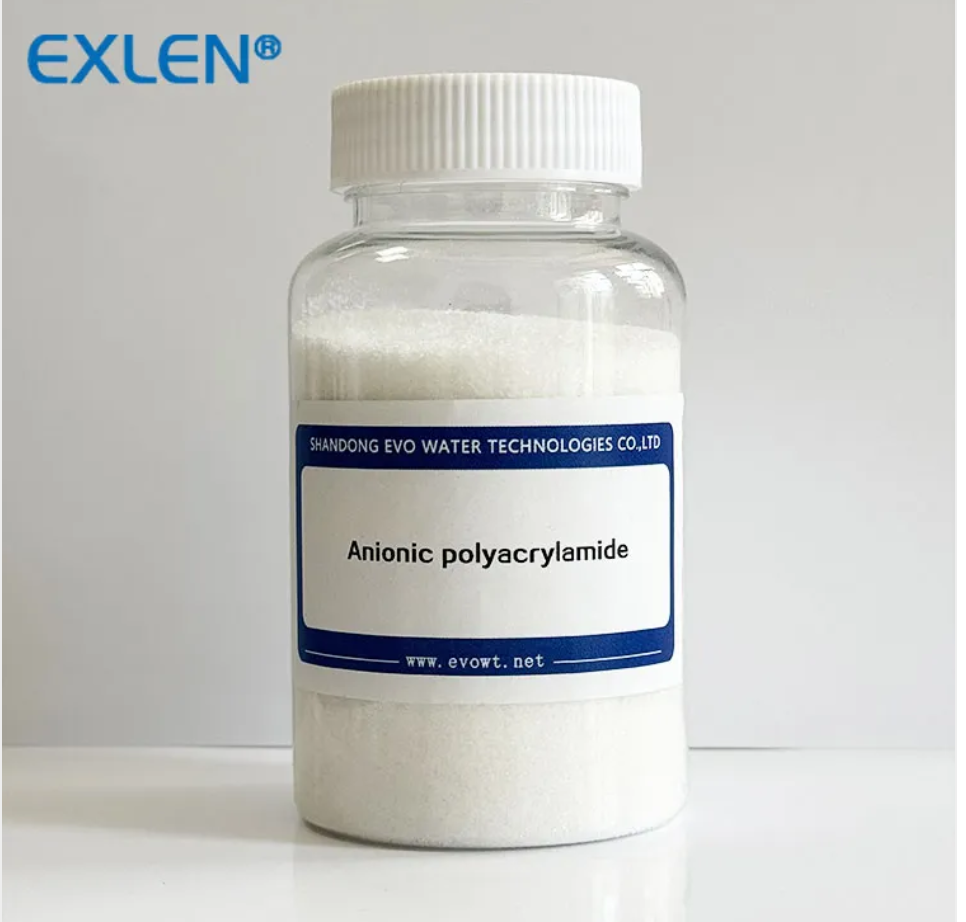
In many treatment plants, the switch from metal salts to anionic polyacrylamide (APAM) often starts with a simple observation: the settling tank looks different. Conventional coagulants like alum or ferric chloride do their job by neutralizing charge, but the resulting flocs tend to be small, fragile, and heavily dependent on precise pH control. APAM, by contrast, works through polymer bridging—long molecular chains that pull suspended particles into dense, fast-settling aggregates. Operators frequently note that clarity improves not just in the clarifier, but also in downstream filters, where the reduced carryover of fine solids means longer run times and fewer backwash cycles.
Another practical advantage shows up in sludge handling. Metal-based coagulants generate large volumes of hydroxide sludge that is difficult to dewater and often requires special disposal due to metal content. APAM produces a much smaller mass of sludge, and that sludge tends to release water more readily under mechanical pressure. For facilities facing rising disposal costs or strict landfill restrictions, this difference alone can justify the transition. It is also worth mentioning that APAM does not consume alkalinity the way that alum or iron salts do, so pH adjustment chemicals can often be reduced or eliminated entirely.
Skeptics sometimes raise concerns about polymer overdosing or the potential for residual acrylamide monomer. Those are valid points, but modern APAM products are manufactured with extremely low residual monomer levels, and dosing control has become far more precise with the use of streaming current detectors and real-time turbidity feedback. When properly applied, APAM delivers reliable clarity across a wider range of raw water conditions than many conventional coagulants—especially in cold water, where metal salt reactions slow down but polymer bridging remains largely unaffected. The result is a more forgiving, lower-maintenance clarification step that holds up under seasonal fluctuations and sudden turbidity spikes.
Sludge Dewatering: How APAM Cuts Hauling and Disposal Costs
Sludge hauling fees rarely shock anyone until the invoice lands. The math is straightforward: every extra ton of water dragged to the landfill or incinerator is a ton you paid to transport and tip. Anionic polyacrylamide (APAM) flips that equation by binding fine, suspended solids into larger, denser flocs that release water quickly under mechanical pressure. The result is a drier cake, often cutting total sludge volume by 15 to 30 percent before the truck ever leaves the plant.
What makes APAM particularly effective is how it behaves in the dewatering stage itself. Instead of simply thickening the sludge, it reduces the capillary and bound water that simple gravity or belt pressing struggles to remove. Operators can push the same press or centrifuge harder without clogging the media or stretching cycle times, which means fewer batches and less polymer waste. That reliability translates into direct cost avoidance: fewer hauls per week, lower disposal tipping fees, and less wear on equipment that no longer has to process the same volume twice.
There is also a quieter saving tied to downstream handling. A crumbly, dry cake is easier to convey, stack, and load than a sticky, high-moisture sludge that clings to belts and hoppers. It reduces cleanup time and cuts the risk of extra charges at landfills that reject free-draining loads. By tuning the APAM dose to the solids concentration and mixing energy, plant staff can hold that dewatering performance steady through seasonal changes in sludge character without chasing it with overdosing or constant adjustments.
Mineral Processing: Managing Fines and Tailings with APAM
Fine particle and tailings management remains one of the more persistent headaches in mineral processing, especially when dealing with ores that carry a high clay fraction or generate large volumes of ultrafine material. Anionic polyacrylamide, commonly referred to as APAM, has become a practical tool for these situations. By bridging and flocculating the suspended fines, APAM causes them to clump into larger, faster-settling aggregates. This dramatically improves thickener and clarifier performance, cutting down the time needed to reach a clear overflow and reducing the load on downstream filtration or centrifugation steps.
Beyond just speeding up settling, APAM also changes the physical character of the tailings themselves. The flocs formed under the right mixing conditions tend to be denser and more stable, which translates into lower moisture content in the underflow. That, in turn, reduces both the footprint and the seepage risk of tailings storage facilities. Many operations have found that adding APAM at carefully controlled dosage points—often ahead of a thickener or within a tailings pipeline—allows them to recycle a larger share of process water while also cutting polymer consumption overall. The result is a less water-intensive circuit, fewer operational upsets, and a tailings stream that is easier to handle and dispose of responsibly.
Papermaking: Retention and Drainage Gains from the Right APAM
Choosing an anionic polyacrylamide that matches the specific furnish and wet-end chemistry does more than just keep fines in the sheet. It changes how quickly water leaves the forming web. Mills often overlook the fact that a high molecular weight APAM with too much charge can actually slow drainage by creating dense flocs that hold water. The right APAM balances bridging strength with charge repulsion, so fines are retained without turning the stock into a sluggish, water-logged mat.
Drainage gains show up almost immediately when the APAM dose is tuned to the system’s conductivity and pH. In many closed-loop mills, high conductivity suppresses the performance of standard anionic flocculants. A tailored APAM with a slightly lower charge density but very high molecular weight often outperforms a high-charge product in these conditions, giving faster wire section dewatering and a drier sheet entering the presses. This directly reduces drying energy and boosts machine speed.
Retention improvements from the right APAM are most visible in the white water clarity and first-pass retention numbers. Instead of chasing higher dosages, operators should test a few APAM grades with the actual headbox stock. Small differences in molecular weight distribution or branching can shift floc structure from weak and shear-sensitive to strong and drainable. The payoff is a cleaner wet end, fewer deposits, and fewer breaks caused by poor formation.
Choosing APAM Grades: Molecular Weight, Charge Density, and Field Conditions
Matching an anionic polyacrylamide grade to a specific site starts with molecular weight, but the real decision hinges on how the polymer behaves under shear and mixing energy. High molecular weight chains bridge more particles and produce larger, faster-settling flocs, yet they are also more prone to irreversible breakage in high-shear transfer lines or centrifugal pumps. Low to mid-range molecular weights tolerate mechanical stress better and dissolve more evenly, which often makes them the safer choice for compact dosing systems or variable flow operations.
Charge density is rarely a one-size-fits-all parameter. A low charge density (5–15%) suits high-turbidity, clay-heavy slurries where strong bridging is needed without overdosing, while a higher charge density (20–40%) works better in low-solids or highly alkaline water where particle surfaces need a firmer electrostatic anchor. Field conditions such as pH, conductivity, and the presence of multivalent cations shift this balance because they alter both polymer coil expansion and the effective surface charge of suspended solids.
Practical selection almost always ends with jar testing on the actual process water, not a generic bench standard. Variations in temperature, retention time, and upstream coagulant carryover can make two APAM grades with similar datasheets perform very differently. Rather than locking onto a single specification, operators should keep two or three grades on hand and switch based on seasonal turbidity swings or process upsets.
FAQ
APAM is an anionic polyacrylamide with negatively charged functional groups along the polymer backbone. That charge makes it selective for binding to positively charged or neutral suspended particles, while standard nonionic polyacrylamide lacks that ionic character. In practical terms, APAM forms stronger, denser flocs in mineral-heavy or alkaline wastewater where nonionic grades often underperform.
Mining, mineral processing, paper manufacturing, textiles, and oil recovery are the big ones. In mining, it settles tailings; in paper mills, it improves retention and drainage; in oilfields, it helps control fluid loss and enhance water flooding. Each sector values it for slightly different reasons, but it usually comes down to its high molecular weight and anionic charge.
It works by bridging fine suspended solids into larger aggregates that settle quickly. Because most industrial wastewater carries a net negative surface charge on colloids, an anionic polymer doesn't get consumed by charge neutralization the way cationic polymers do. Instead, it relies on polymer bridging and sweep flocculation, which often gives better results at lower doses when the pH is above neutral.
Higher molecular weight means longer polymer chains, which can bridge more particles at once and produce larger, faster-settling flocs. Charge density controls how strongly the polymer interacts with particle surfaces. Too low a charge density gives weak flocs; too high can cause restabilization if the polymer overloads the particles. So the right grade depends on the specific solids, pH, and mixing conditions.
Yes, it's one of the core chemicals in tailings management and concentrate thickening. The high molecular weight allows it to flocculate fine ore particles quickly, reducing water content in underflow and improving water recovery in the thickener overflow. It also cuts down the volume of tailings ponds and helps meet discharge limits on suspended solids.
APAM produces much less sludge volume because it works at far lower dosages and doesn't add metal hydroxides to the system. It also avoids lowering pH the way alum and iron salts do, so you often need less alkali for pH correction. In high-turbidity industrial streams, switching to APAM can reduce chemical handling, cut disposal costs, and improve clarifier throughput.
Keep the dry powder in a cool, dry place away from direct sunlight and moisture, because it absorbs water and becomes lumpy. When making a stock solution, always add the powder slowly to clean water under moderate agitation, never the reverse, and use it within 24 to 48 hours. Avoid contact with iron or galvanized equipment, since dissolved metal ions can degrade the polymer chains.
Yes, it doesn't play well with strong oxidizers like chlorine or ozone, which break the polymer backbone and sharply reduce viscosity. It can also be incompatible with high concentrations of cationic polymers, causing precipitates or gel-like solids. The best practice is to add APAM at a separate dosing point and run jar tests if you need to combine it with coagulants.
Conclusion
Anionic polyacrylamide (APAM) earns its reputation as a workhorse in solid-liquid separation because it reliably bridges fine particles into larger flocs, accelerating settling and clarifying turbid water without the excessive sludge volume associated with conventional metal-salt coagulants. In wastewater treatment, APAM often outperforms alum or ferric chloride by reducing chemical dosage, improving effluent clarity, and maintaining performance across a wider pH range—making it especially valuable for food processing, textile, and municipal plants where discharge limits tighten. Beyond primary clarification, APAM transforms sludge dewatering: the same bridging mechanism releases free water and compacts solids, typically lifting cake dryness by several percentage points and slashing hauling and disposal costs. Mines and mineral processors rely on APAM to manage fines and tailings, where high molecular weight grades capture ultrafine clay and silica, reduce pond footprint, and return cleaner process water. Even in papermaking, a carefully selected APAM boosts retention of fibers and fillers while improving drainage on the wire, directly cutting furnish costs and steam demand in drying.
Selecting the right APAM is not a one-size-fits-all decision. Molecular weight controls floc size and shear resistance: ultra-high molecular weight products suit dilute slurries and belt presses, while medium weights handle high-solids streams. Charge density determines how strongly the polymer anchors to particle surfaces—low charge density for mineral fines, higher for organic-rich sludge. Field conditions matter just as much: water chemistry, temperature, mixing energy, and pH shift the optimal grade, and on-site jar testing remains the only reliable way to pin down dosage and grade. Operators who treat APAM as an adjustable tool rather than a commodity gain the full benefit—clearer effluent, drier cake, lower chemical spend, and smoother process control across diverse industrial applications. In short, APAM's value lies not just in its chemistry but in matching that chemistry to real-world separation challenges.
Contact Us
Contact Person: Fiona Su
Email: [email protected]
Tel/WhatsApp: 8619963724144
Website: https://www.evo-chemical.com/