

Refrigerated Trailer Solutions That Keep Perishable Goods Fresh on Every Mile
2026-11-02
Perishable goods don't forgive a single degree of drift. That's why refrigerated trailer solutions from Oriental Shimao are engineered to keep temperatures locked in, whether you're crossing state lines or navigating city streets. If your cargo needs to arrive as fresh as it left, the right trailer makes all the difference—and we're about to show you how.
Cold That Doesn't Drift When the Road Gets Rough
There is a kind of calm that doesn’t wait for smooth pavement. It holds its line when the surface breaks apart, when the tires bite into gravel and the wheel tries to pull sideways. This isn’t the cold of indifference—it’s the cold of a clear head that has already felt the slide and decided not to chase it. You learn it only after enough rough miles, when panic stops feeling like an option and becomes just another noise in the cab.
What looks like stubbornness from the outside is actually a practiced stillness. The hands stay loose, the breathing stays low, and each correction is smaller than the last. That’s the difference between control and luck: a driver who doesn’t flinch when the road gets rough isn’t ignoring the danger—they’ve simply stopped giving it the steering wheel.
Cargo-Specific Zones for Mixed Loads That Play Nice Together
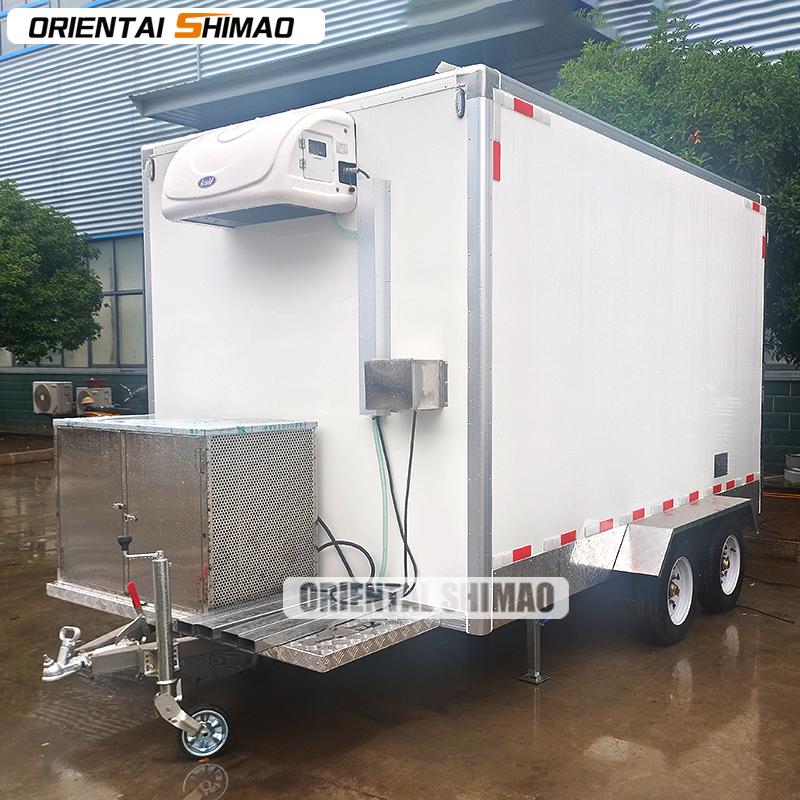
Mixing freight isn't just about filling a trailer—it's about knowing which products tolerate each other's company. A dedicated zone for temperature-sensitive goods keeps dairy away from fresh produce that off-gasses ethylene, while a separate dry goods section stops cleaning chemicals from mingling with boxed foods. By drawing clear boundaries inside the load, handlers save time and cut the small risks that turn into big claims.
Some cargo pairings are obvious only after a spill or a smell complaint. Perfume and tea? Not friends. Bulk flour and anything oily? A recipe for clumping. Cargo-specific zones let you group items by their quirks—absorbent materials in one corner, strong odorants in another, and crushables stacked where they won't meet heavy drums. This isn't over-organization; it's the difference between a load that arrives usable and one that gets rejected at the dock.
The best load plans treat each zone as a mini environment with its own rules. Use dunnage and liners to create physical separation, and label zones in a way that doesn't require a manual—color-coded floor tape, simple pictograms, or a one-glance load diagram. When every item has a predictable place based on what it can and can't sit beside, mixed loads stop being a gamble and start behaving like a system.
Reefer Bodies That Seal Out Heat Without Suffocating the Load
Keeping heat outside a reefer body is only half the job. The real challenge is doing it without trapping moisture and stale air inside. A well-designed reefer body uses high-density foam cores and precision-fitted door gaskets to stop thermal bridging, yet it pairs that tight seal with carefully placed pressure vents and return-air channels. That way, the cold chain stays intact while the cargo still breathes.
Many operators overlook the fact that a perfectly sealed box can actually damage fresh produce or frozen goods. Without controlled airflow, ethylene gas builds up, humidity spikes, and temperature layers become uneven. Smart reefer bodies solve this with integrated air chutes and micro-vent panels that let excess heat escape without pulling outside heat back in. The result is a stable interior climate that protects both the load and the insulation.
Durability also plays a role here. Door seals that lose their shape over time create invisible leaks, forcing the refrigeration unit to work harder and cycle more often. Choosing a body with reinforced corner joints and compression-resistant gaskets keeps the barrier strong season after season. It is not about making the box airtight; it is about making it selectively breathable, so heat stays out and the load stays alive.
Monitoring That Flags Trouble Before the Load Knows It
Modern infrastructure tends to hide its failures until a request actually times out. The monitoring approach here starts from the opposite assumption: if the first sign of trouble is a user complaint, the signal arrived too late. Instead, lightweight probes run continuously against the same paths real traffic will take, measuring latency, queue depth, and dependency health in near-real time. When deviation appears in any of those channels, an alert fires while the load is still moving through healthy nodes, not after a bottleneck has already formed.
What makes this different from threshold checks is the use of short-window baselines. Rather than comparing current metrics to a static limit set months ago, the system watches how each endpoint behaves at this exact time on this exact day. A sudden shift in p95 latency that would look harmless on a dashboard can still be caught because it breaks the pattern of the last few minutes. That means issues are named before they become incidents, and the on-call engineer sees a likely cause rather than a vague spike.
This kind of early warning matters most when traffic is uneven. During a flash sale or a product launch, a slow dependency can be flagged while traffic is still below the threshold that would normally trip alarms. The goal is not to replace post-incident reviews but to shrink the window between a fault developing and a customer noticing it.
Defrost Logic That Won't Turn Berries Into Ice Cubes
Berries have a nasty habit of weeping the moment they thaw, leaving you with a soupy mess that's half fruit, half pink water. The trick isn't speed; it's controlling temperature and moisture. Move the sealed bag from freezer to fridge the night before you need them, then spread the berries in a single layer on a couple of paper towels. The fridge's slow, cold air lets ice crystals melt gradually so cell walls stay intact, while the paper wicks away condensation before it can pool around the fruit.
If you forgot to plan ahead, don't reach for the microwave. A quick dunk of the sealed bag in a bowl of cold tap water works in about ten minutes, but you have to use the berries immediately and expect a softer texture. For baking or smoothies, skip thawing altogether and toss frozen berries straight into the batter or blender. Their chill actually helps keep muffin dough from turning purple, and the rapid blend means no iciness lingers.
Power Management for Long Nights Without a Generator's Roar
When the sun drops and the campsite goes quiet, every watt counts. Start by mapping your actual overnight needs—CPAP machines, phone charging, a small fridge—then separate them into critical and optional. A 100Ah lithium battery can carry a surprising load if you resist the urge to run anything with a heating element. Those little 12V blankets and coffee warmers drain power faster than most people expect.
Use a battery monitor with a shunt, not just a voltage readout, to see real-time draw. Set a mental red line, say 30% state of charge, and treat it like a curfew. If you have solar, angle panels for the morning sun before bed and run the heaviest loads while the panels still see light. For long nights, a small DC-DC charger wired to your vehicle can top up the battery during an evening drive, but never rely on idling the engine just for charging—it's wasteful and noisy.
Finally, group your devices on a single strip with a physical switch, then turn the whole cluster off when you sleep except for the one or two essentials. A cheap 12V timer can cut inverter draw automatically at midnight. Silence isn't just pleasant; it's a sign your power system is running lean and intentional, not gasping for a generator you don't need.
FAQ
Reliability comes down to consistent temperature control, robust insulation, and backup power options. The best setups include real-time monitoring so drivers can catch fluctuations before they ruin cargo.
They use multi-zone cooling and smart airflow systems that adjust output based on external conditions. Advanced sensors feed data to the reefer unit, which fine-tunes cooling instead of running at a fixed setting.
Cold air needs to circulate around every pallet, not just the ones near the vents. Poor airflow creates warm pockets, so well-designed trailers use ducted floors and return air bulkheads to move air evenly through the load.
Check the door seals, floor strength, and interior lining. Even the best reefer unit can't compensate for leaky doors or damaged insulation, so the trailer body must be treated as part of the cold chain.
Many can, thanks to multi-temperature compartments. A single trailer can keep ice cream solid in one section while leafy greens stay crisp in another, which helps fleets reduce trips without risking product quality.
Telematics track temperature, humidity, and door events in real time. If a pre-cooling step is missed or a door is left open, alerts go out immediately, allowing corrective action before spoilage becomes a costly claim.
Regular checks on the reefer unit's belts, coolant, and air filters matter, but so does cleaning the evaporator coils and inspecting door gaskets. Small leaks or dirt buildup force the system to work harder, which can create hot spots.
Features like start-stop technology and electric standby can reduce fuel use without compromising temperature, as long as they're paired with fast pulldown and good insulation. The goal is to save energy while maintaining a stable holding temperature.
Conclusion
Keeping perishables fresh from pickup to delivery isn't about freezing everything solid—it's about holding the right temperature without wild swings. The cooling system on these trailers doesn't drift when the road gets rough, so a sudden bump or a long climb won't let warm pockets form. Mixed loads get their own microclimates, with cargo-specific zones that let frozen entrees and crisp produce share a single trailer without trading flavors or moisture. And the reefer body itself works like a tight envelope: heat stays out, but airflow still moves so the load never suffocates. The result is a rolling cold chain that acts less like a blunt instrument and more like a careful steward of whatever is inside.
What happens between checks matters just as much. Sensors watch conditions continuously and flag trouble before the cargo even notices, which means small issues get caught before they become rejected pallets. Defrost cycles are tuned to the actual product, so a load of berries won't end up crusted in ice just because the coil needed a thaw. For long hauls or overnight waits, power management keeps the unit running quietly—no generator roar, no dead batteries, just steady cold hour after hour. Drivers can focus on the road, not on babysitting the reefer. That's the kind of reliability that keeps shrink low and freight moving.
Contact Us
Contact Person: Jack Wang
Email: [email protected]
Tel/WhatsApp: 8618306483516
Website: https://www.orientalshimaofoodtruck.com