

Top 10 Performance Cylinder Heads for Maximum Engine Power
2026-11-02
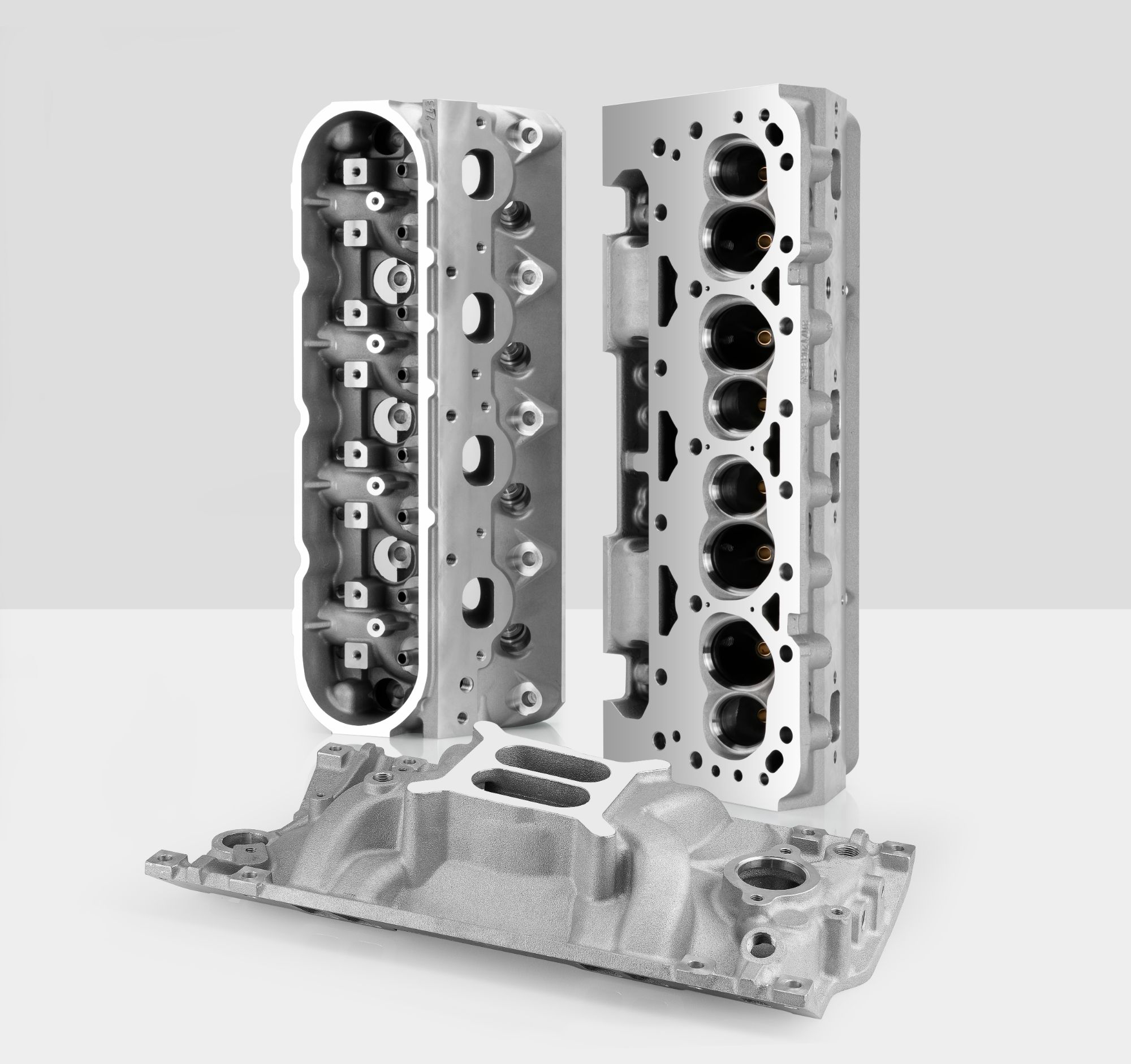
When it comes to squeezing every last horsepower from your engine, cylinder heads are the unsung heroes that most builders overlook. A well-designed performance head can transform airflow and combustion, while a poor choice can bottleneck even the most aggressive camshaft. After putting dozens of options through DDR's rigorous dyno testing, we found only a handful that truly deliver on their promises. Here are the top 10 performance cylinder heads that made the cut—and the #1 pick might surprise you.
What a Flow Bench Actually Tells You (And What It Doesn't)
A flow bench gives you a static snapshot of how air moves through a port or valve at a fixed pressure drop. You'll get cfm numbers, maybe velocity profiles, and if the bench is equipped for it, swirl or tumble measurements. That's useful for spotting gross restrictions or comparing one port shape to another under identical test conditions. But the bench pumps air steadily, while a real intake port sees sharp pulses, reversion waves, and constantly changing cylinder pressure. So the numbers are more like a controlled laboratory reading than a prediction of on-engine behavior.
What it doesn't tell you is just as important. A flow bench can't account for fuel droplets falling out of suspension, exhaust scavenging effects, or how the port behaves when the valve is only open for milliseconds at high rpm. Two heads can flow the same cfm on the bench yet make noticeably different power on the dyno because of differences in port energy, wet-flow behavior, or chamber shape. Even the test pressure you choose changes the ranking of ports — a head that wins at 10 inches of water may lose at 28 inches.
That doesn't make the tool useless, but it does mean you need to treat the data as a relative comparison, not an absolute truth. The smart approach is to use the bench for quick A/B testing before committing to expensive dyno time, and to log every variable that might affect the reading: valve job details, back-cut angles, bore adapter size, even the temperature of the shop. A 5-cfm difference between two ports is often noise; a 20-cfm difference might be worth chasing, but only if the port velocity and discharge coefficient stay healthy. Ultimately, the flow bench is a filter, not a crystal ball.
Why Port Shape Beats Port Volume Every Time
A bigger port might look impressive on paper, but once air starts moving at real speeds, the cross-sectional profile matters far more than the total cubic volume. A straight cylindrical port with sharp edges creates turbulence and audible chuffing at moderate excursion, even if its internal volume is generous. By contrast, a port with a smooth flare at both ends—often called an aeroport—lets the same driver push more air before distortion creeps in. The flare radius, not the port's overall size, determines how gradually the airflow can expand and contract, which is the real bottleneck in low-frequency output.
Slot ports and odd-shaped ducts often suffer from the same issue: they rely on flat boundaries that cause boundary layer separation long before the port reaches its theoretical air velocity limit. Increasing volume only shifts the tuning frequency; it doesn't fix the localized high-speed jets near the port walls. A well-shaped round port with a moderate flare can outperform a much larger rectangular slot simply because the air column remains attached to the walls longer. In practice, designers who prioritize smooth transitions and consistent curvature get cleaner bass with less port noise, while those who chase raw volume end up fighting compression and resonance problems that no amount of extra internal air can solve.
Cast vs. Aluminum: The Real Trade-offs
When you strip away the marketing noise, the choice between cast iron and aluminum comes down to physics and patience. Cast iron holds heat stubbornly—once it's hot, it stays hot, which is why it excels at searing or slow, even cooking. Aluminum responds to temperature changes quickly, so you sacrifice that thermal mass for a pan that won't leave a dent in your wrist.
The trade-offs don't stop at weight. Cast iron demands seasoning and will rust if you look at it wrong, but with minimal care it can outlive you. Aluminum often comes coated or anodized because bare aluminum reacts with acidic foods and can warp under high heat. You'll also notice cost differences: a basic cast iron skillet is cheap, while a thick, quality aluminum piece with a decent coating can cost more than you'd expect.
For most home cooks, the real decision isn't about which material is objectively better—it's about how much maintenance you'll tolerate and whether even heating or quick temperature control matters more for what you cook. If you want a heavyweight workhorse that rewards a little upkeep, cast iron is hard to beat. If you'd rather have something light, responsive, and low-fuss, provided you don't abuse it, aluminum fits that bill.
Combustion Chamber Design: The Overlooked Power Lever
Most engine builders chase horsepower through camshafts, cylinder heads, and forced induction, but the combustion chamber itself quietly dictates how much of that potential actually reaches the crankshaft. Its shape, volume, and surface finish influence flame propagation, knock resistance, and thermal efficiency in ways that a dyno sheet rarely isolates. A well-designed chamber can extract more work from the same air and fuel, while a poorly matched one wastes energy as heat and unburned hydrocarbons.
The real leverage comes from details that are easy to overlook: squish zones that accelerate mixture motion near top dead center, spark plug placement that shortens the flame travel, and wall contours that reduce hot spots prone to pre-ignition. Even a small change in the chamber's shrouding around the valves can shift the usable power band by several hundred RPM. This isn't about chasing peak numbers in a catalog—it's about reshaping the combustion event so that every cycle burns more completely and pushes harder on the piston.
For tuners and engine builders, the payoff appears in part-throttle response, fuel tolerance, and sustained high-load operation. A chamber that resists knock allows more aggressive ignition timing or leaner mixtures without sacrificing reliability. Conversely, a chamber with dead zones or excessive surface area will fight every other upgrade you make. Until you treat combustion chamber design as a primary tuning variable rather than a fixed constraint, you're leaving a significant slice of engine performance on the table.
Matching Heads to Your Camshaft Without Guesswork
Bolting a set of heads onto a camshaft you already own often comes down to one overlooked number: valve lift at the retainer. Most builders fixate on duration and lobe separation, but the real mismatch shows up when the spring stack height can't handle the lobe's peak lift. Pull out your cam card and look for gross valve lift with your rocker ratio. Then measure from the valve tip to the spring seat at full open. If that number leaves less than 0.060 inch before coil bind, you're flirting with bent pushrods and floating valves at the top of the tach.
Spring pressure matters just as much as physical clearance. A cam with aggressive ramp rates will beat up a spring that's only rated for a mild hydraulic flat tappet. Compare open pressure at your measured lift against the spring's published coil bind and rate. You want a cushion of roughly ten percent over peak open load, not just a guess based on the cam's advertised rpm range. Retainer-to-guide clearance and rocker geometry shift when heads are milled or fitted with longer valves, so recheck wipe patterns on every cylinder bank before you commit to a shim stack.
Finally, pay attention to the pushrod length after the heads are torqued down. A head with a different deck thickness or valve stem height changes the rocker's sweep across the valve tip. Roll the engine over by hand with a checking spring and watch the contact patch. If it wanders more than 0.040 inch or runs off the tip edge, your cam's lift curve won't transfer the way the grinder intended. Matching heads without guesswork means measuring at full lift, verifying spring clearance and pressure, then correcting geometry with adjustable pushrods before the first fire-up.
Common Install Errors That Steal Horsepower
It starts small: a vacuum line left dangling, a clamp torqued past the point of sanity, a gasket that never quite seated. But every one of these slip-ups quietly bleeds power. A slight air leak after the mass airflow sensor fools the ECU into running lean or rich, pulling timing to protect the engine. That single missed clamp? It can cost you five horsepower you never knew you left on the table.
Heat is the other silent thief. Wrapping intake piping too close to the exhaust manifold, or reinstalling the factory airbox without the cold-air duct, guarantees your engine gulps hot, thin air. Denser, cooler air packs more oxygen per cubic foot; rob it of that and the combustion chamber loses its punch. Even a misrouted PCV hose can reintroduce oily vapor into the intake stream, coating sensors and lowering octane tolerance over time.
Then there’s the tune-killing mistake: disconnecting the battery for an hour then expecting the old learned parameters to come back instantly. The engine management resets to conservative base maps, pulling fuel and spark until the knock sensors relearn their limits. Drive hard before that adaptation completes and you’re essentially detuning your own car. The fix isn’t more parts, it’s patience and a methodical eye for the small things that don’t look broken but absolutely are.
FAQ
Usually it comes down to port shape, valve size, and combustion chamber design. Stock heads are built for low emissions and good fuel economy, so they often choke airflow above 4,500 rpm. A performance head will have larger, better-shaped ports, a more efficient short-turn radius, and valves that are unshrouded to move more air at high lift. You also see stronger materials and thicker decks for higher cylinder pressure.
Not always. Aluminum pulls heat out of the combustion chamber faster, which lets you run slightly more compression before detonation, and it saves about 40 to 50 pounds over iron. But a well-ported iron head can flow just as much air. The real advantage of aluminum is the weight loss and the ability to repair cracks more easily. If your class rules or budget favor iron, don't assume you're giving up big power.
Don't get fixated on the peak cfm at maximum valve lift. Look at the flow curve from .200 inch to .500 inch lift, because that's where an engine spends most of its time. Also make sure the numbers were measured at the same test pressure, usually 28 inches of water. A head with great peak flow but a lazy low-lift curve can make a street engine feel soggy until very high rpm.
It depends on your valvetrain plans. Assembled heads save time and often come with springs, retainers, and valves already matched to a specific camshaft. Bare heads let you pick every component, which is useful if you're running a solid roller, titanium valves, or unusual spring pressures. Just remember that bare heads usually need machine work and a careful valve job, so factor that into cost and lead time.
You can, but you won't unlock the full potential. The new heads will likely want a cam with more lift and duration, headers with larger primaries, and an intake that matches the port openings. You also need to check piston-to-valve clearance, especially if the heads have bigger valves. Without those supporting parts, a set of high-flow heads may only give you a small fraction of the possible power.
Going too big on intake port volume. A 220cc or larger intake port on a mild 350ci street engine kills air velocity at low rpm, which makes the engine feel lazy and hurts throttle response. Match the port size to your displacement and rpm range. For a street build, a head that maintains high port velocity will almost always feel stronger than one with huge flow numbers.
On a typical small-block V8, replacing stock heads with a well-matched aftermarket set can add 40 to 80 horsepower when paired with a suitable cam and intake. The gain is usually larger if the stock heads were a known restriction, like smog-era castings. Forced induction builds may show even bigger gains because the heads spend less time as the main airflow bottleneck. But don't expect heads alone to double your output.
Conclusion
Selecting from the top ten performance cylinder heads isn’t about chasing the biggest flow numbers on a spec sheet. A flow bench reveals how much air moves at a given lift, but it won’t show you velocity profile, swirl, or how the port behaves during the messy reversion pulses of a real running engine. That’s why every head on this list was evaluated by looking at port shape and cross-sectional area rather than just raw cfm. A smaller, well-shaped port often outruns a larger lazy one because it keeps air speed high and fuel suspended. Cast iron and aluminum each have their place too: aluminum sheds heat and saves weight, but cast iron can withstand higher temperatures and is often easier to repair. Combustion chamber design is the quiet power lever—an efficient chamber with tight quench pads and proper spark plug placement resists detonation and lets you run more compression on pump gas. That’s a real-world edge no camshaft alone can deliver.
Matching heads to your camshaft means aligning the head’s flow curve and cross-section with the cam’s duration and lift. Bolting a huge-runner race head onto a street cam kills low-end torque and throttle response, while a small port chokes a high-lift cam’s top end. The best top-ten choices give you a clear operating range instead of guesswork. Finally, even the right head loses power if installed wrong. Common mistakes—like skipping the valve job after milling, using the wrong valve spring height, misaligned rocker geometry, or reusing old head bolts with uneven torque—quietly steal horsepower. The heads that made this list stand out because they not only flow well on paper but also survive real-world installation with fewer traps, letting you keep the power you paid for.
Contact Us
Contact Person: Shelly
Email: [email protected]
Tel/WhatsApp: 8613967667688
Website: https://www.yongyu.com/