

Top Beeswax Candles Factory Secrets to Pure, Natural Illumination
2026-07-27
Ever wondered what separates a flickering, sooty flame from the warm, steady glow of true purity? At the heart of every XUSHI candle lies a closely guarded factory secret—one that transforms raw beeswax into nature’s cleanest, most luminous light. Step inside to uncover the rituals behind the world’s finest beeswax candles.
Where Purity Begins: Sourcing Unfiltered Beeswax
The journey to exceptional beeswax starts long before it reaches the workshop. We work directly with a network of small, family-owned apiaries that prioritize bee health over maximum yield. These beekeepers place hives in secluded meadows, far from pesticide-heavy agricultural land or industrial areas. The bees forage on a diverse range of wildflowers, which not only keeps them strong but also gives the wax subtle, natural variations in hue and scent—a signature you simply can’t replicate with processed alternatives.
Once the honey is harvested, the capping wax is gently scraped by hand and kept separate from any comb that has been in contact with brood or heavy propolis. This first sort is crucial: it ensures the raw material is already exceptionally clean before it even arrives at our facility. We never use chemical solvents or high-heat filtering that strip away the wax’s native character. Instead, the wax is melted slowly at low temperatures and strained through fine, natural-fiber cloths to remove physical debris, while retaining the pollen grains and faint, honeyed aroma woven into its structure.
Every batch is tested for purity and consistency, but we also rely on something machines can’t measure—sensory cues. A rich, mild fragrance and a smooth, slightly tacky feel are irreplaceable indicators that the wax has not been over-refined or adulterated with paraffin or synthetic additives. This careful sourcing and minimal processing might seem demanding, but it is where true purity begins. The result is an unfiltered beeswax that carries the quiet, honest trace of the fields, flowers, and careful hands behind it.
The Artisan’s Hands: Crafting Candles Without Compromise
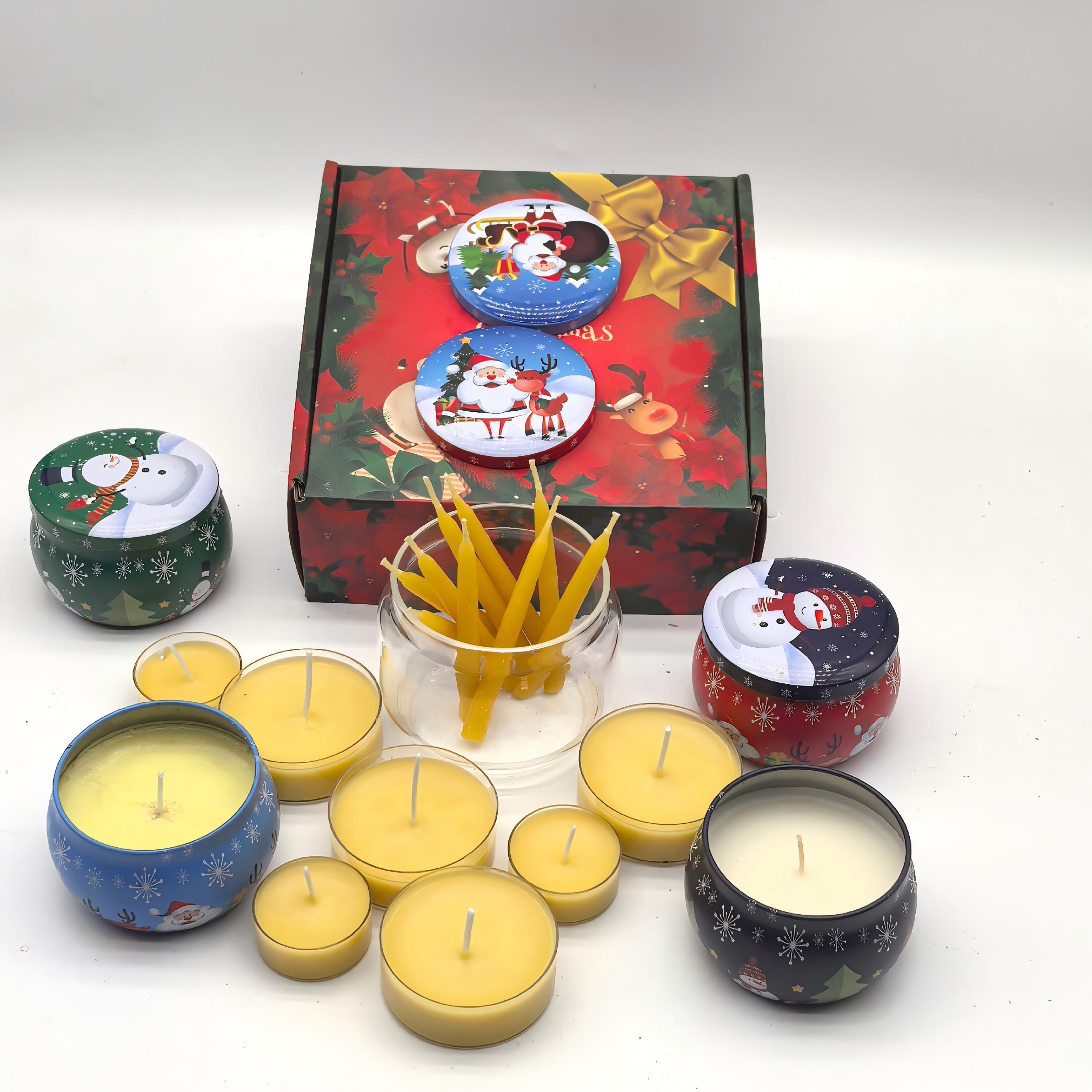
Every candle begins with a moment of quiet intention. We measure wax by feel as much as by scale, letting the texture guide the pour. There is no rush here—just the soft scrape of a spatula, the gentle warmth of melted soy, and the patience to wait for the perfect cooling point. This is unhurried craft, where even the smallest bubble is a conversation between maker and material.
Our wicks are chosen not from a catalogue but from countless test burns, each one a small rebellion against mass-produced uniformity. We twist cotton and paper threads by hand, seeking that precise curl that yields a steady, whisper-quiet flame. If a wick smokes or flickers, we start again. Compromise is not in our vocabulary; every candle must burn as honestly as it was built.
Fragrance is layered like a memory, not poured from a single synthetic note. We blend essential oils in small batches, balancing top notes that greet you with mid-tones that linger. The result is a scent that unfolds slowly, revealing its character over hours—never cloying, never predictable. These are candles for those who notice the difference between handcrafted warmth and factory chill.
No Additives, Just Glow: The Chemistry of Clean Burning
When a candle burns, what you're really witnessing is a delicate dance between wax and oxygen. Pure, high-quality waxes—think soy, coconut, or beeswax—consist primarily of long hydrocarbon chains. As heat from the flame melts the wax and draws it up the wick, these molecules vaporize and react with oxygen in a process called combustion. The key here is 'clean' combustion: without synthetic fragrances, dyes, or stabilizers, the reaction produces mostly carbon dioxide and water vapor, leaving little to no soot or unburned particles behind. That simple equation means you can enjoy the glow without worrying about what else you might be breathing in.
Additives often disrupt this balance. Paraffin-based candles, for instance, can contain petroleum byproducts, UV inhibitors, or synthetic hardening agents. When these burn, the chemical story becomes muddier—incomplete combustion can release volatile organic compounds and visible black soot, evidence of unburned carbon. Even many 'clean' scented candles use phthalate-laden fragrances that aren't designed for high-temperature exposure. By stripping back to the essentials—just wax and perhaps a cotton wick—you let the inherent chemistry shine. The flame stays steadier, the melt pool stays clear, and the air around you retains its natural freshness.
There's a quiet artistry in formulating wax that burns without artificial help. High-melt-point waxes like coconut-blend or rapeseed require skillful wick pairing to ensure a complete burn, but the reward is a soot-free jar and a clean nose. The golden light isn't merely an aesthetic; it's the visible proof of a reaction running exactly as it should. No synthetic shortcuts, no mysterious residues—just pure hydrocarbon chains oxidizing gently into the room. Next time you light one, watch the edge of the flame. That crisp, steady tear-drop shape tells you everything you need to know about the chemistry inside.
From Hive to Wick: A Traceable Journey You Can Trust
Understanding where your candle comes from isn't just about the final glow—it starts in sunlit fields where bees gather nectar, transforming it into wax with a quiet, ancient rhythm. Each hive we work with sits in carefully chosen landscapes, free from pesticides and industrial runoff, because purity at the source is what gives the wax its gentle, honeyed scent and clean burn. That bond between land and hive is the first thread in a story you can follow all the way to your home.
Every batch of wax carries a lot number that links back to a specific apiary and harvest date. This isn't a vague claim—it's a deliberate, trackable choice. We personally visit the beekeepers, watch their methods, and test samples before any wax reaches our workshop. You can scan a code on the box and see the exact field where the bees flew, the flowers they visited that season, and the hands that carefully filtered and poured the wax. Nothing is hidden behind a label.
Once the wax arrives, it moves through a series of small-batch processes that never rush. Cotton wicks are selected to match the wax density, and each candle is poured, cooled, and inspected by the same small team. Every finished piece holds its own journey card—a snapshot of the hive, the processing date, and the name of the person who made it. That way, the trust you place in us isn't built on words alone, but on a path you can trace from the first buzzed note in a meadow to the quiet flicker on your shelf.
Beyond Illumination: The Subtle Perfume of Nature
Light does more than define the visible world; it carries the invisible essence of the outdoors. A sunbeam filtering through a forest canopy doesn't just brighten the foliage—it releases volatile oils from leaves and soil, mingling with damp earth and distant wildflowers to create an aromatic signature that is entirely ephemeral. This interplay transforms ordinary spaces into sensory experiences, where the warmth of light seems to distill the very breath of the landscape.
In the quiet of early morning, the first rays of light coax moisture from petals and grass, lifting delicate fragrances that feel woven into the air itself. It's a subtle alchemy: light and shadow draw out layers of scent that no artificial reproduction can capture. The faint tang of pine on a sunny slope, the fleeting sweetness of jasmine at dusk—these are not merely smells but memories of place, gently illuminated.
Darkness, too, has its own perfume, revealed by the mere suggestion of light. A moonless night stirs the earthy aroma of moss and the cool, green breath of ferns. Even a single candle can highlight the honeyed notes of beeswax or the smoky whisper of a snuffed wick, reminding us that nature's fragrance is always present, waiting for light to give it voice.
Tailored Warmth: How Small Batches Create Big Differences
There's an undeniable charm in things made with intention, not speed. When we craft in small batches, every piece gets the attention it deserves, from the careful selection of materials to the final inspection before it reaches you. This isn't about cutting corners or rushing orders; it's about ensuring that each item carries a sense of purpose and warmth that only comes from a more personal touch. In a world that often prioritizes quantity over quality, choosing the small-batch route is a quiet act of rebellion—a belief that some things are simply better when they're made by hand, with heart.
The difference shows up in the details. With small-scale production, we can adapt and fine-tune as we go, responding to the unique characteristics of each material and even the subtle variations in the environment that day. It's like a conversation between the maker and the medium—something you just don't get with mass manufacturing. Those slight, beautiful imperfections become signatures of authenticity, not flaws to be erased. They remind you that your piece has a story, one that started long before it arrived at your door.
Ultimately, tailored warmth isn't just about the physical product; it's about the connection it fosters. Knowing that your item was created with care, in a limited run, makes it feel more like a thoughtful gift than a generic purchase. It carries a quiet confidence and a sense of belonging—to a smaller, more mindful way of making and living. That's the big difference small batches create: they turn everyday objects into lasting companions, each with its own gentle warmth.
FAQ
It's all about the fuel source—beeswax burns with a bright, steady flame that mimics natural sunlight. The honeycomb structure of the wax releases negative ions as it melts, which purifies the air and creates that warm, golden halo you can't get from petroleum-based candles.
Absolutely. Top factories skip chemical bleaching and synthetic fragrances entirely. They rely on gentle filtration through clay or charcoal to remove debris, then let the wax rest in temperature-controlled vats so any residual honey or propolis settles naturally—no shortcuts that would compromise the wax's integrity.
It comes down to the beekeepers' forage sources. Bees collecting nectar from clover or orange blossoms impart a subtle, sweet aroma to the wax. Factories that source from monoculture farms may get blander wax, so the scent is a direct fingerprint of the flora—and a mark of truly wildcrafted origins.
Real beeswax has a natural stickiness and a slightly granular texture when you run a fingernail over it. If a candle feels overly smooth or has an unnaturally white color, it's likely mixed with paraffin or stearic acid. Also, pure beeswax will develop a soft, dusty bloom over time—that's a good sign, not a flaw.
They gradually cool the candles in rotating molds to prevent thermal shock, often in a humidity-controlled room. Some old-school craftsmen even add a tiny percentage of coconut oil to temper the wax without affecting purity. It’s a delicate dance between temperature, pour speed, and patience.
A single bee produces only about one gram of wax in its lifetime, and rendering that wax without damaging its properties is labor-intensive. Factories have to clean, filter, and sometimes age the wax for months. Plus, beekeepers can't harvest wax without sacrificing some honey—so you're really paying for the byproduct of a thriving hive ecosystem.
Yes—and it's not marketing fluff. As beeswax burns, it releases negative ions that bind with airborne particles like dust, pollen, and mold spores, making them too heavy to float. This is the same effect you get from a rainstorm or a waterfall, but in your living room. It's physics, not perfume.
The wick is everything. They use square-braided cotton wicks primed with a beeswax coating, sized precisely to match the candle diameter. The wax itself is never overheated during pouring—just enough to liquefy—which preserves its natural high melt point and prevents tunneling. Some even age the finished candles in dark rooms for weeks to stabilize the crystal structure.
Conclusion
True purity in beeswax candles begins far from the factory floor—it starts with relationships. The finest producers source unfiltered beeswax directly from local beekeepers, ensuring each block retains the pollen, propolis, and natural hue that mass refining strips away. In the workshop, skilled artisans handle every step without compromise, hand-pouring or dipping each wick in small batches to preserve the raw material’s integrity. There are no shortcuts: no paraffin extenders, no synthetic fragrances, no bleach. This devotion to clean chemistry means the candle burns with a bright, soothing glow, emitting negative ions that help purify the air while releasing a faint, honeyed scent—the true perfume of the hive.
What elevates a top-tier beeswax candle is not just the flame but the story woven into it. A traceable journey from hive to wick offers complete transparency, letting you know exactly which apiaries the wax came from and how it was handled. Small batches create subtle variations in color and aroma, giving each candle a one-of-a-kind warmth. When lit, it delivers more than light; it fills a room with the quiet comfort of nature’s own fragrance, slowly unfurling as the wax pools. It’s this blend of purity, craftsmanship, and honest sourcing that turns a simple candle into an experience—pure, natural illumination shaped by hands that respect the bees’ gift.
Contact Us
Contact Person: Alan Zhu
Email: [email protected]
Tel/WhatsApp: 8613931838766
Website: https://www.cnxushibeeswax.com