

Top High-Speed Paper Bag Machines That Deliver Consistent Packaging Performance
2026-11-18
Speed means little if every second bag needs rework. The real test of a high-speed paper bag machine is how steadily it holds fold accuracy, glue placement, and stack quality when the line is running at full pace. Below, we look at the machines that hold up on busy production floors — and why ROKIN keeps coming up in that conversation.
Where Fast Cycle Times Still Leave Room for Fold Precision
Short makeready windows rarely feel generous, yet fold consistency does not have to disappear when the clock is running. Modern folding systems pull stored job data, compensate for caliper shifts, and confirm sheet position before the first good sheet reaches the stacker. The result is a fast changeover that still holds a clean, repeatable fold line instead of leaving the operator to chase drift across the run.
This balance becomes especially useful on short-run work, where there is little room for trial folds or manual correction. Servo-driven adjustments and dynamic crease feedback absorb the usual variation in grain direction, moisture content, and board stiffness without extending cycle time. Small mismatches get corrected during the run, not flagged afterward as waste.
In practice, speed and precision stop being competing priorities once the process itself carries the fine-tuning. The operator can keep the line moving while the equipment handles the micro-adjustments, which means tighter tolerances show up in the finished piece rather than in a pile of rejected samples.
Why Bag Length Consistency Shows Up at the Pallet, Not the Sample
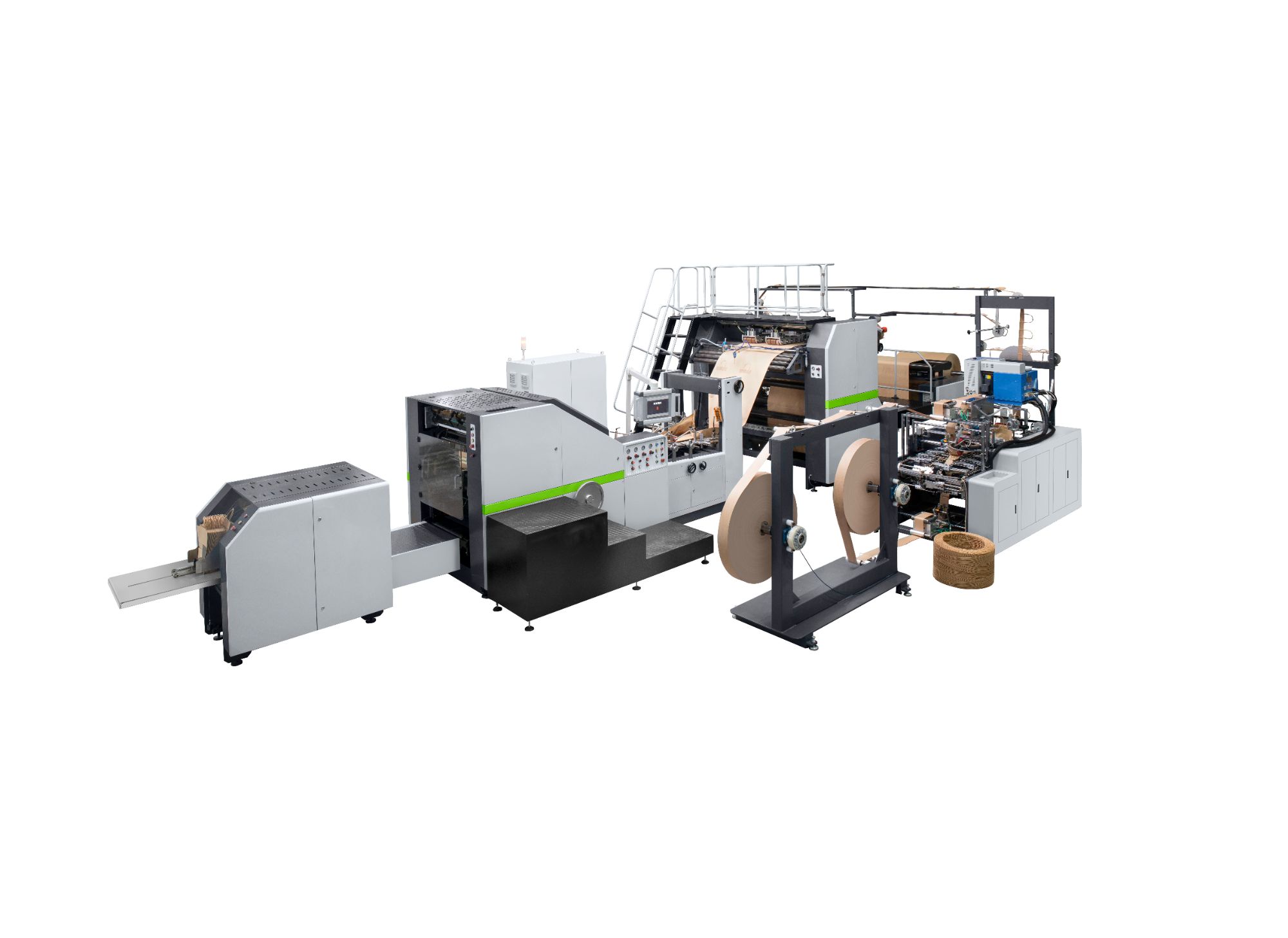
A single bag pulled from the line can look fine on a ruler, but that measurement misses the slow drift that builds across a production run. Film tension, seal timing, and roll diameter shifts all nudge bag length in small ways that an isolated sample never exposes. By the time those minor variations land on a pallet, they start to tell a different story.
When bags are stacked flat and wrapped, a few millimeters of extra length in one corner does not stay local. It compounds layer after layer until the pallet shows a visible lean, a high side, or an uneven edge that a single sample would have hidden. That is why operators tend to spot length problems at the pallet long before a quality check catches them upstream.
The sample also tends to come from a calm moment early in the run, when conditions are stable. The real test happens later, when hundreds of bags sit together and small length differences turn into ridges, overhangs, and awkward corners. Checking the pallet as a whole catches that drift in a way no single bag measurement can.
Tension Control Choices That Keep Thin Stock Moving Without Tears
Thin stock reacts to even small spikes in tension, so the first choice is usually between a load cell and a dancer system. A load cell gives precise readings, but on lighter films it can chase every minor disturbance and create a nervous, jerky feel. A dancer roller, by contrast, stores a little slack and lets the material move through a controlled range before correction kicks in. That mechanical cushion often matters more than absolute accuracy when the goal is keeping a delicate web from tearing.
Taper tension is another control worth dialing in early. Instead of holding one tension across the entire roll, a taper profile drops tension as the diameter builds. This keeps the outer wraps from pulling so tight that the core collapses or the edges buckle, while still giving the unwind or rewind enough grip to stay flat. For very thin stock, a lower starting torque and a slightly more aggressive taper can make the difference between a clean run and a sudden snap.
Pay attention to the mechanical path as much as the control electronics. Low-friction idlers, properly aligned rolls, and lightweight rollers reduce drag that the tension system has to fight. If the tension loop is constantly working against rough bearings or a misaligned splice table, even the best closed-loop setting will cause micro-stretching and eventual tears. In many thin-stock lines, the best upgrade is not more gain or faster correction, but simply less friction in the path.
The Hidden Cost of Small Sealing Deviations in High-Volume Runs
On a single part, a seal groove that runs a few microns shallow or a lip that sits half a degree off axis rarely raises an eyebrow. The component still assembles, passes a quick leak check, and moves down the line. But run that same deviation across forty thousand units a day, and the arithmetic quietly turns hostile. A two-percent increase in borderline seals doesn’t just mean a few more rejects at final inspection. It means rework stations clogging, line speeds dropping to compensate, and field returns that arrive weeks later with the same subtle signature. The cost isn’t in the defect itself—it’s in how many places that defect gets touched, sorted, and argued about before anyone traces it back to the original groove.
Compounding the problem is that sealing deviations often fall inside nominal tolerance bands, so incoming material passes without flags. Operators adjust downstream processes to “manage” the variation instead of correcting the upstream geometry. Over time, gaskets get spec’d slightly thicker, assembly torque creeps upward, and test pressures get tuned to let marginal parts through. Each of those workarounds adds a hidden layer of expense: extra material cost, more wear on tooling, and a process window that narrows until a routine batch suddenly tips into mass failure. High-volume runs punish small deviations not with a single dramatic event, but with the slow bleed of thousands of tiny corrections that no one ever sees on a balance sheet.
What makes the cost especially deceptive is that it rarely shows up in the cell where the deviation originates. A seal that leaks at one part per thousand might pass end-of-line testing but fail after thermal cycling in the customer’s environment. That shifts expense from the factory floor to warranty claims, service dispatches, and eroded brand trust. By the time the root cause is confirmed, weeks of production have already shipped with the same subtle flaw. For high-run operations, the discipline to measure sealing geometry early and react to shifts before they become trends isn’t just quality control—it’s the difference between a profitable line and one that slowly pays for its own inattention in ways no dashboard tracks.
What Maintenance Logs Reveal About Sustained High-Speed Output
Maintenance logs often read like a machine's diary, and the entries tied to sustained high-speed work expose patterns that spec sheets never mention. When equipment is held near its upper RPM range for hours at a time, small deviations start repeating: a bearing temperature that creeps up three degrees after the second shift, a slight increase in vibration on one axis, or lubrication intervals that quietly shrink from 500 hours to 430. These are not failures yet. They are early signals that the cooling path, oil film, and mounting tolerances are being asked to absorb more energy than routine checks account for.
What separates durable high-speed output from expensive downtime is how those marginal notes are used. A log that records only "serviced" hides the useful story. A log that notes ambient temperature, belt tension after warm-up, filter differential pressure, and the exact lubricant grade by hour count reveals which components drift first under sustained load. Over months, that data shows whether a recurring hot spot is tied to a specific batch of bearings, a seasonal shift in cooling air, or an operator habit of pushing acceleration too aggressively after short pauses.
The most revealing entries are often the quiet ones: a slight adjustment to belt tracking, an extra half-liter of oil added between intervals, a coupling that needed realignment after 700 hours instead of the expected 1,000. Each one is a clue about how the system manages resonance, thermal expansion, and micro-misalignment when speed stops being a short burst and becomes the normal operating condition. Ignore them and the machine still runs, until the log suddenly records a failure that earlier pages had already predicted.
Comparing Gear-Driven and Servo-Driven Paper Bag Lines Under Real Loads
On a busy converting floor, the difference between gear-driven and servo-driven paper bag lines rarely shows up in a clean spec sheet. The real test arrives when roll tension spikes, the paper basis weight drifts, and operators push the line to recover lost time after a splice. Gear-driven systems tend to hold their mechanical relationship rigidly, so every station stays locked in step. That predictability can be comforting, but it also means a jam at the bottom forming station sends a shock straight back through the drive train. Servo lines absorb that kind of disturbance differently: each axis reacts to its own feedback loop, so a momentary overload at one stage does not automatically yank the next stage out of register.
Under sustained load, thermal behavior starts to separate the two approaches. A gearbox running a long shift builds heat, and with it, slight changes in backlash and lubrication film that can shift bag length by a millimeter or two over an hour. Servo-driven axes do not escape heat entirely, but the absence of gear mesh means the control system can compensate through encoder feedback rather than waiting for a mechanical adjustment. This becomes especially visible on high-basis-weight kraft or multi-wall constructions, where the forming and pulling loads fluctuate with each bag. Gear lines often need a deliberate warm-up and periodic fine-tuning to stay within tolerance; servo lines lean on drive tuning and regenerative braking to hold the same window without stopping the line.
Energy draw and maintenance exposure under real loads also tell different stories. A gear-driven line tends to run a single large motor and distributes torque mechanically, which can look efficient on a power meter but hides losses in every mesh and bearing. Servo lines use multiple smaller motors, each drawing only what its station needs at any instant, and they recover energy during deceleration. That does not automatically make servo the better choice, though. Plants with stable product mixes and skilled mechanical staff often prefer the familiarity of gear drives, while operations chasing fast changeovers and wider product ranges find the servo architecture more forgiving when loads vary minute to minute. The honest comparison is not about which technology is newer, but which one matches the actual load profile on the floor.
FAQ
Rigid frame construction, servo-driven feeding and sealing, and fast recovery after web splices matter most. Equipment that holds tension automatically and requires few manual tweaks tends to maintain steady output over long shifts.
Closed-loop registration, precise web guiding, and stable heat sealing pressure. Small drift in the gusset or bottom forming stations quickly turns into visible defects when the line is running fast.
In most high-volume settings, yes. Servo control keeps bag length and seal placement in a tighter range, shortens changeovers, and lowers the reject rate during continuous operation.
Choose equipment with smooth motion profiles that keep tension constant during speed changes. That reduces twisted bags, misalignment, and startup scrap.
Many can handle a practical range, but shifting from lightweight kraft to heavier recycled board usually requires careful changes to folding bars and sealing temperature. Quick-change components make the transition faster.
Daily checks on sealing belts, cutting blades, and web guides prevent most unexpected stops. Replacing worn rollers before tracking suffers is often more useful than waiting for a fixed service interval.
Inline sensors or vision systems catch weak seals and off-center print early, so operators can correct issues before entire rolls turn into waste.
Rotary motion usually supports higher continuous output. Intermittent machines can still be a strong choice for shorter runs or thicker materials where extra dwell time improves seal quality.
Conclusion
High-speed paper bag machines earn their place on a converting floor only when raw cycle times translate into finished pallets that stay within tolerance. The fastest lines still allow room for fold precision, but that requires more than tight servos on paper; it depends on how well the draw rollers, former plates, and gusset fingers are matched to the stock. Bag length consistency, for example, rarely shows up in a ten-bag sample. It appears at the pallet, where slight drift in registration or roll tension becomes a stack of bags with visibly uneven bottoms and side seams. Machines that hold that consistency over an eight-hour run usually pair closed-loop tension control with low-inertia unwinds, letting thin kraft or recycled stock move without tearing even when acceleration spikes.
The less obvious losses come from sealing deviations. A fraction of a millimeter in glue or heat-seal placement may pass a quick inspection, but in high-volume runs it quietly raises rejection rates and jams downstream. Maintenance logs tend to confirm this: lines that sustain high output are the ones where operator checks include seal bar alignment, nip pressure, and knife wear, not just lubrication intervals. Under real loads, the gear-driven versus servo-driven debate also shifts. Gear-driven units can hold speed well on long, stable orders, while servo-driven lines show their advantage during frequent size changes and rapid stops. Neither is universally better; the machine that delivers consistent packaging performance is the one whose control architecture, tension settings, and sealing adjustments are managed as a single system rather than as isolated settings.
Contact Us
Contact Person: CARA
Email: [email protected]
Tel/WhatsApp: +8619519778302
Website: https://www.rokinmachinery.com