

Top Zinc Diethylphosphinate: A Comprehensive Overview of Its Advantages and Applications
2026-07-19
In the evolving landscape of flame retardants, zinc diethylphosphinate has emerged as a top performer, prized for its halogen-free profile and exceptional efficiency. But what truly sets it apart from conventional options, and how can it elevate your material formulations? From safeguarding electronics to enhancing automotive components, its versatility is remarkable. Companies like X.X.F.R are at the forefront of delivering high-purity zinc diethylphosphinate, ensuring industries get both reliability and performance. In this comprehensive overview, we’ll unpack its key advantages and real-world applications—offering insights you won’t find in typical data sheets. Whether you’re a material scientist or a product developer, prepare to discover why this flame retardant might just be the missing piece in your next breakthrough.
Why Zinc Diethylphosphinate Stands Out Among Flame Retardants
Zinc diethylphosphinate brings a rare combination of thermal resilience and processing ease to engineering plastics. Unlike many halogen-free options that falter above 300 °C, this phosphinate salt remains stable through high-temperature compounding and injection molding, so it won't degrade or cause discoloration in nylons or polyesters. That means manufacturers can run hotter, faster cycles without sacrificing the flame retardant's effectiveness or the polymer's mechanical integrity.
The shift toward eco-conscious materials has put a premium on additives that don't just work but also align with tightening regulations. Here, zinc diethylphosphinate naturally fits: it contains no halogens, releases minimal smoke, and avoids the corrosive byproducts often linked with traditional systems. In real-world fire scenarios, this translates to safer evacuation conditions and less toxic fume release, which is why it's become a go-to choice in electrical connectors, thin-wall housings, and other compact parts where every property counts.
A less obvious but equally important advantage is how gently it treats the host polymer. Many flame retardants act as plasticizers or nucleating agents in ways that warp dimensions or reduce toughness—zinc diethylphosphinate largely sidesteps this. It shows low moisture uptake, strong retention of electrical properties, and remarkable resistance to blooming or plate-out. As a result, final parts stay dimensionally stable and surface-friendly even after thermal aging, pushing its adoption in demanding applications where long-term reliability isn't negotiable.
Key Performance Benefits in Polymer Systems
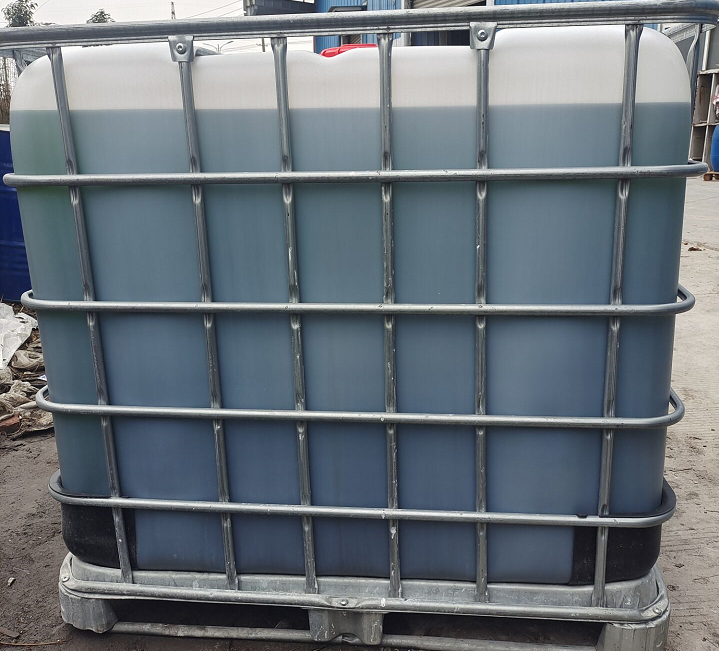
Polymer systems consistently outperform traditional materials in scenarios where weight reduction is mission-critical. A 30% drop in component mass translates directly into lower fuel consumption in transportation and easier handling in portable devices, all without trading off structural integrity. The inherent low density paired with high specific strength allows engineers to push design boundaries, achieving slender profiles and intricate geometries that simply wouldn’t be feasible with metals or ceramics.
Beyond density, the chemical resilience of advanced polymers opens doors to applications that would corrode lesser materials. From aggressive processing fluids in semiconductor manufacturing to saltwater exposure in marine hardware, these systems remain dimensionally stable and maintain their mechanical properties over years of service. Unlike metallic alternatives, they don’t require protective coatings that wear away, reducing maintenance cycles and lifecycle costs significantly.
A less obvious yet transformative benefit is the capacity for function integration during fabrication. Molding complex parts in a single step eliminates secondary operations—threaded inserts, snap fits, and living hinges emerge directly from the tool. This not only slashes assembly time but also diminishes part-count errors, enhancing overall reliability. The result is a streamlined supply chain and a product that gets to market faster, with each unit performing predictably in the field.
Real-World Applications Across Industries
From healthcare to manufacturing, artificial intelligence quietly powers tools that many of us rely on every day. In hospitals, machine learning models sift through thousands of medical images to flag early signs of diseases like cancer, sometimes catching details that even seasoned radiologists might miss. These systems don't replace doctors—they act as a second pair of eyes, helping to speed up diagnosis and reduce human error.
Out on the road, logistics companies use predictive algorithms to reroute delivery trucks based on real-time traffic, weather, and fuel consumption. It’s not flashy, but the result is fewer delays and lower costs. In farming, sensors paired with computer vision help monitor crop health and manage irrigation with precision, cutting down on water waste while boosting yields. The difference isn’t always headline-grabbing, but it shows up in fresher produce and more reliable supply chains.
Even creative fields are seeing shifts. Architects run generative design software to explore thousands of layout options that balance energy efficiency and aesthetics, while musicians experiment with tools that suggest chord progressions or harmonies. These applications rarely make the user feel like they’re interacting with “AI”—they simply solve a problem or spark an idea, weaving themselves into workflows so naturally that they become invisible.
How It Compares to Traditional Halogenated Options
When placed side by side with their halogenated counterparts, these newer alternatives reveal a fundamentally different risk profile. Traditional halogen-based materials often rely on chemical mechanisms that, under extreme heat or combustion, can release corrosive and toxic gases. This not only complicates post-incident safety but also adds remarkable long-term liability in enclosed or high-occupancy settings. By stepping away from that dependency, modern options reduce the complex toxicological burden that has long been accepted as unavoidable in the industry.
Performance expectations also shift noticeably. Halogenated formulas have historically offered a predictable, if brute-force, path to flame resistance—yet they frequently compromise structural integrity and weatherability over time. The non-halogenated route, by contrast, leverages fundamentally different chemistries that often integrate more smoothly with a material’s base polymer. The result is a finished product that can hold its mechanical properties, surface finish, and color stability through a wider range of real-world conditions, without sacrificing the required safety ratings.
Regulatory and disposal landscapes further tilt the comparison. Halogenated compounds are increasingly restricted under evolving waste directives and circular economy frameworks, turning end-of-life management into a costly puzzle. Alternatives designed without these persistent elements fit more cleanly into recycling streams and existing sustainability targets—minimizing both compliance headaches and downstream environmental impact without demanding a complete system redesign.
Processing Tips for Optimal Results
Start by taming your raw material. Whether it's data, images, or text, uneven formatting and hidden noise will sabotage even the most sophisticated processing later on. Trim outliers, standardize units, and fill gaps thoughtfully—small cleanup habits here save hours of head-scratching down the line. Think of it like prepping ingredients before cooking: you wouldn't toss unwashed vegetables into a stir-fry and expect a great meal.
Tuning is rarely a straight path. Resist the urge to run one giant batch with default settings and call it done. Instead, break your process into checkpoints and compare outputs at each stage. Adjust a single variable, observe the change, then move on. Keeping a simple log of what you tried—just a few notes—will steer you away from repeating dead ends and highlight which tweaks actually moved the needle.
Shape the output around its final use. A pristine result that doesn't fit the downstream workflow is just more noise. If a report will be printed, mind the color profiles and margins; if it feeds into an API, double-check field names and structure. Playing through the last mile with the recipient's eyes often uncovers assumptions that need recalibrating long before you ship the final version.
Future Trends and Innovations in Use
The landscape of everyday technology is shifting toward anticipatory design, where devices and services learn to predict our needs before we even express them. Instead of simply responding to commands, future systems will analyze subtle patterns—like the time we leave for work or the music we play during certain moods—to seamlessly adjust environments, recommend actions, or automate routine decisions. This shift reduces friction, making interactions feel more natural and less like managing a machine, while quietly raising expectations for intuitive responsiveness across all digital touchpoints.
Sustainability is moving from a peripheral concern to a core driver of innovation, birthing a wave of regenerative technologies that go beyond minimizing harm. We're seeing the rise of materials that self-heal, packaging that dissolves into nutrients, and energy systems that give back to the grid. In fashion and manufacturing, biofabrication is turning living organisms into factories, producing leather-like textiles from fungi or carbon-negative concrete from bacteria. These innovations aren't just eco-friendly; they're redefining value, where a product's end-of-life is designed to be as beneficial as its use.
Personalization is entering a hyper-contextual phase, where experiences adapt not just to who you are but to your current situation, emotional state, and even the people around you. Imagine a fitness app that adjusts workout intensity based on real-time stress markers, or a learning platform that alters its teaching style when it senses frustration. In entertainment, narratives might branch based on a viewer's unspoken reactions, creating a different story for each person. This level of tailoring blurs the line between digital service and personal companion, offering deeply relevant moments that feel uniquely crafted in the moment.
FAQ
Zinc diethylphosphinate is a phosphorus-based flame retardant that has gained significant attention due to its high efficiency and versatility. It stands out because it offers excellent fire protection in a variety of polymer systems without compromising mechanical properties, making it a preferred choice for demanding applications.
It shows exceptional performance in engineering plastics like polyamides (nylons), polyesters (PBT, PET), and thermosets such as epoxy resins. Its thermal stability and compatibility allow it to function effectively in both glass-fiber-reinforced and unreinforced grades.
The compound acts through a dual mechanism: in the condensed phase, it promotes char formation, creating a protective barrier that insulates the underlying material from heat and oxygen; in the gas phase, it releases phosphorus-containing radicals that interrupt the combustion chain reactions.
Unlike halogenated options, zinc diethylphosphinate does not produce corrosive or toxic gases during combustion, which significantly improves safety during fires. It also tends to have a lower impact on the electrical properties of polymers, making it ideal for electronics applications.
Yes, it is extensively used in electrical and electronic components (connectors, switches, circuit breakers), automotive parts (under-the-hood components, battery housings), and in construction materials where high thermal stability and low smoke generation are critical.
Absolutely. It often works synergistically with nitrogen-based flame retardants (like melamine polyphosphate) or other phosphorus compounds, leading to improved char formation and overall flame retardancy at lower total loadings. This synergistic effect can also help maintain the polymer's original physical properties.
It is generally regarded as an environmentally friendlier alternative because it is halogen-free and does not persist or bioaccumulate. It aligns with global regulations such as RoHS and WEEE, which restrict hazardous substances in electronics, making it a sustainable choice for manufacturers.
One challenge is its relatively high cost compared to some conventional flame retardants, though this is often offset by its higher efficiency and lower required loading. Additionally, it may require careful dispersion in certain polymers to avoid processing issues, but proper compounding techniques can mitigate these concerns.
Conclusion
Zinc diethylphosphinate has emerged as a modern flame retardant that bridges performance and environmental responsibility, moving beyond the limitations of traditional halogenated additives. Its phosphorus-based chemistry delivers exceptional fire suppression through a dual-phase mechanism — acting in both the condensed and gas phases to form a protective char and release radical-scavenging species. This not only extinguishes flames efficiently but also minimizes smoke and toxic emissions, a critical advantage in densely populated or enclosed spaces. Unlike many alternatives, it maintains polymer transparency and mechanical integrity at low loadings, making it an attractive option for applications where aesthetics and durability are paramount. The compound’s compatibility with a wide range of thermoplastics and thermosets, including polyamides, polyesters, and epoxy resins, further broadens its industrial appeal.
Across industries, zinc diethylphosphinate has proven its worth in demanding environments: it safeguards electronic connectors and thin-wall components in consumer devices, enhances the fire safety of automotive parts under extreme conditions, and supports lightweighting trends without compromising thermal stability. When compared to legacy halogenated systems, it avoids corrosive by-products and regulatory scrutiny tied to persistent organic pollutants, positioning it as a future-ready solution. Processing demands a nuanced approach — careful control of compounding temperatures and screw configurations can prevent premature decomposition, while synergistic co-additives sometimes amplify performance. Looking ahead, research is steering toward nano-encapsulation and tailored synergists that push thermal thresholds even higher, opening doors for use in aerospace composites and next-generation electric vehicle batteries. These innovations cement zinc diethylphosphinate not as a mere substitute, but as a cornerstone of sustainable fire protection engineering.
Contact Us
Contact Person: Guohua Wang
Email: [email protected]
Tel/WhatsApp: 8613003442895
Website: https://www.xxflameretard.com