

Treadmill Manufacturers Guide: How to Identify Quality and Innovation in 2025
2026-05-13
The treadmill industry is sprinting into 2025 with a wave of sleek designs and smart tech, but beneath the polished exteriors, true quality and innovation can be elusive. This guide cuts through the noise to help you spot the markers of a machine that's built to last and designed to evolve—without getting blinded by buzzwords. As we dissect what separates genuine advancement from gimmickry, you'll discover why forward-thinking manufacturers—like Yingruis—are redefining durability, user experience, and connected fitness in ways that matter.
Treadmill Motors: Why Higher Horsepower Isn't Always Better
It’s easy to look at a treadmill’s horsepower rating and assume bigger is always better, but that’s not the full story. For most home users, a motor rated between 2.0 and 3.0 continuous horsepower (CHP) gives you all the smooth, reliable performance you’ll ever need. Going much beyond that often means paying extra for power you’ll never use, especially if your routine focuses on walking or light jogging. The treadmill’s motor is just one piece of the puzzle, and overbuying here rarely translates to a better workout experience.
What really matters is the type of motor and how its power is measured. Many budget treadmills advertise inflated “peak horsepower” figures that look impressive but don’t reflect real-world use. Continuous horsepower tells you what the motor can sustain over time without overheating or struggling. A high-quality 2.5 CHP motor will often outlast and outperform a poorly built 4.0 CHP motor. Factors like motor balance, bearing quality, and heat dissipation have a bigger impact on longevity and noise than raw power alone.
There’s also the practical side: higher horsepower motors tend to run louder, consume more electricity, and generate extra heat that can wear down internal components faster. If you’re not putting heavy stress on the machine, that oversized motor simply adds bulk and cost without benefit. A mid-range motor that matches your typical pace and body weight keeps things quiet, efficient, and durable—exactly what most people want in a home treadmill.
The AI Running Coach: Hype vs. Helpful Feedback
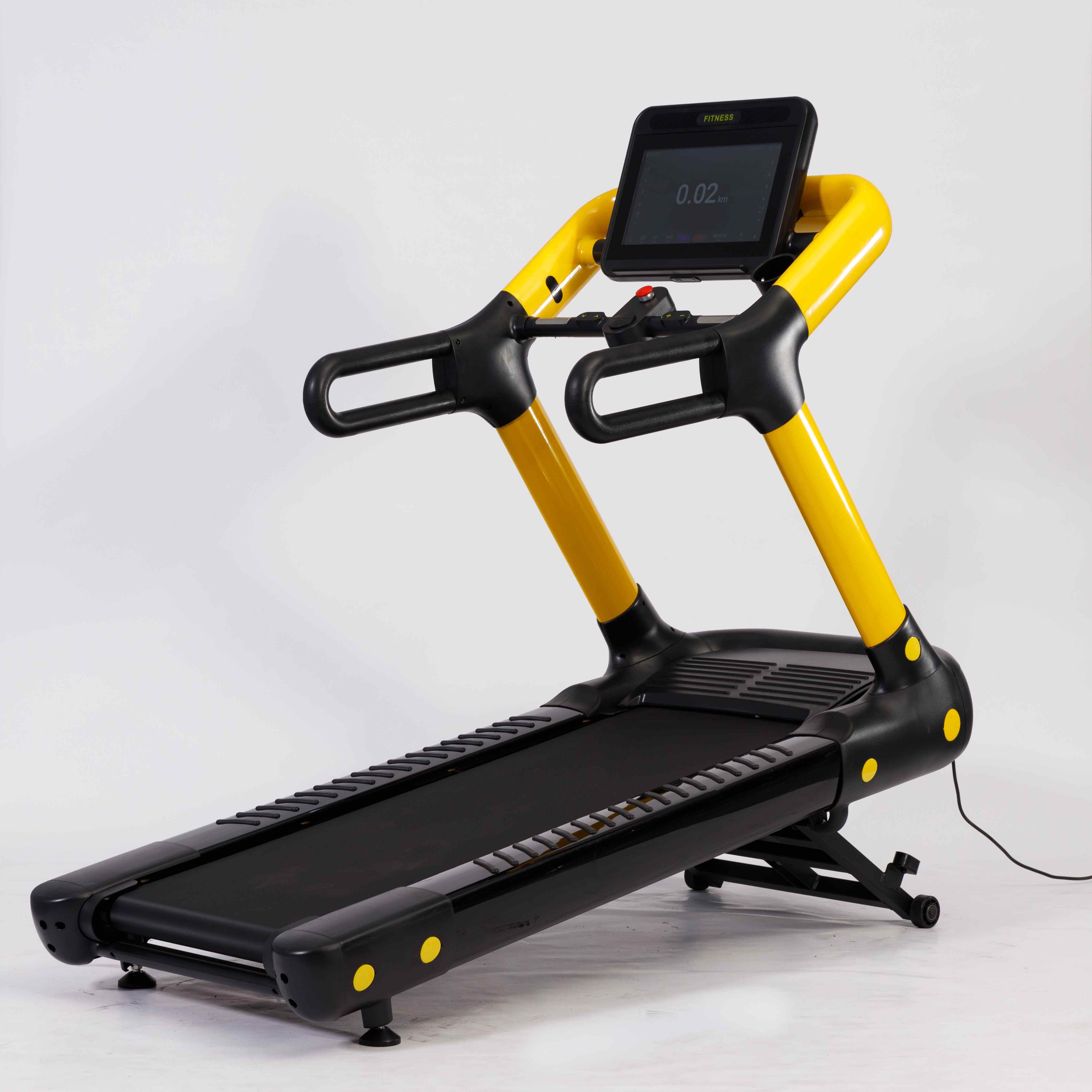
It’s tempting to believe that an AI running coach will transform your training overnight, but the reality often falls short of the polished marketing. Many runners find themselves flooded with generic advice—run more miles, sleep better, stay hydrated—that rarely deviates from what a quick web search would offer. The hype suggests personalization, yet the feedback can feel like a repackaged template that ignores your unique mechanics, history, and the subtle ways your body responds to fatigue.
Where the rubber really hits the road is when runners expect nuanced, day-to-day guidance. An app might tell you to slow down because your heart rate is elevated, but it can’t know you’re fighting a headwind or dealing with a stressful life event. The disconnect between data points and contextual understanding leaves athletes questioning whether they’re following a coach or a calculator. Helpful feedback requires a dialogue—something static algorithms aren’t built to offer.
That said, when the AI gets out of its own way, there are glimmers of usefulness. A well-designed tool can highlight patterns you might miss, like a creeping increase in resting heart rate or subtle changes in cadence. The trick is treating it as a supplementary mirror rather than a source of wisdom. The most valuable insights still come from lacing up, paying attention to your body, and occasionally sharing a knowing nod with another runner who understands the grind.
Eco-Friendly or Eco-Fraud? Spotting Genuine Green Manufacturing
Green manufacturing is more than a buzzword; it's a commitment that some companies embrace authentically while others merely dabble in for public approval. The line between genuine eco-innovation and clever marketing can be thinner than you think. How can you tell if a product's green claim is truly rooted in sustainable processes or just a polished facade?
One of the most telling signs is transparency. Genuine green manufacturers openly share details about their supply chain, from raw material sourcing to end-of-life disposal. They invite audits and often hold certifications like Cradle to Cradle or Energy Star. When a company is vague about its environmental efforts or relies heavily on nature-themed imagery without concrete data, it's often a red flag. Look for specific metrics: reduced water usage by 40%, recycled content percentage, or carbon footprint per unit. These numbers speak louder than vague statements like "eco-friendly" or "green."
Another key indicator is the lifecycle approach. Real sustainability isn't just about using recycled materials; it's about designing products that last longer, are repairable, and can be safely dismantled. Companies that practice green manufacturing will often offer take-back programs or share how their products are recycled. If a manufacturer only touts one isolated green feature while ignoring the overall environmental impact, you might be witnessing greenwashing. For instance, a phone marketed with a "bamboo box" but shipped across the globe in a fossil-fuel-powered supply chain should raise eyebrows.
Lastly, listen to third-party voices. Independent watchdog groups, consumer reports, and even employee reviews can shed light on whether a company's green claims hold up. Sites like EWG, Good On You, or B Corp certification provide unbiased assessments. If a company is genuinely green, they usually welcome this scrutiny. Be wary of those who avoid discussions about their factory conditions or energy sources. In the end, staying curious and asking tough questions is your best tool to spot eco-fraud and support truly green manufacturing.
Whisper-Quiet: The Engineering Behind Silent Treadmills
The heart of a silent treadmill lies in its brushless DC motor. Unlike traditional brushed motors, these eliminate the constant scraping of carbon contacts, drastically reducing electrical noise and mechanical friction. The motor casing often integrates precision-balanced rotors and sealed bearings lubricated for life, which together suppress the high-pitched whine common in cheaper units.
Belt and deck engineering plays an equally critical role. A multi-layer construction bonds a low-friction running surface to a reinforced core, often embedded with noise-damping polymers. The belt never requires external oiling, as its materials are self-lubricating. Underneath, the deck might feature a cushioning system that uses elastomer pods or air chambers to absorb foot strike impact before it can resonate through the frame.
The structural chassis isn’t just a steel box—it’s a vibration isolation platform. High-density rubber grommets decouple the motor assembly from the frame, while carefully tuned spring mounts float the deck above the base. Even the incline mechanism uses a worm gear instead of a rack-and-pinion, trading some speed for silent operation. Combined, these choices turn a machine that could rattle walls into something that barely hums under load.
Reading Between the Lines of User Reviews
It’s tempting to take a review at face value, but the real story often hides in what’s left out. When a diner raves about the "charming atmosphere" but never mentions the food, it’s worth asking why. A string of five-star ratings with one-line praises like "best ever!" might actually point to a lack of genuine enthusiasm—or worse, a coordinated push. Real feedback tends to be messier, blending pros and cons, and you’ll often spot a pattern if you’re paying attention.
Sometimes the most useful insight comes from how a reviewer phrases a complaint—or what they choose to ignore. A lengthy rant about slow delivery might reveal more about the person’s expectations than the product itself, especially if other reviews don’t echo it. Conversely, when multiple people mention a specific flaw, like a zipper that breaks after two uses, that’s a red flag you can’t afford to skim over. Picking up on these unspoken cues takes practice, but it turns a wall of text into a surprisingly honest conversation.
A quick sanity check can save you from a bad purchase. Glance at the reviewer’s history—do they only leave angry one-star ratings? That tells you more about them than the product. Also, watch for clusters of reviews posted around the same date, which might hint at a promotional campaign. And if a product has almost no middle-ground ratings, that’s often a sign that people are either thrilled or furious, which means the experience might depend heavily on factors you can’t control.
The Fine Print: Warranty Coverage That Actually Matters
Warranties often bury the most critical protections in paragraphs of jargon, but a few clauses genuinely define your ownership experience. Look past the headline-grabbing “lifetime” promises and scan for what’s actually covered: parts versus labor, transferability to a second owner, and whether routine maintenance voids the deal. Many brands cap labor rates or exclude shipping for replacement items, leaving you with a fee that undercuts the warranty’s value. The real coverage shines when a company shoulders both the component and the technician’s time without sneaky deductions.
Damage caused by everyday life—power surges, accidental drops, or water exposure—sits in a gray zone that separates premium policies from basic ones. Some warranties quietly exclude “consequential damage,” meaning a failed $10 seal that ruins your floor won’t be covered beyond the seal itself. Others offer a true no-fault approach, replacing the product even if you’re the one who spilled coffee on it. The distinction matters most for items that travel with you or live in high-traffic zones, where mishaps aren’t hypothetical but inevitable.
Finally, the claim process can make or break a warranty’s worth. A promise that requires mailing a 40-pound item cross-country, waiting weeks for inspection, and arguing with a chatbot might as well not exist. Top-tier coverage gives you a prepaid label, a local repair network, or a direct replacement within days—no interrogations. Before buying, test a company’s support: pretend to have a minor issue and see how fast they respond with a human solution, not a canned script. That’s where the fine print becomes real-world protection.
FAQ
Focus on continuous horsepower (CHP) rather than peak output. A 3.0 CHP or above motor is ideal for regular runners, while 2.5 CHP works for walkers. Check if the motor uses copper windings and has a sealed design to resist dust. You can also judge quality by the weight—heavier motors usually mean better heat dissipation and durability.
Test the deck flex directly. Good systems combine variable elastomers or suspension with a stable base, not just soft foam. Look for orthopaedic belt technology or adjustable firmness settings. If possible, do a short run—you’ll feel the energy return without a spongy sensation. Avoid treadmills where the deck feels overly bouncy or hard as concrete.
Prioritize adaptive coaching that uses real-time biometrics from wearables to adjust workouts. Auto-incline and speed changes based on heart rate zones are practical. Screens should be anti-glare with screen mirroring rather than preloaded apps you may not use. Over-the-air updates keep the software relevant. Ignore gimmicks like virtual reality courses unless you truly enjoy them.
Check the frame material—steel with a thick gauge (at least 14-gauge) is sturdy. Shake the console and handlebars; there should be minimal lateral movement. Heavier machines (over 250 lbs) tend to stay put during sprints. Also, inspect the welding points on the base—they should be smooth without spatter, indicating better manufacturing.
Look for lifetime coverage on the frame and at least 5 years on the motor, 2 years on parts, and 1 year on labor. If the motor warranty is only a couple of years, that’s a red flag. Also, read the fine print—some brands pro-rate coverage after the first year. A strong warranty often reflects lower expected maintenance.
For running, aim for a belt that’s at least 55 inches long and 20 inches wide. Taller users (over 6 feet) need 60 inches in length. Walkers can manage with shorter decks. Width matters for comfort—22 inches allows natural arm swing. Don’t compromise on belt length, as a too-short deck alters your gait and raises injury risk.
Yes. Look for brushless DC motors that use less electricity and run quieter. Some treadmills now generate power from the belt’s movement to charge devices. Recyclable running belts and eco-mode that reduces standby consumption are growing trends. Check the manufacturer’s sustainability report for concrete data, not just greenwashing claims.
Tap the console—if it flexes or feels hollow, it’s vulnerable to cracks. Buttons should have tactile feedback and not stick. Wires shouldn’t be exposed underneath the motor cover. A flimsy power cord and a small, hot-running power supply are danger signs. Check if the display angles are adjustable for glare; fixed scruffy screens suggest low-cost components.
Conclusion
Choosing a treadmill in 2025 means cutting through the noise to find what truly delivers. Start with the motor—forget raw horsepower numbers and look for sustained torque and smart power management that matches your actual running style. Many brands now integrate AI coaching, but the real value comes from adaptive feedback that adjusts to your fatigue and form, not just pre-recorded tips. Sustainability claims also need a close look: genuine eco-friendly manufacturing goes beyond recycled packaging to include energy-regenerating decks and responsibly sourced materials, backed by transparent supply chain data.
Quiet operation is no longer a luxury, so pay attention to belt texture, deck cushioning, and brushless motor designs that reduce vibration at the source. When reading user reviews, ignore the extremes and focus on repeated mentions of durability and after-sales support—those reveal the true ownership experience. Finally, scrutinize the warranty: meaningful coverage protects the frame, motor, and deck for years without hidden exclusions, because a company confident in its engineering won't hide behind fine print.
Contact Us
Contact Person: Owen Wu
Email: [email protected]
Tel/WhatsApp: 86-15376736259
Website: https://www.yingruisfit.com/