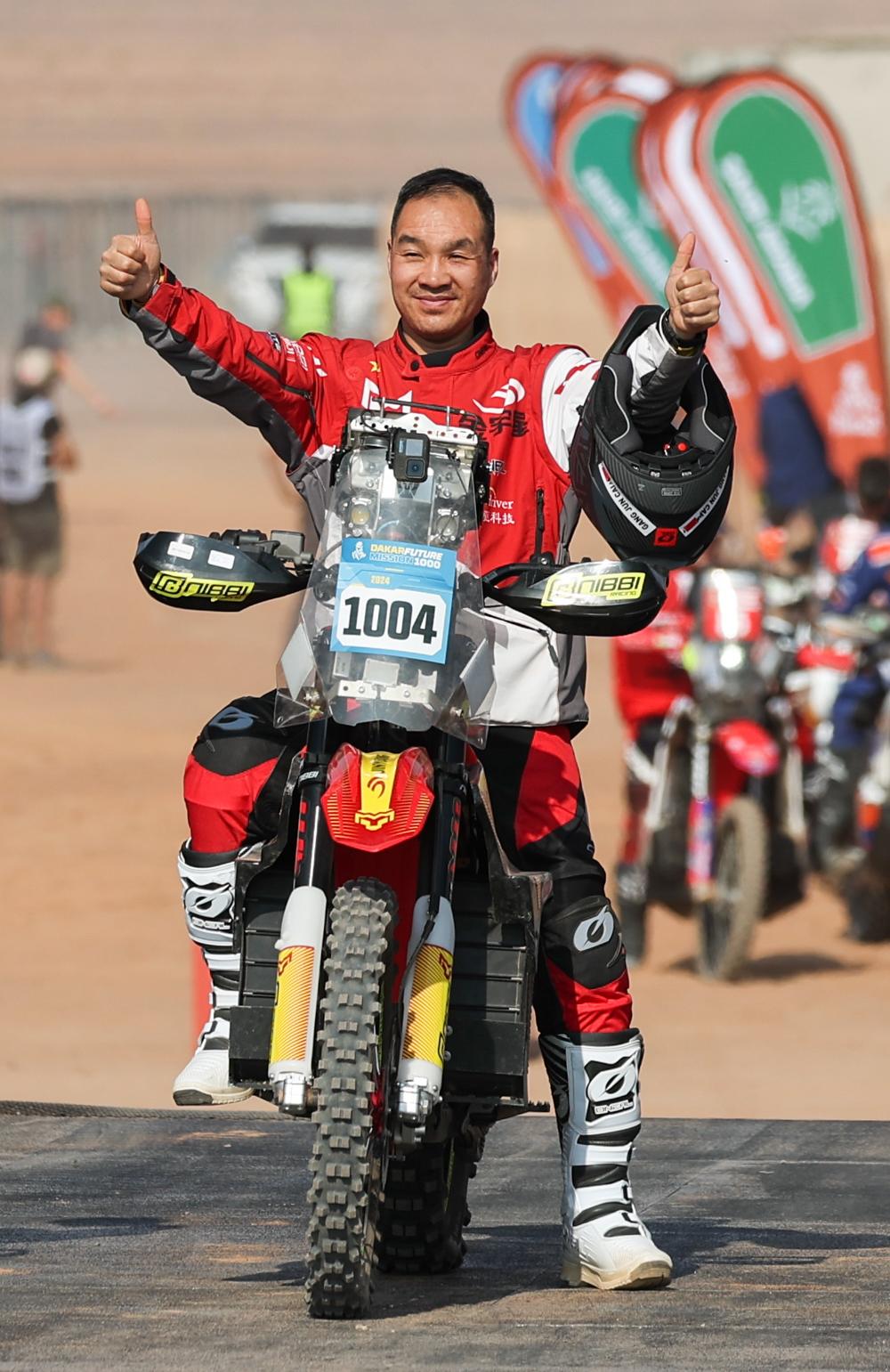

XE Pro R Electric Dirt Bike Company Redefines Off-Road Riding with Instant Torque and Quiet Power
2026-11-25
You don’t so much start the XE Pro R as uncork it. Twist the throttle and torque arrives without the usual gas-engine buildup, while the trail stays quiet enough to hear tire tread working the dirt. Arctic Leopard didn’t just remove the noise from off-road riding—it used that silence to sharpen the experience. The result is an electric dirt bike that feels less like a compromise and more like its own breed.
Instant Torque Without the Lag
Press the pedal and the push arrives before your brain has time to brace for it. There's no build-up, no moment where the powertrain seems to be consulting itself. The response is immediate and full-strength, more like flipping a switch than coaxing a machine into motion.
That kind of urgency rewires the way you drive. You stop planning overtakes seconds in advance and start taking them when the gap appears. Merging becomes a non-event, and uphill stretches lose the sluggish, downshift-heavy feel that usually drains momentum. The car simply goes, right now, without asking you to wait.
Stranger still is the composure. You get the shove without the soundtrack—no climbing revs, no mechanical pause, just a seamless wave of acceleration that stays linear and confident. It feels less like sudden force and more like the road tightening beneath you. After a few miles, anything with a delay starts to feel broken.
Quiet Enough to Hear the Trail
The volume of the woods doesn't drop all at once. It fades behind you after the last road crossing, replaced by smaller sounds that were there all along—gravel shifting underfoot, a branch brushing a sleeve, the dry scuffle of leaves as something small decides you're not worth the trouble.
That's when the trail stops being scenery and turns into a conversation. You hear water moving beneath a crust of ice long before you see it. You learn the difference between wind in oak leaves and wind in pine needles. Your own breath settles into a rhythm that belongs to the climb, not to the noise you carried in.
It's not silence exactly. It's more like the place finally has room to speak, and you've finally stopped interrupting.
No Clutch, No Stall on Technical Climbs
Rolling into a ledge with the clutch pulled and the motor chattering is a fast way to lose momentum and tip over. On slow, rocky climbs, the throttle can do most of the work if you let the flywheel carry the bike. A quick stab of revs just before the front wheel hits the obstacle shifts weight rearward, and the engine's inertia keeps the rear wheel clawing instead of stalling.
The trick is committing to a gear that feels almost too tall. Lower gears spike torque and break traction, while a taller gear lets the engine lug down to a pulse-like idle without flaming out. Keep your hand away from the lever and use body English to control speed. If the rear starts to spin, relax the throttle a fraction rather than reaching for the clutch.
When you do need to pause, a quick blip and a slight slip of the clutch can reset your line, but it should be the exception. Riders who treat the clutch as a crutch rarely learn how much traction is already there. Stay smooth, let the motor chug, and most technical climbs will clear themselves without any lever work.
Less Engine Noise, More Honest Feedback
There is a strange comfort in the roar of a machine that speaks too loudly. It fills the room, gives us something to react against, and lets us believe that volume equals confidence. But the instant that noise settles, a quieter truth arrives: the quality of the work no longer hides behind decibels. When the engine stops pretending, the people around you stop performing too. They tell you what they actually saw, what felt forced, what almost worked. Honest feedback has a different texture than polite applause, and it only surfaces when the space allows silence to do its job.
We often confuse production with progress, mistaking a busy workspace or a constant stream of updates for meaningful momentum. Less engine noise means fewer distractions dressed as urgency. It means choosing clarity over spectacle, and precision over repetition. In that quieter mode, a single well-placed observation from a colleague can redirect an entire project. A short pause before responding turns a defensive answer into a genuine exchange. The real cost of noise is not just attention; it is the slow erosion of trust in what we hear and say.
To build better things, we have to ask one uncomfortable question: what is actually being said beneath all the sound? When the motor of self-promotion idles, the feedback that remains is sharper, more specific, and often harder to accept. That is exactly why it matters. Teams that learn to operate with less noise do not lose energy; they redirect it. They stop polishing the surface and start strengthening the structure. The result is not silence for its own sake, but a working environment where honest feedback is not an interruption of the process—it is the process.
Electric Power That Feels Immediate and Planted
The first press of the throttle doesn't stage its delivery—it simply reports for duty. Torque arrives in one clean wave, so gaps in traffic close without a downshift delay or a long wait for revs to climb. That immediacy makes the everyday commute feel less like negotiation and more like pointing the car where you want it to go.
What keeps that rush from feeling nervous is the underbody mass. The battery's low position and the suspension's firm, consistent damping give the front end a sense of purpose. Instead of the nose lifting and wandering under acceleration, the car hunkers down and drives out of corners with a flat, deliberate stance. The power is quick, but the body never feels hurried.
The result is an electric response that behaves more like a strong, steady current than an on-off switch. You can lean into the accelerator mid-turn and trust that the tires will stay loaded. It gives the vehicle a sure-footed character that makes the instant torque feel useful, not theatrical.
Why the XE Pro R Feels Different in the Dirt
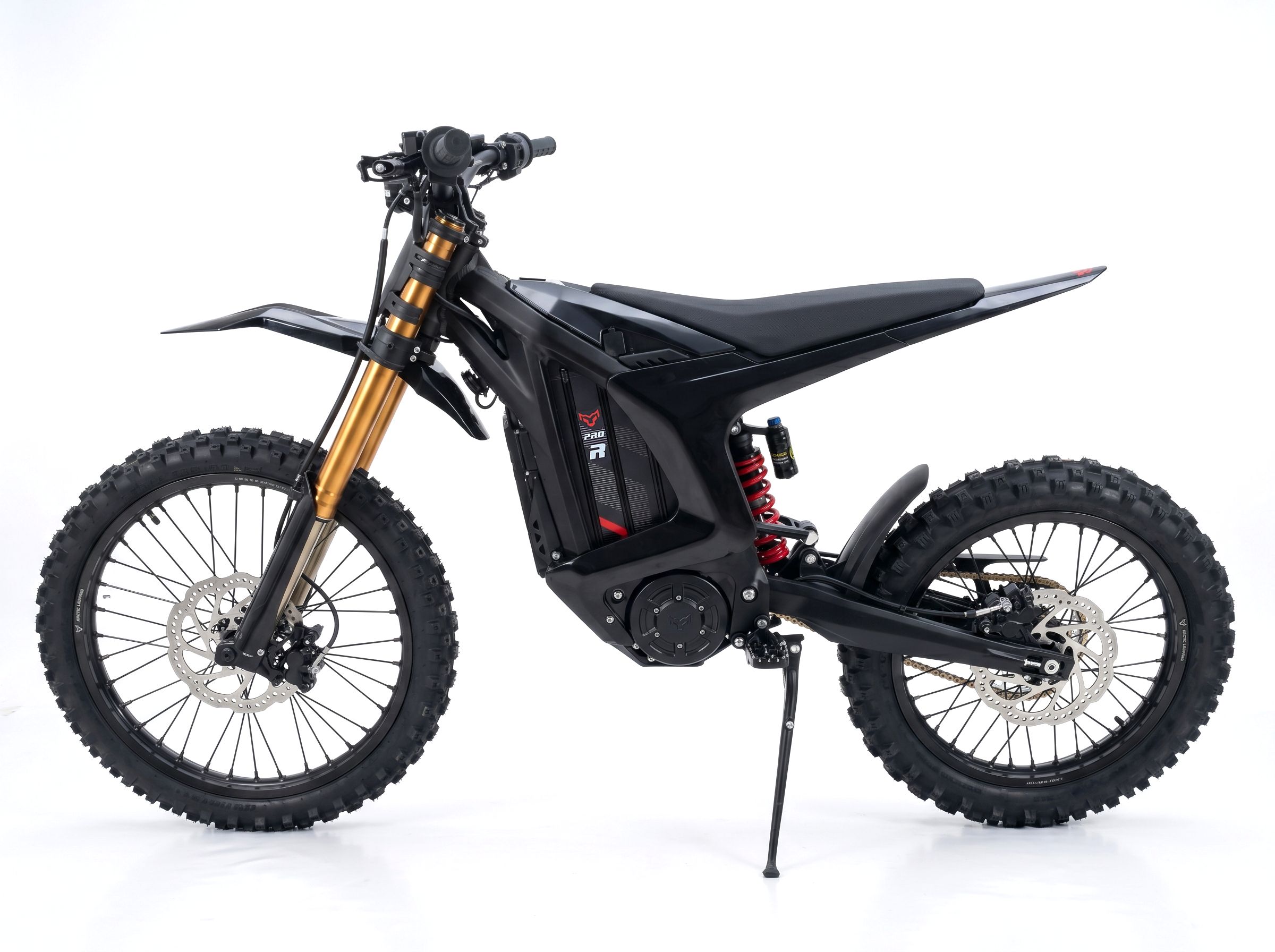
Most dual-sport bikes treat dirt like an afterthought, but the XE Pro R was clearly built from the knobbies up. The chassis carries its weight lower and further back than you would expect, which shows up the moment the front wheel starts hunting for traction in loose gravel. Instead of fighting the bars through every rut, the bike settles into a slight rearward squat and lets the suspension work. That geometry choice alone changes how confident you feel when the surface turns unpredictable.
The fork and shock are not just stiffer versions of the street setup. They have a longer, more progressive stroke that soaks up square-edged hits without blowing through the travel on hard landings. Small adjustments make a real difference, and the bike communicates what the tires are doing instead of muting everything into a vague mush. You can feel a rock roll under the front wheel and still keep your line, rather than getting bounced offline and waiting for the chassis to recover.
What really sets it apart is how the power comes on in the dirt. The throttle response is softer just off idle, letting you feed in torque without lighting up the rear tire, but there is plenty of pull once you are past the initial tip-in. It makes technical climbs feel less like a balancing act and more like the bike is working with you. Combined with a standing position that does not force your knees into the tank, the XE Pro R feels less like a compromise and more like a machine that actually enjoys being off-road.
FAQ
The first thing you notice is the lack of buildup. A gas engine needs revs to find its sweet spot, but the XE Pro R shoves you forward the second the throttle moves. Technical climbs feel less frantic because you are not constantly managing clutch and rpm.
At slow speeds you hear mostly tire crunch and drivetrain noise. The motor itself is more of a low whir. That changes the whole ride because you can hear approaching riders, wildlife, and your own line choices instead of wearing earplugs.
Aggressive riding typically lands around two to three hours depending on elevation, mud, and throttle use. Swapping in a charged pack takes only a few minutes, so many people carry a spare for longer loops.
It can, especially with hikers or horses that rely on sound cues. Many owners add a subtle warning chime or bell for blind corners. The flip side is you can hear others much earlier and slow down before it becomes an issue.
It fits a wider range than people expect. Beginners like the predictable throttle and no stalling, while experienced riders use it for skill drills and places with strict noise limits. Private landowners and trail builders also appreciate not losing access due to noise complaints.
The battery pack sits low and central, so it does not have that top-heavy feel some early electric bikes had. It is still not ultra-light, but the mass is placed where it helps cornering, and without a fuel tank sloshing around it stays consistent through rough sections.
The battery, controller, and connections are sealed against splashes and submersion up to a practical limit. Mud is less of a problem than with an air-filtered engine because there is no intake to clog, but you still need to clean the drivetrain and check seals after deep rides.
Conclusion
The XE Pro R changes how a dirt bike communicates with the rider. Twist the throttle and the response arrives without the lag of a combustion engine building revs, which means technical climbs lose the usual fear of stalling because there is no clutch to manage and no sudden drop in power. Instead of shouting over a loud exhaust, you can actually hear tire slip, rocks shifting, and the trail surface telling you where the grip is. That quietness is not just about being polite to the surroundings; it sharpens your sense of what the bike is doing underneath you.
What makes the XE Pro R feel different in the dirt is how planted the delivery becomes once the instant torque settles into the rear wheel. The power comes on in a way that feels direct but not twitchy, so loose corners and steep lines give you confidence rather than demanding constant throttle correction. Less engine noise also means the feedback from the suspension and tires reaches you sooner, making it easier to read the ground and react before mistakes turn into crashes. This is electric power that rewards smooth inputs and lets the trail become the main focus instead of fighting the machine. Riders who spend long days in rough terrain will notice the difference most when the trail gets slow and off-camber.
Contact Us
Contact Person: Jack
Email: [email protected]
Tel/WhatsApp: +86 15657688888
Website: https://www.arctic-leopard.com